
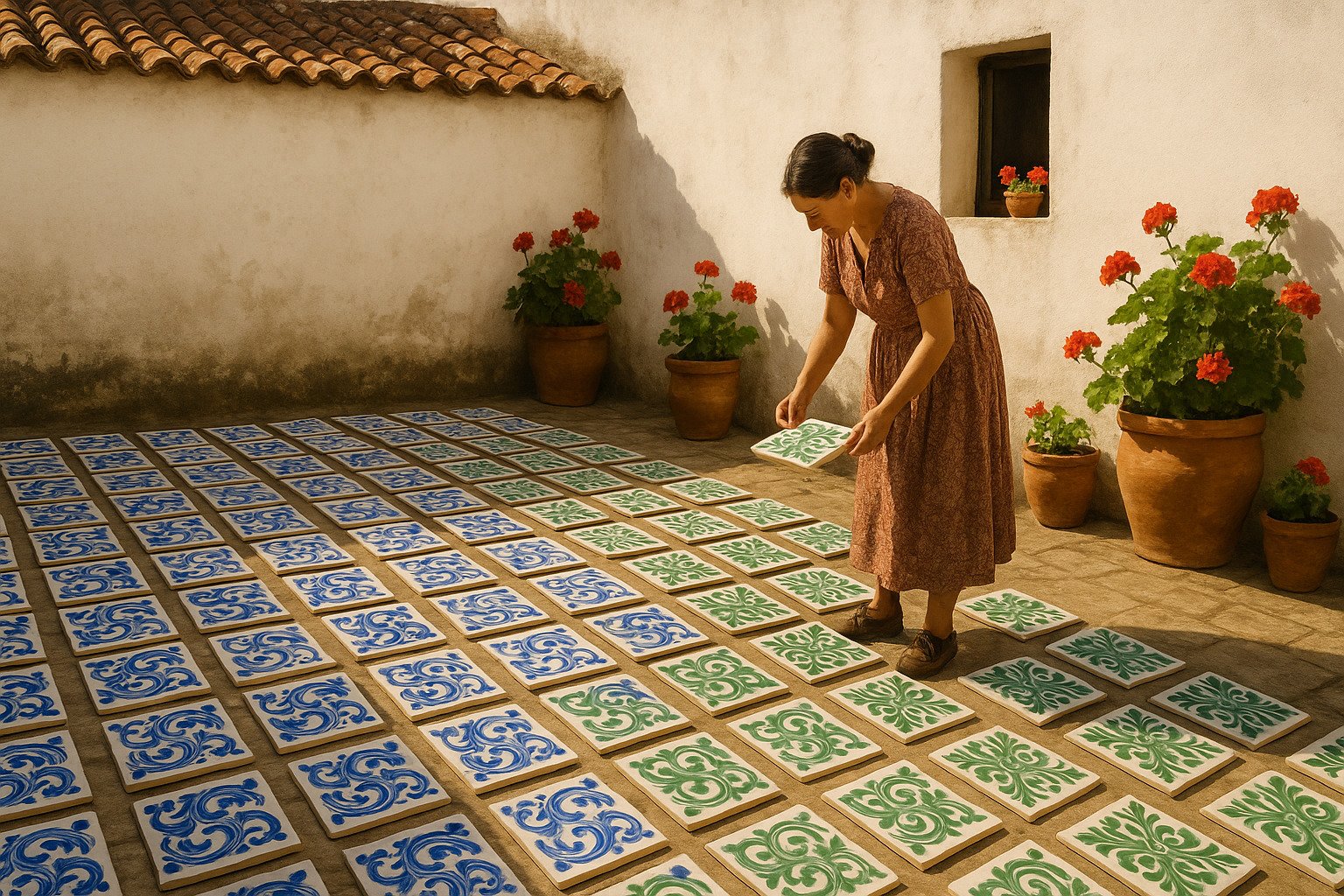
From the shimmering blue-and-white panels of Lisbon’s convents to the geometric mosaics adorning Moorish-inspired façades, Portuguese tiles — azulejos — are more than decoration. They are language. Every motif, color, and arrangement tells a story, carrying messages that have traveled across centuries of Portuguese history.
Travelers often admire their beauty, yet few know that tiles were designed to be read as much as admired. For those who take the time to interpret their symbols, tiles become eloquent storytellers, whispering tales of faith, power, voyages, and identity.
At Portugal Magik Private Tours, we have seen how much richer a guest’s journey becomes when they learn to decode these visual messages. Standing before a wall of azulejos, they no longer see only patterns and colors — they see history revealed in ceramic form.
This article unveils the secret language of Portuguese tiles: the symbols, colors, and stories that turn Portugal’s façades into an open-air library of art.
Origins: Tiles as Storytellers
The art of the azulejo arrived in Portugal in the late 15th century, influenced by the intricate geometric mosaics of Islamic Spain. These early designs were not figurative but abstract, reflecting Islamic prohibitions against depicting people.
Soon, Portuguese artisans transformed the medium. By the 16th century, tiles carried biblical narratives, mythological scenes, and allegories. In convents, they taught morality to congregations who could not read. In palaces, they celebrated royal grandeur. On city houses, they added rhythm and beauty while symbolizing prosperity.
Understanding tiles as storytelling tools is the first step to decoding their messages.
The Language of Symbols
Portuguese tiles employ a vocabulary of recurring motifs. Here are some of the most common, each with its hidden meaning:
1. Floral and Botanical Motifs
Flowers, vines, and acanthus leaves abound. They represent renewal, fertility, and the eternal cycle of life. Tulips and carnations often symbolized love, while vines could allude to both the Eucharist and Portugal’s vineyards.
2. Geometric Patterns
Inherited from Moorish design, these repetitive shapes embody harmony, infinity, and divine order. To medieval artisans, geometry was the language of the cosmos.
3. Ships and Sea Motifs
In a maritime nation, it is no surprise that tiles often depict ships, waves, or sea monsters. These celebrated Portugal’s Age of Discoveries and the country’s relationship with the Atlantic.
4. Religious Figures
Saints, angels, and biblical scenes filled convents and churches. A wall of tiles became a catechism for the illiterate — faith in ceramic form.
5. Mythological Figures
Palaces often featured gods, nymphs, and classical heroes. These reflected humanist influences and celebrated knowledge, beauty, and power.
6. Everyday Scenes
By the 18th century, artisans began depicting farmers, musicians, and hunters. These celebrated rural life and grounded Portugal’s identity in everyday culture.
The Meaning of Colors
Colors in Portuguese tiles are not merely aesthetic; they carry layers of symbolism.
-
Blue: The most iconic, drawn from costly cobalt oxide imported from Persia and later China. Blue symbolized the divine, the infinite sea, and heavenly grace.
-
Yellow/Gold: Associated with sunlight, divinity, and wealth. In baroque churches, it echoed gilded altars.
-
Green: Symbol of nature, fertility, and hope. In Marian iconography, it often represented rebirth.
-
White: Purity and spiritual illumination, serving as a canvas for other colors.
-
Black/Brown: Less common, but used to symbolize earth, humility, or shadow in dramatic narrative scenes.
Travelers who understand this palette begin to see tiles less as decoration and more as coded messages.
Other Visitors are reading now:


Reading Panels: How to Interpret a Story
Standing before a vast azulejo panel can feel overwhelming. But once you know how to read it, the narrative unfolds.
-
Context: Where is the panel located? In a convent, it likely carries biblical or moral messages. In a palace, it may celebrate family lineage or myth. In a fountain, it might depict abundance and civic pride.
-
Centerpiece: Most panels have a central motif — a saint, a coat of arms, or a mythological figure. Identify this first to unlock the theme.
-
Surrounding Motifs: Frames and borders carry secondary symbols. Florals may suggest renewal, scrolls intellect, shells fertility or pilgrimage.
-
Colors: Notice dominant colors — are they celestial blues, golden baroque tones, or rustic greens? This often reveals mood and meaning.
For example, in Lisbon’s Convento da Madre de Deus, the central figure of St. Francis of Assisi is surrounded by vines and birds, painted in blue and yellow. To the trained eye, this panel conveys not only a saint’s humility but the harmony between divine creation and human devotion.
Regional Variations: Different Dialects of Tile Language
Lisbon
Lisbon’s panels are grand, baroque, and narrative-driven. Convents tell biblical stories, palaces boast mythological allegories, and houses show rhythmic floral repeats.
Porto
In Porto, tiles took on monumental scale in the 19th and early 20th centuries. The São Bento train station is a masterpiece: 20,000 tiles narrating Portuguese history, from battles to rural life. Porto’s tile language is public, civic, and nationalistic.
Alentejo
Rural Alentejo features more rustic patterns — simple geometrics, earthy colors, and folk motifs. They speak of simplicity, endurance, and connection to the land.
Coimbra
Coimbra developed its own style, blending Renaissance humanism with religious iconography. University buildings showcase intellectual motifs, reflecting the city’s role as Portugal’s scholarly heart.
When Tiles Whisper Personal Stories
Not all tiles are grand public statements. Some carry private or intimate meanings. In Lisbon’s Alfama, small panels depict patron saints above doorways, believed to protect families within. In rural homes, colorful kitchen tiles bore blessings for fertility or abundance.
For luxury travelers, these small, personal tiles are often the most touching discoveries. As one Portugal Magik guest from Chicago said after exploring Alfama: “It felt like every house had left me a ceramic love letter.”
The Contemporary Language of Tiles
Today, Portuguese tiles continue to evolve. Contemporary artists reinterpret their language, blending tradition with modern design. At Lisbon’s Viúva Lamego, renowned architects have created bold new patterns, while at the LX Factory, young designers use tiles as canvases for abstract and political art.
The language of azulejos lives on, not frozen in history but constantly adapting — a dialogue between past and present.
Why Decoding Tiles Enriches Travel
For travelers, learning the secret language of Portuguese tiles transforms sightseeing into cultural literacy. A church wall becomes scripture in ceramic. A palace corridor becomes a poem of myth. A street façade becomes a folk tale in blue and white.
Luxury is about depth as much as comfort. To know what you are seeing — to read the colors and symbols — is to experience Portugal with intimacy and understanding.
Portugal Magik: Unlocking the Language for Guests
At Portugal Magik Private Tours, we weave this knowledge into our itineraries. Our expert driver-guides point out symbols in Lisbon’s convents, decode panels in Porto’s train station, and lead guests into private ateliers where artisans explain their motifs. For those who want a deeper connection, we arrange hands-on workshops where guests paint tiles using traditional symbols, learning their meanings through personal creation.
Traveling in the comfort of luxury Mercedes-Benz vehicles, our guests experience both the grand narrative of Portugal’s tiles and the small personal stories that line its streets. Most of our travelers choose multi-day journeys, ensuring time to see not just the monuments but the meanings behind them.
Conclusion: Listening to the Walls
Portugal’s tiles are not silent ornaments. They are eloquent storytellers, speaking through color, symbol, and pattern. To those who listen, they reveal centuries of faith, power, joy, and resilience.
Travelers who learn to read this language find Portugal transformed: walls once seen as beautiful become legible, alive, and profoundly human.
Let Portugal’s tiles whisper their stories to you — and let us guide you to hear them clearly.
Book Your Portugal Experience:
-
Explore our bestseller tours: Multi-Day Tours
-
Best Private Day Tours Around Lisbon: Private Day Tours
-
Read Top Guests Reviews: Reviews
-
Contact Us: Contact
-
Or simply fill in the form below to request your custom itinerary.