Follow Portugal north from the Algarve’s tidal lagoons to the vineyard terraces of the Douro, with Roman stones, Atlantic tables, and city afternoons along the way. This tailored itinerary leaves room for the small encounters that become a journey’s best stories.
Day 1: Arrival in Faro, an Algarve Introduction
Arrive in Faro and begin gently inside the Cidade Velha, where whitewashed houses and the cathedral frame a quieter Algarve than its beach reputation suggests. Beyond the old walls, the Ria Formosa reveals the region’s other identity: a tidal landscape of channels, salt marshes, and working shellfish grounds. Over a seafood cataplana, served in its hinged copper-colored vessel, let lunch become your first proper appointment. Portugal Magik’s private driver/guide handles the driving and pacing in a Mercedes-Benz vehicle, shaping this arrival day around your energy; overnight in Faro.
Day 2: Tavira, Rooftops and Tidal Water
Spend the morning in Tavira, following the Gilão River before climbing toward the castle garden for a view across the town’s distinctive hipped roofs. The bridge often called Roman is better understood as medieval in origin, a useful reminder that familiar names can conceal more complicated stories. Continue to Santa Luzia for octopus, perhaps grilled with olive oil and potatoes, and watch the waterfront settle into its afternoon rhythm. Return to Faro for the night, leaving time for a last walk rather than another scheduled visit.
Day 3: Lagos, Between Gilded Wood and Open Sea
Travel west to Lagos, where the ornate interior of the Igreja de Santo António offers a striking counterpoint to the town’s bright streets and sea air. Later, follow the designated paths and boardwalks at Ponta da Piedade, looking down at limestone stacks and sheltered coves without turning the afternoon into a strenuous coastal expedition. Lunch might be grilled sea bream with boiled potatoes, olive oil, and a crisp Algarve white. Overnight in Lagos, with the evening reserved for wandering and a table you need not hurry to leave.
Browse our travel inspiration for ideas, or tell us what kind of day you have in mind.
Day 4: Into the Alentejo, with an Evening in Evora
Leave the coast for the longer inland drive to Évora, allowing much of the morning for the journey rather than squeezing in another Algarve stop. Once settled, walk between the Roman Temple and Praça do Giraldo, where the surrounding arcades offer shade and the city begins to feel comfortably navigable. At dinner, try açorda alentejana, a bread preparation fragrant with garlic and coriander, often served with a poached egg. Overnight in Évora, whose pale walls and granite details reward an unhurried evening more than a hurried checklist.
Day 5: Evora to Lisbon, from Cork Country to the Tagus
Before leaving Évora, visit the Igreja de São Francisco and its Chapel of Bones, created by Franciscan friars as a meditation on life’s brevity. The drive toward Lisbon passes through an Alentejo landscape where cork oaks give the journey a rhythm quite different from the coast. Arrive with time to settle, then head to Praça do Comércio for your first broad view of the Tagus and dinner featuring bacalhau à Brás, shredded salt cod with egg and fine potato sticks. Overnight in Lisbon.
Day 6: Lisbon, Maritime Ambition and Neighborhood Life
Begin in Belém at the Jerónimos Monastery, whose elaborate Manueline stonework belongs to the age when overseas trade transformed Portugal’s fortunes. Follow the visit with a warm custard tart at Pastéis de Belém, where production began in 1837, and notice how quickly a grand historical morning becomes a conversation about pastry. Spend the afternoon in Alfama, choosing a manageable walk through steep lanes rather than attempting every viewpoint. Overnight in Lisbon, with dinner close enough to your hotel that the evening remains pleasantly uncomplicated.
Want this route shaped around your own dates and pace?
Day 7: Sintra, a Palace with Stories in Every Room
Make Sintra a day of depth rather than a race between estates, beginning at the National Palace of Sintra beneath its unmistakable twin conical chimneys. Inside, the painted ceilings and remarkable tilework tell stories of royal taste across successive reigns, with enough detail to hold even a palace-weary traveler. After a lunch break, explore the gardens at Monserrate, where botanical collections and nineteenth-century architecture show another chapter of the town’s appeal. Try a small queijada before returning to Lisbon for your final overnight in the capital.
Day 8: Obidos to Coimbra, Walls and University Streets
Head north to Óbidos for a morning inside its walls, taking side streets away from the busiest shopfronts and admiring the white houses edged in blue or yellow. A small taste of ginjinha, the sour cherry liqueur associated with the town, makes a cheerful pause before continuing to Coimbra. Arrive in time for a gentle introduction to the lower town and the banks of the Mondego, saving the university’s hilltop buildings for tomorrow. Dinner might feature chanfana, goat slowly cooked with red wine; overnight in Coimbra.
Day 9: Coimbra’s Books, then North to Porto
Give Coimbra’s university the morning, with a timed visit to the Biblioteca Joanina, whose gilded shelves embody the wealth and ambition of eighteenth-century royal patronage. Book the appropriate admission ahead, since access arrangements and available times shape what you can see. After lunch, perhaps roast suckling pig from the Bairrada tradition, continue north to Porto and take an introductory walk through Ribeira as the riverfront changes color toward evening. Overnight in Porto, resisting the temptation to turn an arrival afternoon into a full city tour.
Day 10: Porto, Painted Histories and Port Wine
Start at São Bento station, where Jorge Colaço’s tile panels bring episodes of Portuguese history and scenes of rural life into a working railway concourse. Continue to the Palácio da Bolsa for its richly decorated interiors, joining a scheduled guided visit rather than assuming you can wander independently. Across the river in Vila Nova de Gaia, arrange a cellar tasting to understand how tawny and ruby ports follow different paths through aging. Pair the day with a leisurely seafood lunch and overnight again in Porto.
Day 11: The Douro, Where the Landscape Becomes the Story
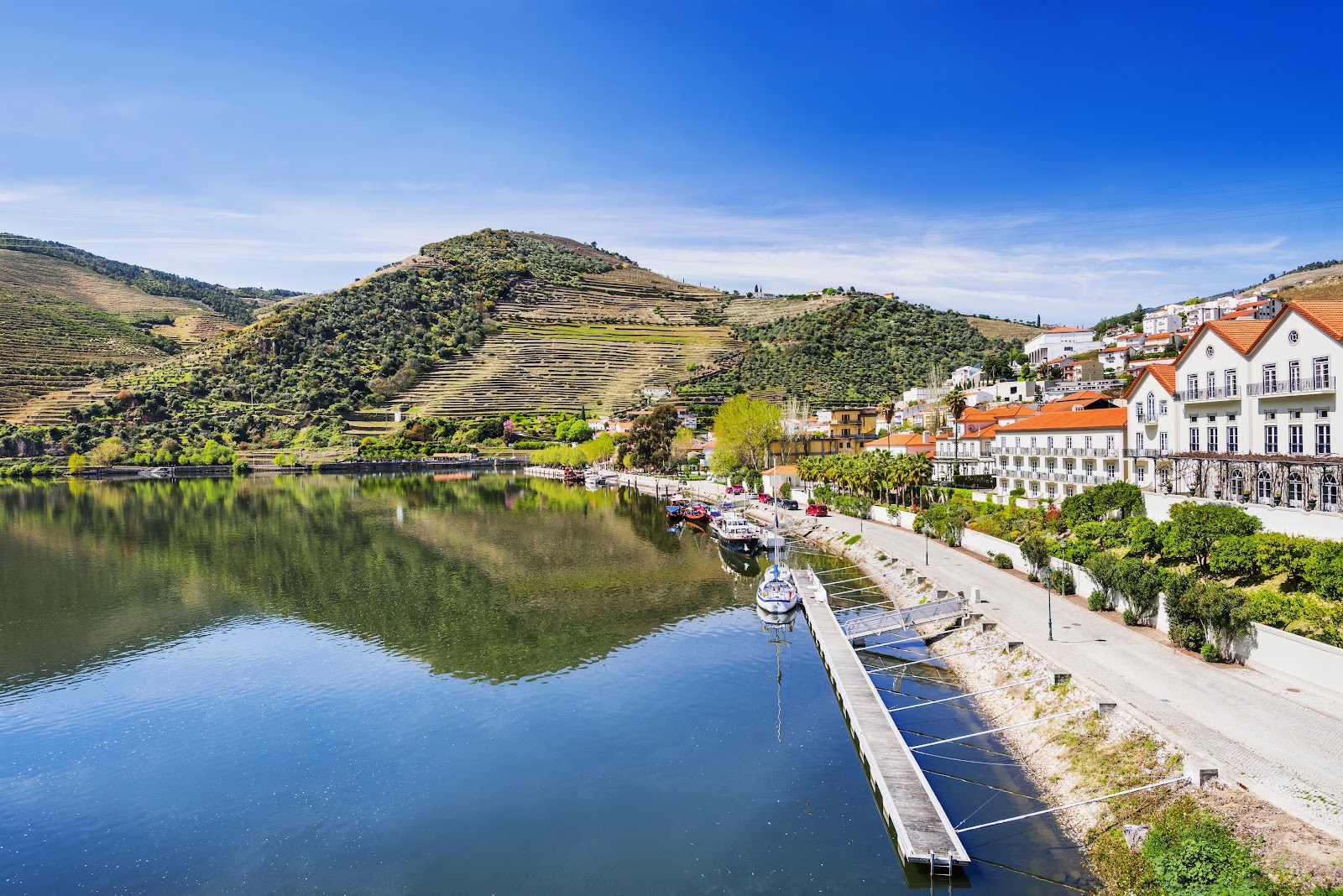
Travel inland to Peso da Régua and begin at the Museu do Douro, giving the valley’s beauty its essential human context: difficult labor, trade, and generations of winegrowing. Follow the river toward Pinhão for a prearranged estate visit, where a glass of Douro red makes more sense with the vineyard slopes directly in view. Your local driver/guide can shape the day around a longer lunch or more time among the vines, rather than another stop. Overnight in Peso da Régua after roast kid, a regional specialty.
Day 12: Pinhao and Casal de Loivos, a Last Look
Return toward Pinhão for a closer look at the railway station’s tile panels, which depict vineyard work and the river transport that once carried wine downstream. Then climb by road to Casal de Loivos, where the river’s curve and folded vineyard slopes gather into the view that may stay with you longest. Over a final lunch and a glass of white port, recall yesterday’s estate conversation: these terraces become more memorable when you understand the work behind them. Overnight in Peso da Régua, with onward travel arranged for the following day.
Plan your own day
Share your dates, group size and interests, and we will suggest a tailored plan with a local driver/guide.