A day in Peneda-Gerês follows an old Roman road, pauses beside a reservoir with a submerged village, and ends above a valley of water and wooded slopes. Between those places, northern Portugal tells its stories through mountain paths, shared tables and quiet acts of remembrance.
Morning begins beside the Caniçada water
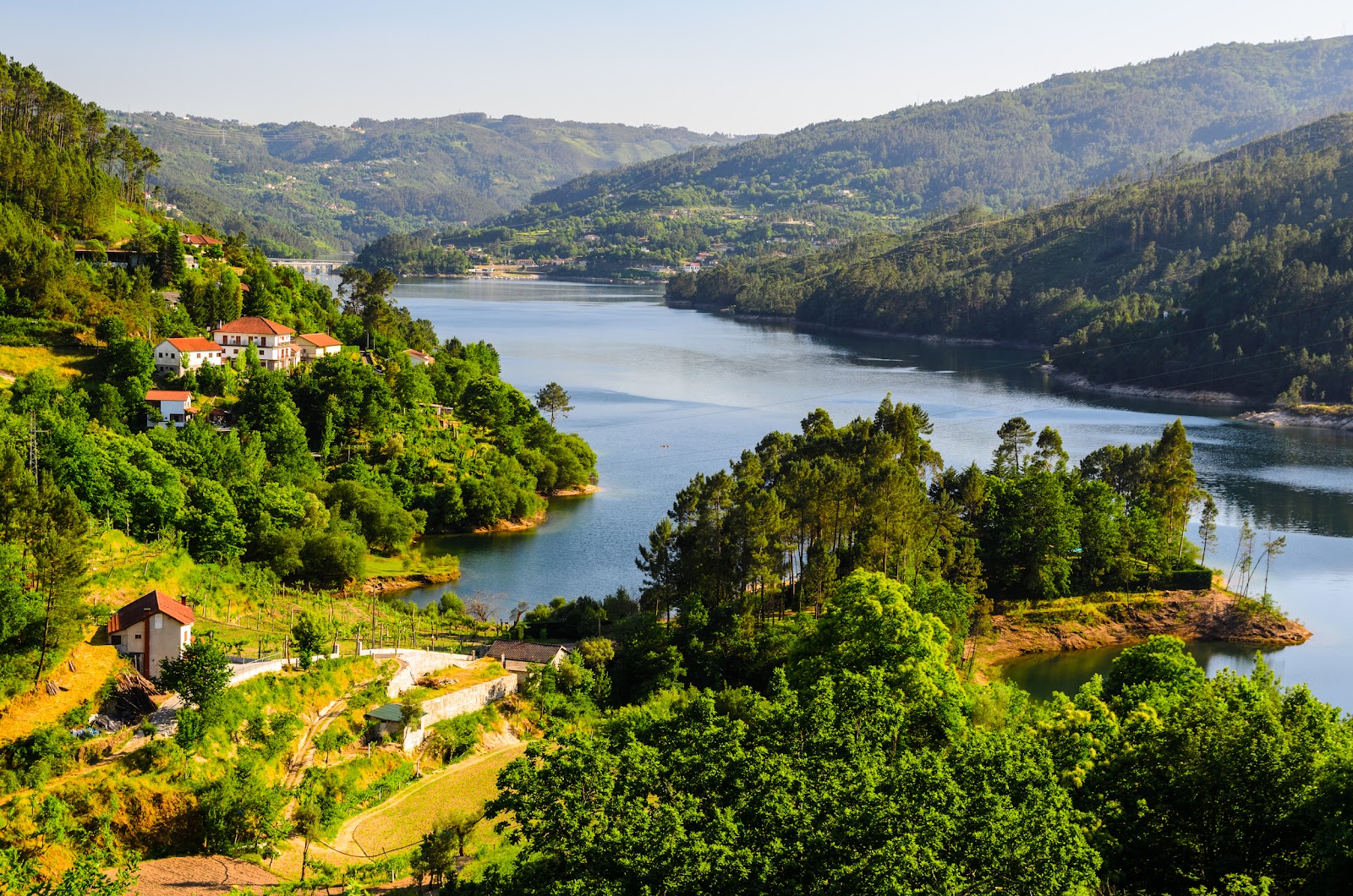
The first memorable sight is not a summit. It is the water at Caniçada, catching the morning light beneath hills that seem to fold into one another. Around Rio Caldo, bridges carry everyday traffic across the reservoir, cafés begin serving coffee, and the mountains feel close enough to change the mood of the day. This is a welcoming southern approach to Peneda-Gerês, Portugal’s only national park, established in 1971.
The park stretches far beyond this first view, across parts of Minho and Trás-os-Montes to the Spanish border. Trying to collect all its landmarks in a day would miss the point. Instead, follow a manageable thread through its southern Gerês landscapes: Campo do Gerês, a Roman road, the memory of a drowned village, and an afternoon looking back across the valleys.
With Portugal Magik, a local driver/guide can shape the day around the guests, allowing more time for a walk, a lingering lunch or easier stops close to the vehicle. A Mercedes-Benz makes a comfortable base between places, but the best moments happen outside it.
Campo do Gerês and a road older than Portugal
At Campo do Gerês, also known as São João do Campo, granite houses and narrow lanes introduce a landscape that has never been simply wilderness. People have grazed animals, cultivated small plots and crossed these mountains for centuries. The village rewards an unhurried look rather than a hurried photograph: a doorway, a garden wall, the way a lane bends around an older building.
The nearby Museu da Geira offers context for one of the region’s most remarkable survivals. The Geira, or Roman road Via XVIII, linked Bracara Augusta, modern Braga, with Asturica Augusta, now Astorga in Spain. Built during the first century AD, it carried the business of an empire through terrain that still makes modern drivers pay attention.
If opening hours fit, begin with the museum before exploring an accessible stretch of the route nearby. Roman milestones survive along the Geira corridor, reminders that this apparently remote country once belonged to a carefully measured network. The pleasure is not in pretending every stone underfoot is Roman. It is in recognising that other travellers had reasons to come this way almost two thousand years ago.
The village beneath Vilarinho das Furnas
From Campo do Gerês, the story turns towards Vilarinho das Furnas. The village was submerged in 1972 when the reservoir filled, and its former residents left behind houses, paths and a distinctive tradition of communal organisation. Decisions about shared resources and village affairs had been managed collectively, making its history about much more than buildings lost beneath water.
The Museu Etnográfico de Vilarinho da Furna, part of the museum complex at Campo do Gerês, helps restore human scale to that story. Agricultural tools and objects of daily life speak of work, households and a community that had to move. Seen afterwards, the reservoir is no longer just a beautiful expanse between slopes.
When water levels are low, remains of the village can emerge, but their visibility should never be the promise on which a visit depends. Stay on permitted routes and respect access restrictions around the reservoir. Even without a wall showing above the surface, the place holds your attention. The quiet is different once you know what lies underneath.
Browse our travel inspiration for ideas, or tell us what kind of day you have in mind.
Lunch belongs to the mountains
Back around Campo do Gerês or nearby Covide, lunch is the right reason to stop travelling for a while. Choose a local restaurant according to its opening day and seasonal menu, rather than chasing a complicated detour. In these villages, the most satisfying meal often begins with a straightforward question: what is good today?
Look for regional dishes such as cabrito assado, roast kid, or a cut of beef identified as Barrosã, a native cattle breed associated with northern mountain country. Roast potatoes and greens make natural companions. Portions and preparations vary, and some slow-cooked dishes need advance ordering, so it is worth checking before arriving with a particular meal in mind.
A bowl of caldo verde might begin lunch, while locally produced honey is worth seeking in village shops. For guests who drink wine, a Vinho Verde from the wider region brings freshness to the table. There is no need to turn the meal into a tasting exercise. Bread, conversation and enough time to finish comfortably are the point.
A sanctuary before the climb
Returning towards Rio Caldo brings a different kind of mountain landmark: São Bento da Porta Aberta. Its origins reach back to a small seventeenth-century chapel, and it grew into one of Portugal’s important pilgrimage sanctuaries. The name recalls an open door, a fitting idea in a landscape where journeys once demanded considerably more effort than they do today.
The older church and the larger modern worship space speak to the enduring scale of devotion here. Visitors may encounter families lighting candles, pilgrims arriving on foot or a quieter interval between services. This is a living religious place rather than a scenic set piece, so enter respectfully and leave photography aside whenever it would intrude.
Then continue through the town of Gerês and climb towards Pedra Bela on the appropriate public road. The change is gradual: buildings fall behind, woodland gathers around the bends, and the day begins to open out again.
The view that gathers the day together
At the Pedra Bela viewpoint, roughly 800 metres above sea level, the Caniçada reservoir returns to the story far below. What looked broad and immediate in the morning now appears held within a much larger arrangement of ridges and valleys. Take the short approach carefully, especially when surfaces are wet, and give the view a few minutes before reaching for a camera.
Weather matters here. Cloud can erase the distance, and rain, fire risk or temporary restrictions can change what is sensible to visit. Wear shoes with grip, carry water and keep to marked, permitted paths. This day needs neither a difficult hike nor a waterfall scramble to feel complete.
The lasting memory may be that final panorama, but it might equally be a Roman milestone or the thought of a village beneath still water. Peneda-Gerês is generous with scenery. Its deeper gift is the discovery that these mountains have always held lives, journeys and stories.
Plan your own day
Share your dates, group size and interests, and we will suggest a tailored plan with a local driver/guide.