A second visit makes room for the Portugal between the famous sights. Follow one day from Lisbon into the Alentejo, where Roman stones, a long lunch and an embroidered carpet offer reasons to return.
1. The second trip can begin beyond the familiar skyline
Leave Lisbon after breakfast and watch the city give way to the open country east of the Tagus. The destination is Évora, roughly ninety minutes away by road, depending on traffic and your starting point. Cork oaks begin to punctuate the landscape. For Americans who spent their first Portuguese holiday between Lisbon’s hills and Porto’s riverfront, this feels like opening another chapter rather than repeating a favorite page.
That is a strong reason to return: familiarity makes a new region easier to approach. You already understand the pleasure of a small coffee and an unhurried table. Today, those familiar rituals belong to the Alentejo, with its whitewashed buildings, broad skies and distinct regional cooking.
2. A morning coffee makes the language barrier feel smaller
Start near Praça do Giraldo, Évora’s central square, where arcades provide welcome shade and the sixteenth-century fountain faces the Church of Santo Antão. Order a café, usually an espresso, and something small from the pastry counter. There is no need to turn breakfast into another reservation.
English is widely spoken in Portugal’s visitor-facing businesses, although it is not universal, particularly in smaller communities. For American travelers, that practical ease leaves more attention for the place itself. Évora’s historic center rewards walking, with ordinary precautions around belongings and traffic. Uneven paving deserves attention too. Feeling comfortable here does not require pretending that every street is level or every interaction will happen in English.
3. History becomes more interesting when there is less to cover
Walk uphill to Évora’s Roman temple. Its surviving Corinthian columns date from the first century AD, and its familiar nickname, the Temple of Diana, is not a securely established identification. The building is generally associated with the Roman imperial cult. That distinction is a small story worth pausing over, especially when there is no pressure to hurry toward three more monuments.
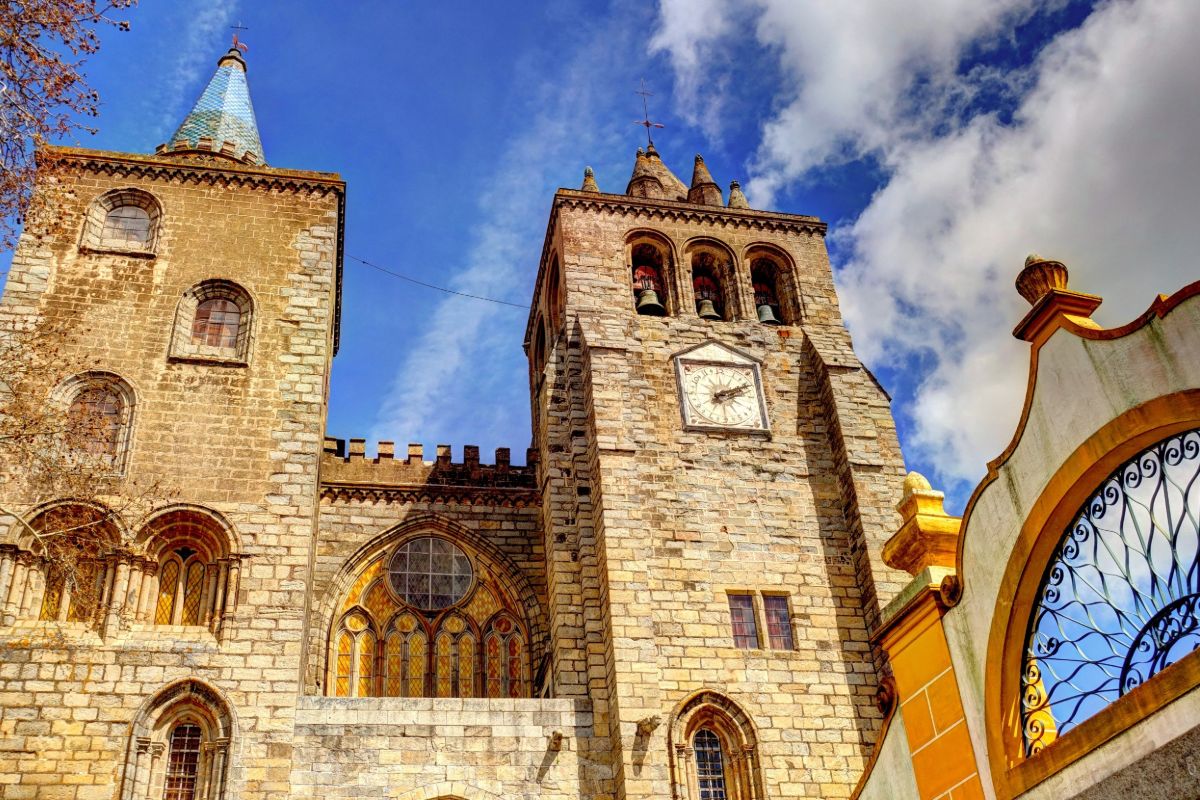
Nearby, the granite cathedral adds a very different layer, with construction beginning in the late twelfth century. Évora’s UNESCO-listed historic center brings Roman, medieval and later architecture into close conversation. Travelers who know Rome or Florence may appreciate the change in scale: the interest is substantial, but the morning need not become an endurance event.
Browse our travel inspiration for ideas, or tell us what kind of day you have in mind.
4. Lunch gives the region a voice of its own
By lunchtime, the best next stop may simply be a table. Look for açorda à alentejana, a preparation of bread, garlic, coriander, olive oil and hot water, often served with egg. Migas, another bread-based specialty, frequently accompany pork. These are dishes rooted in the practical business of feeding people well, not versions of something designed elsewhere.
For couples comparing another French or Italian itinerary with a Portuguese return, regional specificity matters. So does a family table where different appetites can be accommodated. Ask what is available that day rather than expecting every specialty everywhere. Finish, if appetite allows, with sericaia, an Alentejo egg dessert often paired with preserved plums associated with Elvas.
5. Wine and value can share the same table
A glass of Alentejo wine makes more sense beside lunch than as another appointment squeezed into the afternoon. Antão Vaz is an important regional white grape; Aragonez and Trincadeira appear in many reds. Ask for a local recommendation and explain whether you prefer something lighter, fuller or less oaky. The conversation can be straightforward without becoming superficial.
Americans accustomed to celebrated destinations in France, Italy or Spain may find appealing value in an inland Portuguese restaurant, particularly when choosing regional food and wine. That is a possibility, not a countrywide price rule. Location, producer and restaurant style still matter. Check the menu and remember that bread, olives or cheese brought to the table may be charged if consumed.
6. Comfortable pacing matters more than collecting stops
After lunch, take a shaded pause before leaving Évora. In summer, the Alentejo’s afternoon heat is a real consideration, especially for younger children and travelers who prefer shorter walks. A successful return visit often includes fewer compulsory sights because everyone knows what kind of day suits them.
With Portugal Magik, a local driver/guide can shape the day around the guests, using a Mercedes-Benz vehicle for the journey and adjusting the balance of walking, sightseeing and rest. Nobody in the family needs to navigate unfamiliar roads, find parking or abstain from lunch wine in order to drive. The benefit is practical: more shared attention, and less of the day spent managing its moving parts.
7. A short drive reveals a completely different story
Arraiolos lies roughly twenty-five minutes by road from Évora, making it a manageable afternoon change of scene rather than another long transfer. Its castle occupies the hill above town, but the more intimate story waits below: the embroidered wool carpets that carry the town’s name. These are embroidered on a fabric foundation, not woven into their patterns.
The Arraiolos carpet interpretation center, housed in a former hospital building, explores that tradition; check current opening times before planning around a visit. For well-traveled Americans, this is the sort of discovery that can justify coming back. After the palaces and panoramic views of a first trip, a second allows time to understand an object, its makers and the town behind it.
8. One satisfying day leaves room for another return
Before heading back to Lisbon, pause for coffee in Arraiolos rather than adding another destination. The day’s memories now have distinct textures: granite columns, coriander in warm broth, wool worked into a pattern. This is not all of the Alentejo, and it should not try to be. The region deserves longer stays as well as carefully chosen introductions.
That may be the most persuasive reason Americans plan a second Portugal trip. Once the famous places have introduced the country, a quieter day can make it personal. Come back not to finish Portugal, but to give one small part of it your full attention.
Plan your own day
Share your dates, group size and interests, and we will suggest a tailored plan with a local driver/guide.