Portugal’s monasteries hold stories of royal love, ocean voyages, and battles that changed a nation. Choose one as the heart of a memorable day, with time for a proper lunch and the details you came this far to notice.
1. Alcobaça, where a royal love story outlasted a kingdom
Begin with the silence. Inside the church of the Monastery of Alcobaça, long ranks of pale columns draw your eye toward an almost startlingly spare interior. Founded in 1153 by Portugal’s first king, Afonso Henriques, this Cistercian monastery offers something different from Europe’s gilded palace circuit: scale without constant ornament. Its emotional center is the pair of carved tombs belonging to King Pedro I and Inês de Castro, killed in 1355 on his father’s orders. Their placement facing one another invites the familiar legend that they will see each other first at the Last Judgment. The tombs are real; the romantic explanation belongs to the story told around them.
For Americans planning a day from Lisbon, Alcobaça makes a rewarding first stop, roughly an hour and a half away by road in favorable conditions. Look beyond the royal drama to the monks’ vast kitchen and its monumental chimney. Then take lunch in town: roast meat, seasonal vegetables, and a glass of regional wine suit the setting. Leave room for an egg-rich convent-style sweet, remembering that today’s pastry traditions draw on religious kitchens without making every modern recipe medieval.
2. Batalha, where an unfinished roof opens onto the sky
About half an hour’s drive from Alcobaça, Batalha provides the natural second chapter of the same day. King João I founded the monastery in thanksgiving for victory at the Battle of Aljubarrota in 1385, a decisive moment in securing Portuguese independence from Castile. The Founder’s Chapel contains the tomb of João and his English wife, Philippa of Lancaster, alongside those of several of their children, including Henry the Navigator. For American travelers who enjoy seeing European histories overlap, this is an unusually tangible meeting of Portuguese nationhood and England’s royal family.
The great surprise comes in the Unfinished Chapels, where elaborate stonework frames open sky rather than a completed vault. Resist treating them as merely a photographic stop. Changing light makes the absence of a roof part of the experience. Alcobaça and Batalha together offer a full, satisfying monastery day without adding a third major monument. A Portugal Magik local driver/guide can shape the day around the guests, allowing more time for carved detail, a longer lunch, or fewer steps, with a Mercedes-Benz vehicle for the journey between stops.
3. Jerónimos, where Lisbon’s riverfront ambitions became stone
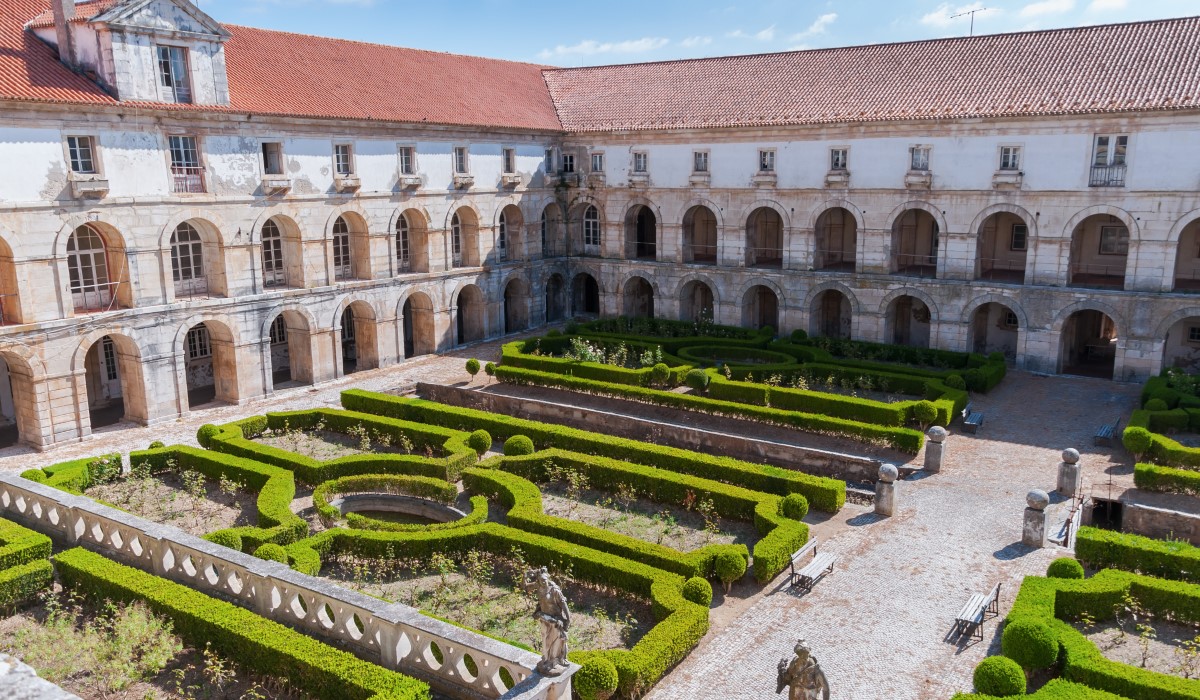
If your memorable day belongs in Lisbon rather than on the road, make the Jerónimos Monastery in Belém its anchor. Construction began in 1501 under Manuel I, and its Manueline architecture turns ropes, foliage, and maritime imagery into a richly textured stone language. The church contains the tombs of Vasco da Gama and the poet Luís de Camões, although both commemorative tombs were installed centuries after their deaths. The cloister rewards slow looking: what seems symmetrical at first becomes a succession of different faces, creatures, and carved details.
This is also a place to consider the costs behind the splendor. Portugal’s oceanic expansion brought trade and cultural exchange, but also conquest, exploitation, and enslavement. That fuller history gives the architecture greater meaning. Afterward, walk to Pastéis de Belém, whose business dates to 1837, for its custard pastries served with optional cinnamon and sugar. English is commonly spoken in this visitor-focused neighborhood, which makes lunch and practical questions straightforward. Check current church and cloister access separately, since worship, ticketing arrangements, and queues can affect the sequence of your visit. Keep the afternoon nearby rather than crossing Lisbon repeatedly.
Browse our travel inspiration for ideas, or tell us what kind of day you have in mind.
4. Tomar’s Convent of Christ, where the Templars left their mark
Although named a convent, Tomar’s Convent of Christ belongs firmly on a monastery-minded itinerary. The complex grew around a Templar stronghold founded in 1160 and later became the headquarters of the Order of Christ, which inherited much of the Portuguese Templars’ property after their suppression. Its extraordinary centerpiece is the Charola, a polygonal oratory inspired by holy sites in Jerusalem. Later paintings and sculptural decoration give it a layered richness, while the surrounding complex records centuries of changing religious life and royal ambition.
Outside, find the celebrated chapter house window, commissioned during Manuel I’s reign and associated with the architect Diogo de Arruda. Its carved ropes, vegetation, and maritime forms make an absorbing puzzle for adults and children alike. Tomar deserves its own day from Lisbon rather than being squeezed behind Alcobaça and Batalha. After the hilltop visit, descend into town for lunch and a walk beside the Nabão River. Try fatias de Tomar, an egg-based sweet cooked in a special vessel and soaked in syrup. Uneven surfaces and the extensive site make comfortable shoes and a deliberately modest afternoon sensible companions.
5. Tibães, where a quieter monastery reveals everyday life
Near Braga, the Monastery of São Martinho de Tibães offers a northern alternative to Portugal’s best-known monuments. It became the motherhouse of the Portuguese Benedictine congregation in 1567, and much of the surviving complex reflects major rebuilding during the seventeenth and eighteenth centuries. The church’s gilded carving supplies the visual drama, but the wider monastic setting brings daily life into focus. Rooms, passageways, and the enclosed grounds suggest an institution that needed food, water, work, and administration as surely as prayer.
Build the day around Tibães and Braga rather than a long checklist of northern landmarks. In Braga, bacalhau à Braga, commonly served with fried potatoes and an onion-based topping, makes a fitting lunch; a glass of Vinho Verde connects the table to the surrounding wine region. For travelers comparing Portugal with France or Italy, the attraction here is not a blanket promise of lower costs, but the richness of a day with little distance between its pleasures. Check current opening hours and grounds access before setting out. Then leave some time unclaimed: the monastery you remember best may be the one where you finally stopped watching the clock.
Plan your own day
Share your dates, group size and interests, and we will suggest a tailored plan with a local driver/guide.