Spend a day climbing through Coimbra’s university history, from a royal courtyard and a remarkable library to student songs and convent sweets. Along the way, the city reveals how seven centuries of learning have shaped its streets.
Morning Above the Mondego
Begin with the river below you. From the upper town, the Mondego draws a broad curve through Coimbra, with bridges connecting the old city to the lower ground on its western bank. Rooftops gather down the hillside, and somewhere among them a café is setting out its first cups. This is a city best approached with curiosity rather than a checklist: its greatest monument is still a working university, and its history keeps spilling into ordinary life.
For a day with Portugal Magik, arriving in a Mercedes-Benz vehicle gives you a comfortable beginning before exploring on foot. A local driver/guide can shape the day around the guests, allowing more time for architecture, quieter breaks or a gentler approach to Coimbra’s steep streets. Start high, near the university, while your attention is fresh. The walk downhill later will carry you from royal rooms and scholarly traditions into the city’s shops, churches and lunch tables.
A University That Moved Before It Settled
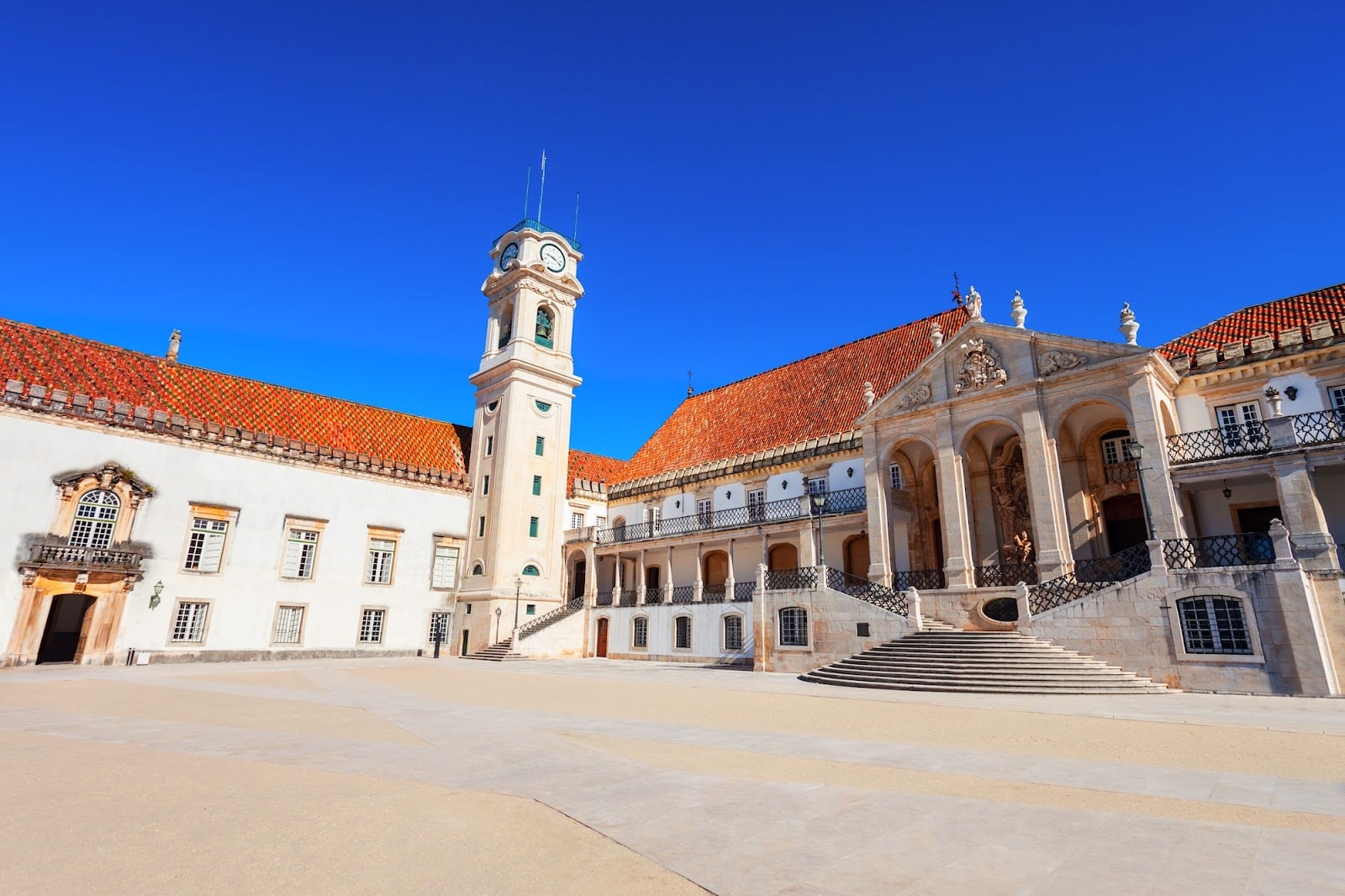
Enter the Paço das Escolas through the Porta Férrea, the Iron Gate, and pause in the courtyard. The university tower rises above the surrounding buildings, while the open side looks toward the river. Students may cross this grand setting with bags over their shoulders, apparently unmoved by the view. That contrast is part of Coimbra’s appeal: a place visitors come to admire is also somewhere people hurry to lectures.
King Dinis founded the university in 1290, initially in Lisbon. It moved between Lisbon and Coimbra several times before King João III established it permanently in Coimbra in 1537. The buildings here had been a royal palace, so learning took possession of rooms already charged with political history. In the Sala dos Capelos, the former throne room became the setting for major academic ceremonies, including doctoral proceedings. Portraits of Portuguese kings reinforce that overlapping story of crown and scholarship. In 2013, UNESCO inscribed the University of Coimbra, Alta and Sofia on its World Heritage List, recognizing a university landscape extending well beyond this courtyard.
The Library and the Life Behind Its Doors
The Biblioteca Joanina is the day’s moment of theatrical surprise. Commissioned under King João V and built between 1717 and 1728, its principal floor brings together gilded woodwork, painted ceilings and towering shelves. The richness has a purpose beyond decoration: it presents knowledge as something worthy of royal patronage and architectural ceremony. Look upward, then closer, letting the room’s scale give way to the individual bindings.
Its most unexpected residents are bats, which help control insects that could damage the books. Protective coverings are placed over the historic tables at night. It is a wonderfully practical detail inside such a splendid room, a reminder that preserving a library involves patient daily work as well as admiration. Visitor entry follows timed arrangements, so book the appropriate university visit ahead and check the current rules, including photography restrictions.
If your ticket and opening arrangements allow, continue to the Chapel of São Miguel. Its tiles and elaborate organ offer another expression of university life, when worship, ceremony and study occupied neighboring rooms. Give these interiors time rather than trying to collect them quickly.
Browse our travel inspiration for ideas, or tell us what kind of day you have in mind.
Downhill to Stone Walls and a Proper Lunch
Leave the university precinct and descend toward the Sé Velha, Coimbra’s old cathedral. Consecrated in the late twelfth century, this Romanesque church looks almost defensive, with heavy walls and battlemented edges. Around it, the lanes narrow and turn, breaking the monumental scale of the morning into doorways, steps and small squares. Shoes with reliable grip matter here, especially when the paving is wet.
Lunch belongs to this change of pace. Look for chanfana, a regional dish of goat slowly cooked with red wine, traditionally in an earthenware vessel. Closely associated with communities around Coimbra, including Miranda do Corvo and Vila Nova de Poiares, it brings the surrounding countryside to the city table. It is substantial food, suited to an unhurried pause after a morning on the hill.
For something sweet, seek out a pastel de Santa Clara, made with an egg yolk and almond filling inside pastry. Coimbra’s convent traditions survive particularly well at the bakery counter. Choose one with an espresso, and leave room in the afternoon for another small discovery.
Kings, Students and Songs in the Lower Town
Continue through the Arco de Almedina, part of the medieval city’s defenses, toward the commercial streets of the Baixa. On Rua Ferreira Borges, the atmosphere shifts again: shop windows, passing conversations and the business of a living town replace the university courtyard’s formal spaces. Follow the streets to Praça 8 de Maio and the Church of Santa Cruz.
Founded in the twelfth century as part of a monastery, Santa Cruz holds the tombs of Portugal’s first two kings, Afonso Henriques and Sancho I. Their presence gives the afternoon a useful perspective. Coimbra was a royal center before it became permanently identified with the university; the city’s importance did not begin with its students.
Yet the students supplied one of its most distinctive voices. Coimbra’s song tradition is closely associated with university culture, male singers and the Portuguese guitar. If a public performance fits the day’s schedule, listen for its serenading character. It is not simply Lisbon’s fado transplanted north, but a tradition with its own repertoire and academic associations.
An Evening View Back Up the Hill
Finish beside the Mondego in Parque Verde, where the city finally gives your legs a level path. From the river, look back toward the university buildings above the roofs. You can now place the courtyard, imagine the library behind its walls and understand how much of Coimbra’s daily movement runs between the hill and the lower town.
The day’s lasting impression may be smaller than its monuments: the worn stone beneath the Iron Gate, an almond-sweet mouthful after lunch, or a student’s hurried footsteps across a royal courtyard. Coimbra rewards this kind of attention. Its university history is not sealed away in one magnificent building. It continues through streets where people study, eat, sing and make their way home.
Plan your own day
Share your dates, group size and interests, and we will suggest a tailored plan with a local driver/guide.