From a morning coffee in Lisbon to a paper-covered lunch table in Setúbal, six gentle days follow the pleasures of the Portuguese capital and the peninsula across the river. At their heart is a day of market voices, limestone hills and sea air in Arrábida.
Day 1: Lisbon, with time to find your feet
The coffee arrives before you have quite settled into your chair. Beyond the café doorway, someone is pulling a shopping trolley over Lisbon’s uneven paving, its wheels keeping a small, determined rhythm. This is a good way to begin six days in Portugal: not with a ticket in your hand, but with a warm cup and time to notice where you are.
Start in Alfama, choosing a short walk rather than trying to master every steep lane. The old quarter grew below the hilltop fortifications, and its narrow streets still reward wandering without much purpose. A doorway framed in tiles, washing above a staircase, the sudden appearance of the Tagus between buildings: these are enough for a first morning.
Later, make your way to Praça do Comércio, the great riverside square shaped by Lisbon’s rebuilding after the 1755 earthquake. Lunch might be bacalhau à brás, shredded salt cod folded through eggs and fine potato strips. Leave the afternoon free for a rest or another coffee. Tonight, sleep in Lisbon, with no need to have understood the whole city.
Day 2: Belém and the pleasure of staying awhile
Keep a second night in Lisbon and spend the morning in Belém. The river feels broader here, and there is room to slow your stride. Admire the exterior of Jerónimos Monastery, commissioned under King Manuel I in the early sixteenth century. Its carved stonework belongs to an age when maritime trade was transforming Portugal, bringing wealth alongside the violence and exploitation of imperial expansion.
Continue towards the waterfront to admire Belém Tower from outside. Built as part of the Tagus defences, it looks almost delicate from a distance, though its original purpose was thoroughly practical. There is no need to turn either landmark into a long appointment. Looking carefully can be its own satisfying way of spending a morning.
Pause for a pastel de nata, ideally still warm, with cinnamon if you like it. Then let the day loosen. Return to central Lisbon for lunch and an afternoon of your own choosing, perhaps browsing a bookshop or sitting beside the river. With Portugal Magik, a private driver/guide handles the roads and pacing in a Mercedes-Benz vehicle, and the plan can be reshaped around the guests’ own ideas.
Day 3: Azeitão, where the peninsula begins to taste different
Leave Lisbon after breakfast and cross the Tagus towards Azeitão, a journey that usually takes around an hour, depending on traffic. The change is gradual: city edges give way to vineyards, village houses and the hills of Arrábida. In Vila Nogueira de Azeitão, walk a little before deciding where to sit. This is a day for discovering that a small place can comfortably fill a morning.
A tasting at José Maria da Fonseca, subject to availability, introduces one of the peninsula’s best-known wine traditions. The company dates to 1834, and Moscatel de Setúbal is central to its story. Made from the aromatic Muscat grape and fortified during production, the wine often carries flavours of orange peel and dried fruit. One tasting is plenty.
At lunch, look for Queijo de Azeitão, the soft sheep’s milk cheese traditionally made using cardoon thistle as a coagulant. Afterwards, leave time for a café or a quiet village stroll before the short drive to Setúbal. Spend the night there, close to the waterfront and tomorrow’s market morning.
Your trip, your way
Tell us your ideas, we add ours
Share your dates, who is travelling and what you would love to see. We will match it with what we know works well on the road and send you a tailored private proposal.
Day 4: The Setúbal morning that stays with you
This is the day I would leave the most room around. Begin at Mercado do Livramento on a trading morning, remembering that it normally closes on Mondays. Its blue and white tile panels deserve a look, but the fish counters are the real draw. Silver skins catch the light. A vendor lifts a fish to show a customer, then returns to a conversation that plainly began long before you arrived.
Setúbal’s working relationship with the water is older and more interesting than a postcard suggests. Fishing and fish canning helped shape the city, and that history still feels close at the market. You need not identify every species. Watch how people choose, ask a question when the counter is quiet, and leave plenty of space for the regular shopping to continue.
Lunch belongs to choco frito, Setúbal’s much-loved fried cuttlefish, usually served in strips with chips and lemon. At a simple table, with a squeeze of citrus and a cold drink, the morning finds its natural conclusion. There is nothing elaborate about it. That is part of the pleasure.
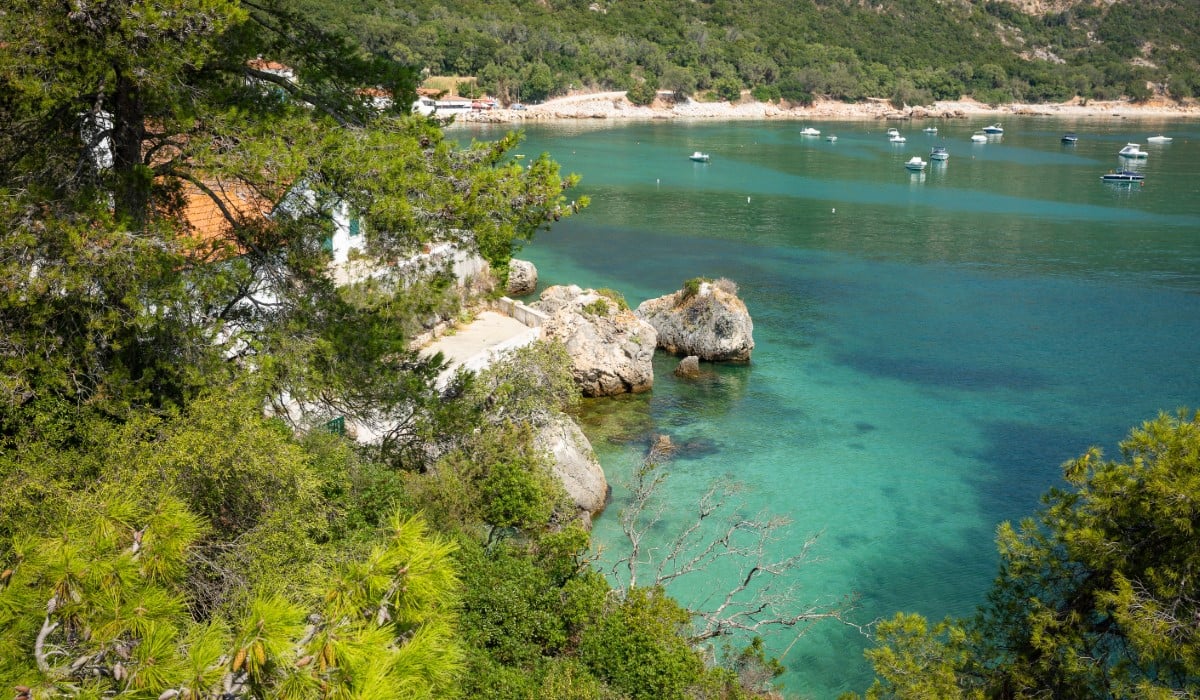
In the afternoon, drive into Arrábida Natural Park for a viewpoint above the coast. Limestone slopes carry Mediterranean vegetation down towards remarkably clear water. Choose an accessible stopping place according to current road conditions, since summer traffic restrictions affect some coastal roads. Then stop trying to improve the day. Look out, sit awhile, and return to Setúbal with free time before dinner. Sleep here again; the bags can stay exactly where they are.
Our bestseller
Golden Portugal Unveiled, 10 days
Lisbon, Sintra, Evora, Porto and the Douro Valley with a private driver/guide, at an easy pace.
Day 5: Sesimbra and the wind at Cabo Espichel
After breakfast, take the road towards Sesimbra, allowing roughly an hour rather than treating the drive as a race. The town still has a working fishing harbour, while its sheltered bay gives visitors an easy place to walk beside the sand. Spend the morning along the waterfront, then choose grilled fish for lunch, asking what is available that day rather than arriving with a fixed order in mind.
Leave a generous stretch of free time afterwards. A beach walk, shoes in hand, is an entirely respectable afternoon plan. So is sitting beneath an umbrella and finishing the chapter you began on the flight. There is no obligation to swim, especially outside the warmer months.
Later, if the weather is kind, drive out to Cabo Espichel. The sanctuary of Nossa Senhora do Cabo stands above the Atlantic beside long rows of former pilgrims’ lodgings. Its broad courtyard feels very different from the enclosed streets of Lisbon. Bring a layer for the wind and keep to established paths away from the cliff edges. Return to Sesimbra for the night, with dinner left pleasantly undecided.
Day 6: Palmela, then Lisbon once more
Turn inland this morning towards Palmela, roughly forty minutes from Sesimbra. Its castle occupies a commanding hilltop, with views across the peninsula and towards the Sado estuary when the air is clear. The fortress has layers of Islamic and Christian history, and Palmela later became an important seat of the Order of Santiago. A gentle circuit of the accessible grounds gives the landscape some welcome context.
Have lunch in town before returning to Lisbon. A glass of red made from Castelão, a grape closely associated with the sandy soils around Palmela, makes a fitting final taste of the peninsula. There is time to linger over the meal; the drive back to Lisbon is generally around an hour, traffic permitting.
Spend your final night in Lisbon and keep the remaining afternoon free. By now, you may know exactly which café you want to return to. Six days have offered famous monuments, certainly, but perhaps the memory that comes home is smaller: lemon on cuttlefish, a market conversation, or that quiet pause above the Arrábida sea.
Shape it around you
Every trip on this page is a starting point. Tell us how many days you have, the places you keep thinking about and the pace that suits you, and we will put our ideas next to yours and send a tailored proposal with a private driver/guide.
Tailored proposal
Plan your days in Portugal
Free, no commitment. A real person on our team reads every request.
See the 10-day bestseller trip