Beyond Portugal’s headline sights, small towns offer riverbank lunches, painted churches and histories that unfold on foot. Each of these places can anchor one memorable day, without pretending that everyday Portuguese life has stood still.
1. Constância, where the day begins between two rivers
Begin where the Zêzere meets the Tagus, with a coffee before you climb into Constância’s whitewashed streets. The town’s setting explains much of its history: river transport once connected this inland community to wider markets. Its association with Luís de Camões is more elusive. Local tradition places the poet here, but that story deserves to be told as tradition rather than settled biography. The Jardim-Horto de Camões gives the connection a physical form, with plants associated with his life and writing. For Americans accustomed to European sightseeing measured in admission slots, the pleasure is having room to follow a story rather than a schedule.
Let lunch belong to the region: look for freshwater fish when available, or a hearty meat dish from the Ribatejo kitchen. Nearby Almourol Castle rises from an island in the Tagus and makes a natural companion, though reaching it depends on operating conditions and boat access. You need not make the crossing for the riverside view to be worthwhile. This is one possible day, not the first stop in a race through all five towns: water, poetry, lunch and perhaps a castle.
2. Sardoal, where a church changes the morning
Sardoal rewards the traveler who opens a modest church door rather than searching only for monumental façades. Its parish church holds seven early-sixteenth-century panels attributed to the painter known as the Master of Sardoal. Their presence makes this small Ribatejo town a meaningful stop for anyone who has already admired the great collections of Madrid, Florence or Paris. Check visiting arrangements before building the morning around them. Outside, the experience returns to a smaller scale: sloping streets, white walls and the ordinary movement of a working town. What feels untouched is not isolation from modern life, but the absence of a visitor itinerary imposed on every corner.
At Easter, Sardoal’s traditions include chapels decorated with carpets of flowers and greenery, although access and dates require planning. At other times, leave space for a bakery stop and the surrounding countryside. Constância and Sardoal are close enough to pair without turning the day into a long transfer. A local driver/guide can shape the day around the guests, giving art lovers more church time or choosing shorter walks for a family traveling with grandparents. English is widely spoken in Portugal’s visitor-facing businesses, but it is less dependable in tiny establishments; a little Portuguese remains useful.
3. Dornes, where a strange tower watches the water
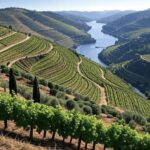
Approach Dornes through wooded country and the village appears on a small peninsula above the Zêzere. The broad water belongs to the Castelo de Bode reservoir, an important reminder that a scene can feel ancient while its landscape has changed substantially. Above it stands the unusual five-sided medieval tower associated with the Knights Templar. Beside the tower, the church of Nossa Senhora do Pranto keeps the village’s religious history close to its defensive one. Rather than promising a place untouched by time, Dornes offers something more interesting: several centuries visible together, with the reservoir adding its own chapter.
Make this a day of looking closely. Walk toward the church, pause over the water, then settle into a lunch that does not have to be squeezed between appointments. In the Ferreira do Zêzere area, menus may include river fish or roast kid, depending on the restaurant and season. Reserve ahead rather than assuming a small village will have plentiful tables. Steep lanes and uneven paving also deserve consideration, particularly for retirees with mobility concerns. Comfortable pacing here means selecting the worthwhile climb, not insisting on every climb. The afternoon can be as simple as another waterside viewpoint before returning to your base.
Browse our travel inspiration for ideas, or tell us what kind of day you have in mind.
4. Alvito, where the Alentejo hides detail in plain sight
Alvito does not announce itself with the scale of Évora. Instead, it invites a closer look at doorways, windows and the castle overlooking its central square. Completed around the end of the fifteenth century, the castle combines defensive forms with the character of a noble residence; today it houses a pousada. The town also preserves Manueline architectural details, reminders that Portugal’s age of maritime expansion left traces far beyond its ports. Arrive in the morning, before the strongest heat, and allow the streets to supply the rhythm. A shaded pause can be as valuable as another photograph.
Lunch gives this day its center of gravity. Seek Alentejo dishes such as açorda, the bread-based preparation scented with garlic and coriander, or pork served with migas. Pair them with an Alentejo wine if you wish, especially when nobody in your party needs to drive. Americans comparing Portugal with France, Italy or Spain may find appealing value in regional restaurants, but the country is not uniformly cheaper: location, wine choices and season matter. Alvito’s attraction is less a promise of savings than the chance to spend well on a satisfying meal, then step back into a town that has not arranged every street around tourism.
5. Belmonte, where the most memorable story is human
In Belmonte, build the day around listening. The town is associated with Pedro Álvares Cabral, whose expedition reached Brazil in 1500, but its Jewish history deserves equal attention. A community maintained Jewish practices in secrecy across generations of persecution and religious pressure. The Jewish Museum provides context, while the modern Bet Eliahu synagogue represents a living community rather than merely a historical exhibit. Check opening arrangements and respect the distinction between visiting a museum and entering a place of worship. The castle and views toward the Serra da Estrela add another layer, but they need not crowd out the human story.
At lunch, look for regional lamb or kid dishes and taste Queijo Serra da Estrela, the sheep’s milk cheese made using cardoon thistle. With Portugal Magik, travel between your base and these smaller places takes place in a Mercedes-Benz vehicle, leaving narrow approaches and parking to someone else. Choose the town that speaks to you, rather than collecting all five. The day worth remembering may end with nothing more elaborate than a shared piece of cheese and a story you had never heard.
Plan your own day
Share your dates, group size and interests, and we will suggest a tailored plan with a local driver/guide.