A second visit to Portugal often trades the checklist for a day worth lingering over. Between Setubal, the Arrabida hills and Azeitao, familiar comforts make room for new stories.
1. The next discovery can be close to somewhere you already know
A first Portugal trip might revolve around Lisbon’s yellow trams, Sintra’s palaces and Porto’s riverside. On the second, the interesting question becomes smaller: what lies beyond the places you already loved? Begin in Lisbon and head south toward Setúbal, a working port on the Sado estuary. In ordinary traffic, the drive takes roughly an hour, although the bridge crossings can slow things down.
For Americans accustomed to covering considerable distances between sights, that proximity changes the mood. There is no airport morning, no repacking and no need to change hotels. One day can hold a fish market, a seafood lunch, a mountain landscape and a wine cellar, with time to notice what connects them.
2. Everyday places offer stories the first itinerary missed
Make the Mercado do Livramento the morning’s first substantial stop, checking its opening days before setting out. Setúbal’s celebrated covered market occupies a building opened in 1930. Its blue and white tile panels depict local work and daily life, while the counters below bring the fishing port’s present into view.
The reward is not simply a photograph of handsome produce. It is seeing how much variety sits behind the phrase Portuguese seafood: cuttlefish, octopus, sardines in season and fish that rarely appear on an American supermarket counter. This is a place to browse considerately while people shop. On a return visit, ordinary commerce can feel more revealing than another monumental entrance hall.
3. Familiar hospitality makes a new town easier to explore
From the market, continue toward Praça de Bocage, named for the poet Manuel Maria Barbosa du Bocage, who was born in Setúbal in 1765. His statue stands above a square of café tables and pedestrian movement. Order a coffee, look toward the church of São Julião and give the city a few unstructured minutes.
English is widely spoken in Portugal’s visitor-facing businesses, particularly around Lisbon, though it is not universal at individual market stalls. A greeting in Portuguese remains welcome. For returning Americans, that balance of accessibility and difference is appealing. Normal precautions still matter, especially around valuables, but a central square and a straightforward café stop make an unfamiliar town feel approachable without removing its personality.
Browse our travel inspiration for ideas, or tell us what kind of day you have in mind.
4. Lunch has a local identity, not just a good view
Stay in Setúbal for choco frito, the city’s signature fried cuttlefish, generally served in strips with fries and lemon. Cuttlefish is not squid, although the resemblance is understandable at first glance. Here, it is an excellent reason to sit down rather than treat lunch as something squeezed between visits.
Americans who already know the restaurant rituals of France, Italy or Spain may appreciate how satisfying a Portuguese meal can be without a tasting menu or elaborate setting. Value is not a promise that every bill will be lower. It is the possibility of spending on fresh ingredients, regional character and time at the table. Check whether bread, olives or cheese placed on the table are charged separately before accepting them.
5. The landscape changes before the day becomes tiring
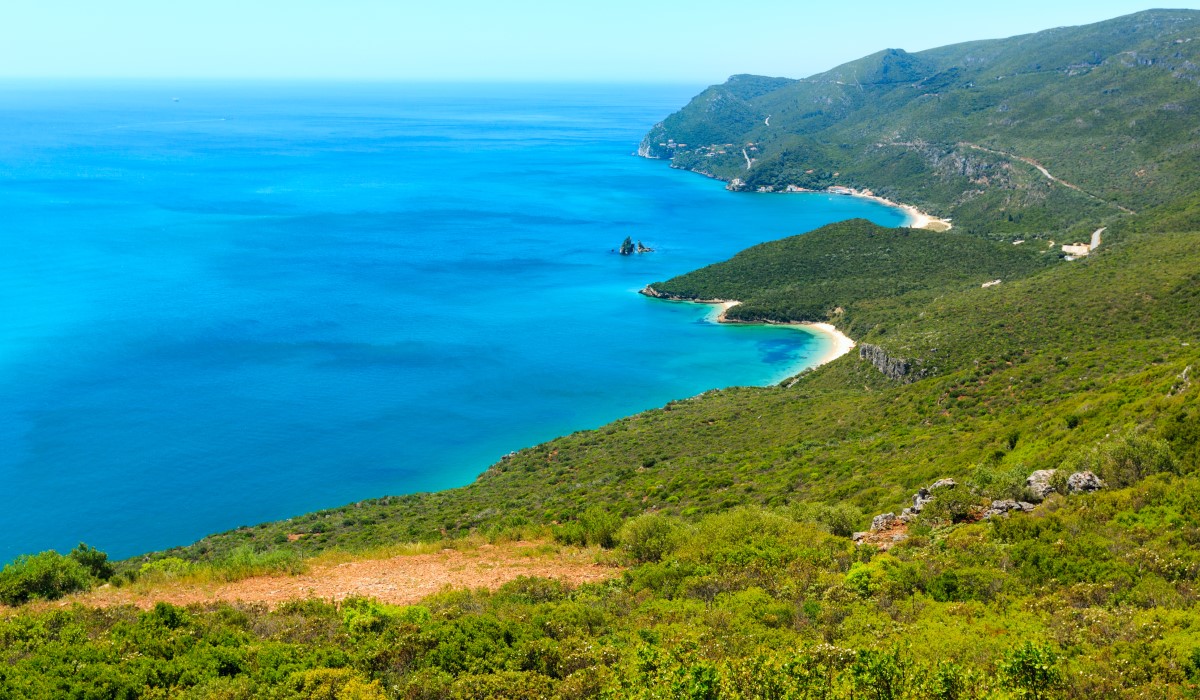
After lunch, leave the port behind for the Serra da Arrábida. The limestone hills shelter Mediterranean vegetation above pale beaches and blue-green water. The contrast with Setúbal is striking precisely because it does not require a long cross-country journey. When conditions and access allow, a viewpoint stop provides the afternoon’s most expansive moment.
This is also where thoughtful planning matters. Roads are winding, and seasonal restrictions can affect vehicle access to the beaches. A scenic afternoon need not include a descent to the sand, much less a demanding walk. Couples, families and retirees can enjoy the same landscape differently, whether that means a short stroll, photographs from an accessible stopping place or simply sitting with the view.
6. Nobody has to spend the afternoon being the driver
A beautiful road is not always relaxing from behind the wheel. Around Arrábida, bends, parking decisions and unfamiliar restrictions can divide a couple’s attention between scenery and navigation. After lunch, and before a wine tasting, the appeal of leaving those responsibilities to someone else becomes especially clear.
With Portugal Magik, a local driver/guide can shape the day around the guests, using a Mercedes-Benz vehicle for the journeys between stops. That might mean less walking for a parent, longer at the market for an enthusiastic eater or skipping an extra stop altogether. The advantage is comfortable private pacing, not collecting the greatest possible number of attractions before returning to Lisbon.
7. Wine becomes a story attached to a real place
Continue to Vila Nogueira de Azeitão for a prebooked cellar visit. José Maria da Fonseca, founded in 1834, has its historic house museum here. Its story connects the village to two important Portuguese wine names: Periquita and Moscatel de Setúbal. Confirm the available visit and tasting arrangements when booking.
Moscatel de Setúbal is a fortified wine associated with the Setúbal Peninsula, often offering orange peel, dried fruit and nutty notes, particularly with age. Tasting it where its history unfolds gives the name a foothold in memory. For Americans who have toured Bordeaux or Tuscany, Portugal offers a different vocabulary, rooted in its own grapes and traditions rather than an imitation of another wine country.
8. Small pleasures leave something unfinished in the best way
Before leaving Azeitão, look for tortas de Azeitão, small rolled egg-rich cakes with cinnamon. The village also gives its name to Queijo de Azeitão, the protected-origin sheep’s milk cheese made with cardoon as the coagulant. These are distinct local specialties, not interchangeable souvenirs. Choose a pastry for the afternoon or taste the cheese if appetite allows.
On the return to Lisbon, the day’s strongest memory may be neither the widest view nor the oldest cellar. It may be the cuttlefish at lunch, a tiled market wall or the freedom to linger over coffee. That is a persuasive reason to plan Portugal again: the second trip does not need to outdo the first. It can simply bring you closer.
Plan your own day
Share your dates, group size and interests, and we will suggest a tailored plan with a local driver/guide.