From Lisbon pastry counters to a lingering lunch in Monsaraz, this gentle week leaves room for a couple to celebrate in their own way. The occasion matters, but so do the ordinary hours you finally have time to share.
Day 1: A first evening in Lisbon
The first toast need not wait for dinner. It might happen at a pavement table in Lisbon, with two glasses of Portuguese white wine and the afternoon still warm on the stone. A wedding anniversary, a birthday, a retirement, or something only the two of you understand: bring the occasion, but leave room for Portugal to suggest how to mark it. This week moves from the capital to Sintra and Cascais, then inland to Évora, with one particularly lovely day in Monsaraz.
Begin at Praça do Comércio, where the open square meets the Tagus. The royal palace stood here before the earthquake of 1755; today, the generous space feels like permission to slow down. Share some bread and queijo de Azeitão, a soft sheep’s milk cheese, before taking an unhurried riverside walk. Portugal Magik’s private driver/guide handles the roads and pacing in a Mercedes-Benz vehicle, with every plan open to reshaping around your own ideas. Leave the evening free and sleep in Lisbon.
Day 2: Sintra, with time beyond the palace
After breakfast, the drive to Sintra usually takes around forty minutes to an hour, depending on traffic. Stay here tonight rather than treating the town as a hurried excursion. The wooded hills change the mood immediately. At Pena Palace, yellow and red walls rise above the trees, the nineteenth-century imagination of King Ferdinand II built around the remains of an older monastery. Give the palace its proper share of the day, allowing for timed entry and the uphill approach rather than squeezing it between other monuments.
Then come back down to Sintra’s historic centre for something smaller: a travesseiro, the flaky pastry filled with an almond and egg cream mixture. It is difficult to eat neatly, which is part of its appeal. The afternoon belongs to you. Browse a shop, sit over coffee, or return to your room before dinner. With no second palace on the schedule, there is time to notice the damp scent of the trees and the chimneys above the roofs. Overnight in Sintra.
Day 3: A sea-facing pause in Cascais
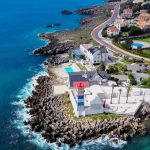
It is a short journey to Cascais, generally around forty minutes by road. This old fishing village grew into a fashionable seaside retreat after the Portuguese royal family began spending summers here in the nineteenth century. You can still find its earlier character around Praia dos Pescadores, where the small beach sits below the town and fishing boats bring working life into the postcard view.
Make this a day with very little to accomplish. Walk through the old centre, then choose a table for grilled fish, boiled potatoes and a salad dressed with olive oil. Ask what is fresh rather than deciding before you arrive. Afterwards, there is free time for a beach walk, reading, or simply watching people cross the square. If the celebration deserves a longer dinner tonight, you have left yourselves the energy for it. Sleep in Cascais, with tomorrow’s inland journey waiting until after breakfast.
Your trip, your way
Tell us your ideas, we add ours
Share your dates, who is travelling and what you would love to see. We will match it with what we know works well on the road and send you a tailored private proposal.
Day 4: Across the river country to Evora
Allow roughly two hours for the drive from Cascais to Évora, with traffic sometimes adding a little more. The coastline falls away and the landscape opens into cork oaks, pasture and long stretches of sky. There is no need to add a sightseeing stop. Arriving with an appetite and an afternoon ahead is enough.
Begin with Évora’s Roman Temple, whose surviving columns stand beside much later buildings. It dates from the first century AD, though the familiar association with Diana is not supported by the historical evidence. From here, wander into the old streets without trying to cover the whole city. Lunch might be açorda alentejana, a bread-based dish scented with coriander and garlic, often served with an egg. It makes good sense in a region where bread has always mattered. Leave the late afternoon free for a rest or another short walk. Évora is your overnight base for the next three nights, so you can unpack properly.
Day 5: The day you may remember in Monsaraz
This is the day I would keep for the heart of the celebration. Monsaraz is about an hour from Évora, across country that encourages quiet conversation. Arrive in the morning and walk into the walled village, where whitewashed houses line uneven stone streets. At the castle, the view opens over the Alqueva reservoir. The water looks timeless from up here, but it belongs to a modern chapter: the dam’s gates closed in 2002, transforming this part of the Guadiana landscape.
Stay a while at the walls. Below are olive groves, pale tracks and water folding around the hills. Monsaraz passed into Portuguese hands during the medieval struggles for territory, and its position near Spain helps explain those sturdy defences. Yet the detail you remember may be much smaller: a cat asleep against a doorway, or the sound of plates being set out for lunch.
Choose a village restaurant and let lunch be the occasion. Share some Alentejo sheep’s milk cheese, then perhaps slow-cooked lamb with bread, in the regional style of ensopado de borrego, if it is on the menu. A glass of Alentejo red is plenty of ceremony. Keep time afterwards entirely free, with no winery appointment pulling you away. Walk another lane, find a bench, take the photograph you will actually print. Return to Évora for the night.
Our bestseller
Golden Portugal Unveiled, 10 days
Lisbon, Sintra, Evora, Porto and the Douro Valley with a private driver/guide, at an easy pace.
Day 6: An ordinary morning, gladly kept
After yesterday, stay close to home. Évora rewards a second morning, when you recognise a turning and have a favourite coffee counter. Visit the cathedral, begun in the late twelfth century, for a different sense of the city’s long history. Its solid granite presence is a striking contrast to the whitewashed houses around it.
Later, settle around Praça do Giraldo, named for Geraldo Sem Pavor, associated with the Christian capture of Évora in 1165. There is everyday life here as well as history: conversations beneath the arcades, shopping bags, cups arriving on saucers. Try a slice of sericaia, the Alentejo egg sweet often served with a preserved Elvas plum. Keep the rest of the day free for browsing, resting or returning to somewhere you liked. No road journey is needed today. Spend your final night in Évora over a simple dinner, perhaps agreeing that a celebration can stretch comfortably across several days.
Day 7: Back to Lisbon, without a rush
Return to Lisbon in around an hour and a half, allowing longer when traffic is busy. Make Belém your gentle final chapter. Admire the exterior of Jerónimos Monastery, commissioned under Manuel I in the early sixteenth century, and look at the carved stonework before moving on. There is no need to make the last day a test of stamina.
A warm custard tart from Pastéis de Belém provides a fitting last food memory. The business began selling its pastries in 1837, and the pleasure remains wonderfully straightforward: crisp pastry, soft custard, perhaps a little cinnamon. Leave the afternoon free and stay overnight in Lisbon before onward travel. By now, the special occasion has acquired its own geography: a square by the Tagus, a pastry in Sintra, a table in Monsaraz. You came to celebrate something. You leave with a week you shared.
Shape it around you
Every trip on this page is a starting point. Tell us how many days you have, the places you keep thinking about and the pace that suits you, and we will put our ideas next to yours and send a tailored proposal with a private driver/guide.
Tailored proposal
Plan your days in Portugal
Free, no commitment. A real person on our team reads every request.
See the 10-day bestseller trip