Cross the Alentejo from Roman columns to hilltop castles, with time for pottery workshops, generous lunches and the changing light. At the heart of these five days is an afternoon in Monsaraz, where the region’s history becomes wonderfully tangible.
Day 1: Arrival in Evora, Roman Columns and Cafe Tables
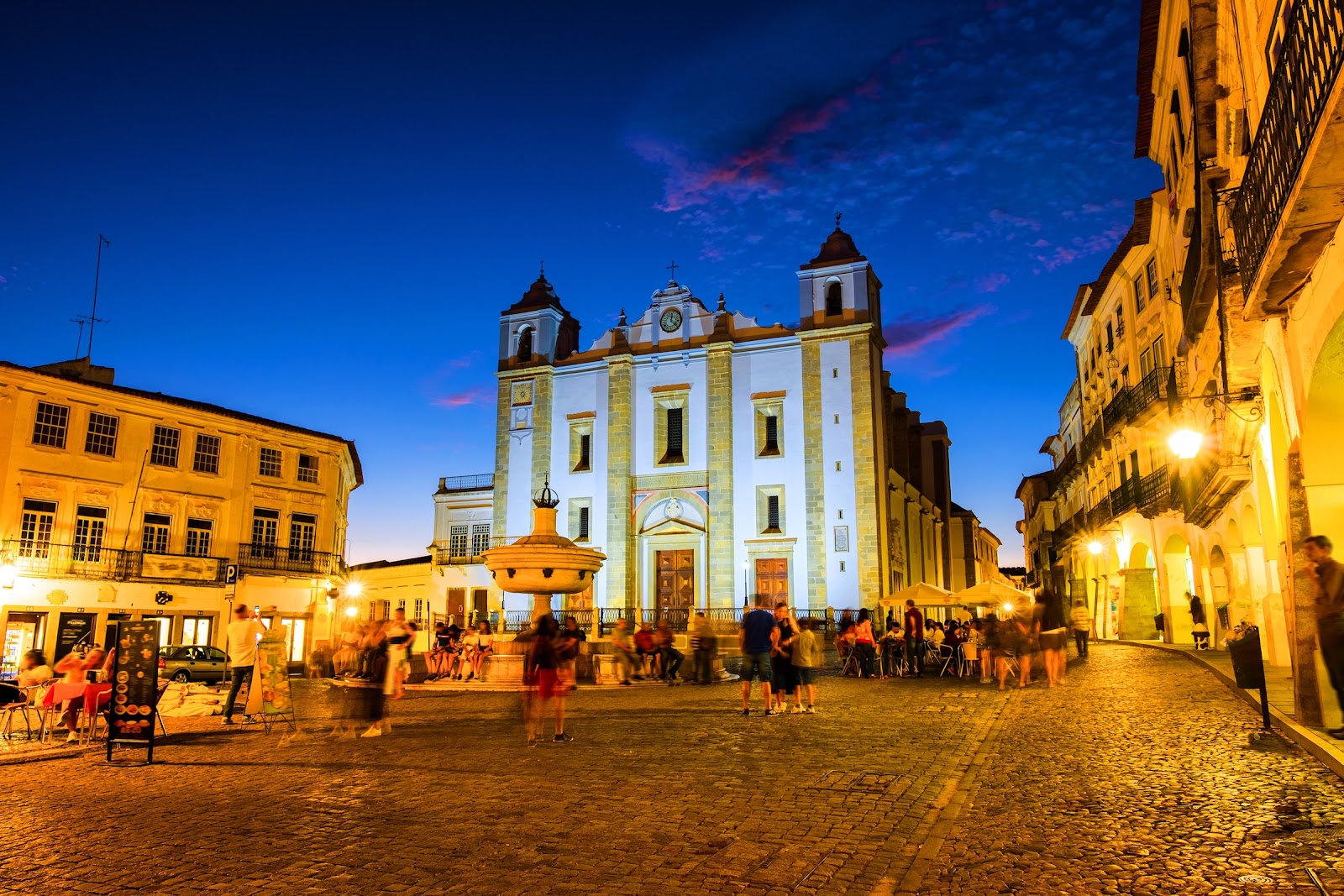
Begin in Évora, allowing the first afternoon to unfold on foot rather than treating this UNESCO World Heritage city as a collection of appointments: whitewashed lanes, granite doorways and small patches of shade make the approach to each monument part of the pleasure. Near the Roman Temple, pause long enough to distinguish the surviving Corinthian capitals against the sky; built in the first century AD, the monument is commonly associated with Diana, although that traditional name is not evidence of its original dedication. Continue to Praça do Giraldo, named for Geraldo the Fearless, who captured Évora from Muslim rule in 1165, and settle beneath the arcades for coffee while the square carries on with its ordinary errands and conversations. For your first lunch, choose açorda alentejana, the region’s bread-based preparation with garlic, coriander and olive oil, often served with a poached egg, and notice how ingredients that sound modest acquire character through good bread and generous seasoning. A Portugal Magik private driver/guide handles the driving in a Mercedes-Benz vehicle and can shape the day’s pacing around your arrival and interests, leaving the evening free for an unhurried dinner and an overnight stay in Évora.
Day 2: Evora, Cathedral Heights and a Thoughtful Lunch
Stay in Évora for a second day, beginning at the cathedral, whose fortress-like silhouette and pinkish granite give little away about the layers of Romanesque and Gothic architecture inside; construction began in the late twelfth century, following the city’s Christian conquest. If stairs suit you and access is available, the roof terrace offers a useful change of perspective, with the close weave of the old town giving way to a countryside that seems to begin almost at its edges. Later, visit the Chapel of Bones beside the Church of São Francisco, where human bones arranged by Franciscan friars in the seventeenth century turn a small room into a meditation on mortality rather than simply an unusual photograph. Let lunch restore the day’s earthly pleasures with slow-cooked lamb stew, ensopado de borrego, served over bread, and a glass of Alentejo red, perhaps a blend featuring Aragonez and Trincadeira, asking your server which local producer best matches the dish. Keep the remaining afternoon deliberately open for a bookshop, a second coffee or a quiet return to a street you liked yesterday, then spend another night in Évora rather than packing up just as the city begins to feel familiar.
Day 3: Sao Pedro do Corval and an Afternoon in Monsaraz
Leave Évora after breakfast for São Pedro do Corval, a village known for its concentration of pottery workshops, where shelves of painted bowls and sturdy earthenware dishes connect the landscape to the table more directly than any souvenir display could. In a workshop open to visitors, ask about the difference between decorative pieces and vessels intended for food, and, if someone is working at the wheel, give yourself time to watch a lump of clay become something useful under practiced hands. Continue to Monsaraz for the afternoon that anchors this itinerary: enter the walled village on foot, follow its uneven stone lanes uphill, and notice how white facades frame sudden glimpses of the Alqueva reservoir, a distinctly modern body of water beneath a medieval settlement. Over lunch, try migas, bread worked with garlic and fat into a substantial accompaniment often served with pork, then linger over the contrast outside the window, remembering that the reservoir transformed this landscape in the early twenty-first century while the village’s defensive position belongs to centuries of frontier conflict. Finish beside the castle as the light softens across the water, without trying to squeeze in another destination, and stay overnight in Monsaraz, where dinner and a short evening stroll provide a satisfying end to the day’s stories.
Browse our travel inspiration for ideas, or tell us what kind of day you have in mind.
Day 4: Vila Vicosa and the Road to Marvao
Today brings the longest move of the itinerary, from Monsaraz into the northern Alentejo, with a considered stop in Vila Viçosa rather than a string of brief detours that would leave little time to enjoy the destination. At the Ducal Palace, the long marble facade introduces the House of Braganza, whose duke became King João IV in 1640, restoring Portuguese independence after sixty years under the same monarchs as Spain; plan an interior visit around the published opening arrangements. The marble is more than a courtly flourish, since quarrying has shaped this area’s economy and appearance for centuries, and even an ordinary walk through town reveals how a material associated with monuments also belongs to everyday thresholds and street furniture. Choose lunch according to appetite, perhaps pork with clams, carne de porco à alentejana, with a local white wine, then let your private driver/guide adjust the onward journey and breaks to the group rather than turn the transfer into a race against a sightseeing list. Arrive in Marvão with time to settle before taking a gentle first walk inside the walls, saving the castle for tomorrow and spending the night in Marvão above the surrounding valleys.
Day 5: Marvao, Roman Ammaia and Castelo de Vide
Give Marvão’s castle the first part of the morning, when you can explore its courtyards and great cistern before deciding how much of the exposed wall walk feels comfortable; sturdy shoes matter here, and the views are impressive without pursuing every staircase. The village’s name recalls Ibn Marwan, the ninth-century rebel associated with this stronghold, while the defenses seen today reflect later medieval building campaigns and the enduring importance of watching the frontier with Spain. Descend to the Roman ruins of Ammaia, near São Salvador da Aramenha, for a revealing reversal of scale: after the compact hilltop fortress, excavated remains and museum finds suggest the civic life of a Roman town established down in the valley. Continue to Castelo de Vide for lunch and a stroll through its former Jewish quarter, whose surviving synagogue building houses a museum, pausing over regional sheep’s cheese and bread before a seasonal dish, perhaps one featuring the chestnuts grown around Marvão if your visit falls in autumn. Return to Marvão for your final overnight stay, leaving time before dinner to look back across the country you have crossed, from Évora’s urban history to Monsaraz’s waterside horizon and these cooler northern heights.
Plan your own day
Share your dates, group size and interests, and we will suggest a tailored plan with a local driver/guide.