Beyond Sintra’s palace gates, another day unfolds through a forest convent, sandy vineyards and a village facing the Atlantic. Follow it slowly, with time for a pastry, a fisherman’s lunch and the stories held in small places.
A morning that begins at the pastry counter
Begin in Sintra before the day becomes a discussion of tickets and towers. In the historic center, delivery vans edge through narrow streets, coffee cups settle onto saucers, and the wooded mountain rises behind the rooftops. The palaces are still there, of course. Today, though, leave them in the background. There is another Sintra to discover in the spaces between its famous sights, where religious devotion, stubborn farming and Atlantic weather have each left their mark.
At Casa Piriquita, founded in 1862, order a coffee and choose between two local loyalties. A queijada has a thin pastry shell and a sweet filling made with fresh cheese, sugar, eggs and cinnamon. A travesseiro is a pillow of puff pastry with an egg and almond filling, its surface scattered with sugar. Neither needs much ceremony. Stand for a moment, take the first bite while the coffee is hot, and let breakfast establish the day’s unhurried mood.
Portugal Magik’s Mercedes-Benz vehicles make a comfortable connection between the village, the wooded hills and the coast. A local driver/guide can shape the day around the guests, allowing more time for walking, a longer lunch or a wine visit arranged ahead. The pleasure is not in fitting everything in, but in giving a few places enough attention to become memories.
The convent that almost disappears into the woods
From the village, climb into the Serra de Sintra toward the Convento dos Capuchos. The road exchanges shopfronts for woodland, and the air can feel cooler almost immediately. Sintra’s Atlantic influence helps sustain this damp, green landscape, although a misty morning is a possibility rather than a promise. Bring a light layer, even when Lisbon has persuaded you that summer needs no sleeves.
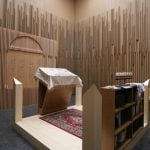
Founded in 1560 under the patronage of Álvaro de Castro, this Franciscan convent offers an extraordinary counterpoint to the area’s grand residences. Buildings fit around granite boulders rather than forcing the landscape aside. Cork lines doors and parts of the interior, providing insulation in the cold, damp setting. Low openings and tiny cells make the friars’ commitment to material simplicity physically understandable.
The community remained here until the dissolution of Portugal’s religious orders in 1834. Walk slowly through the spaces open to visitors, watching your footing on uneven stone and your head beneath low lintels. What stays with you may be neither a date nor a name, but the scale of a doorway. Here, architecture asks the visitor to bend, pause and notice how little room a life might occupy.
Colares and the vines beneath the sand
Descend toward Colares, where the mountain gives way to villages, orchards and the coastal plain. This is one of Portugal’s most distinctive wine landscapes, though its vineyards do not necessarily resemble the neat hillside rows travelers expect. In the traditional sandy plots, vines grow low, sheltered from Atlantic winds by barriers that may include reed fencing.
The sand is central to the story. Phylloxera, the pest that devastated European vineyards in the nineteenth century, struggles in sandy soils. Colares became known for vines grown on their own roots, with planting traditionally requiring deep excavation through the sand toward the underlying clay. Ramisco is the emblematic red grape of these sandy vineyards; Malvasia de Colares produces their characteristic white wines.
If wine belongs in your day, arrange a visit with Adega Regional de Colares, the cooperative founded in 1931. Confirm availability rather than assuming a tasting can happen on arrival. A glass becomes more interesting once you understand the labor behind it. Ramisco can be firm and tannic when young, rewarding patience in the cellar. There is something fitting about meeting it on a day devoted to looking beyond the obvious.
Browse our travel inspiration for ideas, or tell us what kind of day you have in mind.
Lunch with the Atlantic in view
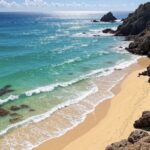
Continue to Praia das Maçãs for lunch near the ocean. Its name means Apple Beach, traditionally associated with apples carried downstream by the Ribeira de Colares. Today, the broad sweep of sand and the village streets make a welcome change from the enclosed world of the forest. On windy days, choose a table indoors and enjoy the view without having to hold down the menu.
Let the day’s catch guide the order. Grilled fish with boiled potatoes and vegetables needs little embellishment when carefully cooked. Another possibility is arroz de marisco, the brothy Portuguese seafood rice often brought to the table in a generous pot. Ask which dishes are intended for sharing and which fish are available that day. A long lunch here is not a pause in the itinerary. It is part of understanding the coast.
An afternoon above Azenhas do Mar
A short drive north brings you to Azenhas do Mar, where white houses descend a steep slope toward the Atlantic. The village’s name recalls watermills, a useful reminder that this much-photographed place had a working history before it became a favorite viewpoint. From the public lookout, the composition is immediately arresting: tiled roofs, pale walls, dark rock and the ocean pool below.
Give the view more than a photograph’s worth of time. Watch how the village follows the contours of the ground, then wander a little if the slopes and steps suit your mobility. The pool and small beach are exposed to tides and sea conditions, so treat them as scenery unless conditions clearly allow otherwise. Even from above, the movement of the water supplies all the drama the afternoon needs.
The last light at Cabo da Roca
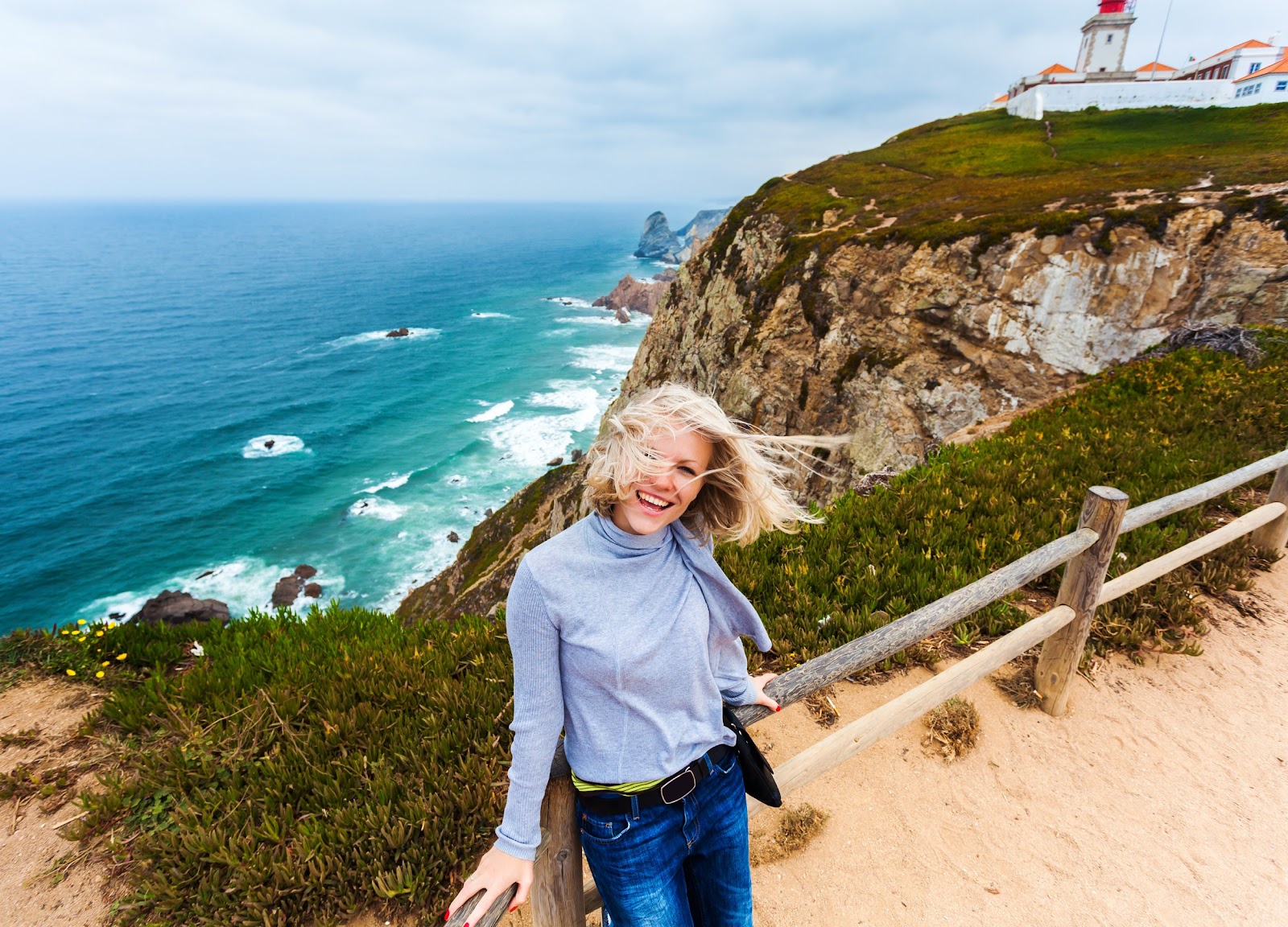
Finish at Cabo da Roca, the westernmost point of mainland continental Europe. A lighthouse stands above the cliffs, and the monument carries words by Luís de Camões describing the place where the land ends and the sea begins. After the convent’s intimate rooms and Colares’s patient agriculture, this open horizon feels enormous.
Stay on marked paths and behind barriers, especially when the wind rises. You do not need a perfect sunset for the stop to matter. Cloud, salt air and the sound of surf far below can be enough. On the return journey, the day’s strongest recollections may be surprisingly small: sugar on a sleeve, cork beneath your fingertips, the first taste of a wine grown in sand. Sintra has offered a whole day of stories without a palace doorway crossed.
Plan your own day
Share your dates, group size and interests, and we will suggest a tailored plan with a local driver/guide.