Follow Portugal north through tiled squares, a walled town, university courtyards and saltwater canals. This nine-day itinerary leaves room for the small encounters that endure, especially a Coimbra afternoon when the country’s history feels wonderfully close.
Day 1: Arrival in Lisbon, First Light on the Tagus
Begin in Lisbon with an afternoon that asks little of you: a walk across Praça do Comércio, where the city’s royal palace stood before the earthquake of 1755, followed by coffee beneath the arcades. Continue into Alfama, letting its stairways and tiled doorways introduce the older city without turning arrival day into an endurance test. Lunch might be bacalhau à Brás, shredded salt cod folded with eggs, onions and finely cut fried potatoes, a comforting introduction to Portugal’s favorite preserved fish. Portugal Magik’s local private driver/guide handles the driving in a Mercedes-Benz vehicle and can shape the pacing around your energy and interests. Overnight in Lisbon, with the first evening deliberately left unhurried.
Day 2: Lisbon, Maritime Stories and Warm Custard
Spend the morning in Belém at the Jerónimos Monastery, commissioned by King Manuel I in the early sixteenth century and enriched with carved ropes, foliage and royal symbols. Its beauty invites admiration, but the wider story also includes the trade, conquest and exploitation that accompanied Portugal’s maritime expansion. At nearby Pastéis de Belém, operating since 1837, order the custard pastries warm and decide for yourself whether cinnamon improves an already excellent thing. Return toward central Lisbon for the Museu Nacional dos Coches, whose ceremonial carriages reveal another kind of movement, one concerned less with distance than with displaying power. Overnight in Lisbon after a day that balances monumental history with a very good pastry.
Day 3: Lisbon to Óbidos, Beyond the Town Gate
Leave Lisbon for Óbidos, arriving with time to appreciate the tiled chapel inside the Porta da Vila rather than simply passing beneath it on the way to the shops. Follow Rua Direita toward the Igreja de Santa Maria, where painted tiles and works associated with the town’s artistic history reward a slower look. Óbidos became closely tied to Portugal’s queens, who received income from the town, a more revealing story than the familiar shorthand of a picturesque royal wedding gift. Try ginjinha, the local sour cherry liqueur, in a small glass so its fruit and sweetness take center stage. Overnight in Óbidos, when the day visitors have thinned and the whitewashed lanes regain something of their everyday scale.
Browse our travel inspiration for ideas, or tell us what kind of day you have in mind.
Day 4: Óbidos to Coimbra, A Monastery Along the Way
Travel north by way of the Monastery of Alcobaça, founded in the twelfth century and shaped by the Cistercian preference for architectural restraint. Inside its immense church, the carved tombs of Pedro I and Inês de Castro bring a human story into the stone: Inês was killed in 1355 on the orders of Pedro’s father, before Pedro became king. Give the tombs time, particularly their intricate narrative carving, rather than treating this as merely a roadside stop. Continue to Coimbra and settle into the lower town around Praça do Comércio, with dinner built around chanfana, goat slowly cooked with red wine, a specialty of the surrounding region. Overnight in Coimbra, ready to explore the university hill properly tomorrow.
Day 5: Coimbra, The Day That Stays With You
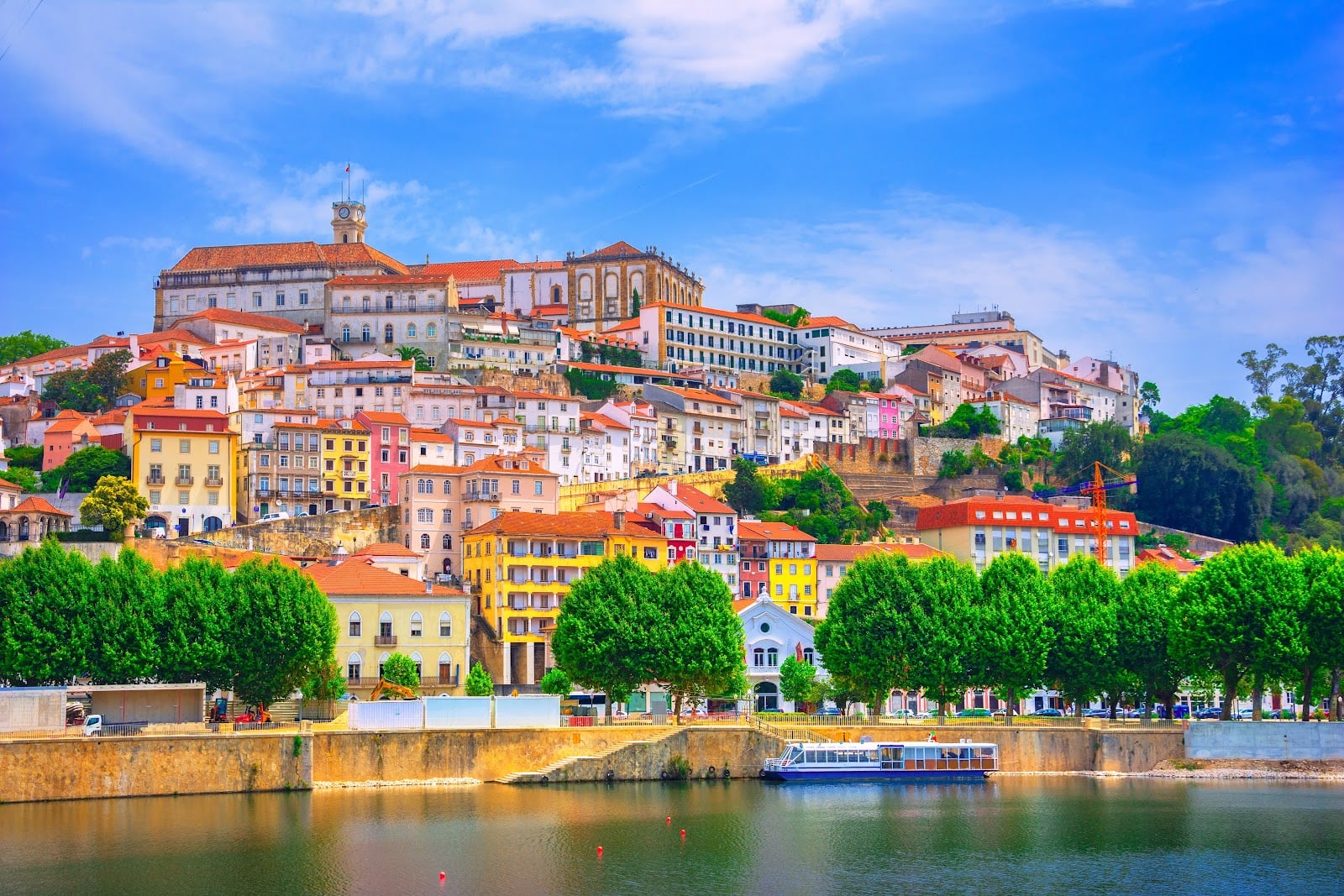
Make this the journey’s anchor day, beginning at the University of Coimbra’s Paço das Escolas, where the courtyard opens toward the river and the former royal palace gives scholarship an unusually theatrical setting. Inside the Biblioteca Joanina, entered according to its scheduled visiting arrangements, gilded woodwork surrounds books that once represented a formidable concentration of knowledge. The memorable detail is smaller than the room: bats help control insects that could damage the collection, while protective coverings shield the reading tables overnight. Walk downhill to the Sé Velha, its fortresslike Romanesque exterior a striking contrast, then pause over a pastel de Santa Clara, filled with almonds and egg yolks. Overnight in Coimbra, carrying away the image of fragile pages protected inside magnificent rooms.
Day 6: Coimbra to Aveiro, Saltwater and Striped Houses
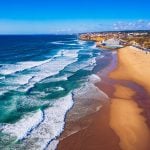
Continue to Aveiro, where the Canal Central introduces a town shaped by its lagoon, salt production and the working boats known as moliceiros, traditionally used to collect aquatic vegetation. Look beyond the boats to the Museu de Aveiro/Santa Joana, housed in a former convent associated with Princess Joana, daughter of King Afonso V. Taste ovos moles, the local egg yolk and sugar confection enclosed in delicate wafer shells, often shaped like fish or barrels. Later, head to Costa Nova to see the striped houses that developed from fishermen’s storage buildings, remembering that this Atlantic shore can be breezy even under a blue sky. Overnight in Aveiro, with the contrast between convent treasures and practical coastal architecture still fresh.
Want this route shaped around your own dates and pace?
Day 7: Aveiro to Porto, The City in Blue and White
Travel north to Porto and begin at São Bento station, where Jorge Colaço’s painted tile panels turn a working railway concourse into a gallery of historical scenes and rural life. From there, walk toward the cathedral, allowing for the uneven paving and slopes that make the city more rewarding at a measured pace. Descend to Ribeira, where tall, narrow buildings face the Douro and the waterfront offers a first sense of Porto’s mercantile character. For lunch, try a francesinha if appetite allows: the substantial meat-filled sandwich arrives under melted cheese and a hot sauce whose recipe varies by establishment. Overnight in Porto, with no need to fit every viewpoint into this first encounter.
Day 8: Porto and Gaia, A River Between Two Stories
Cross the Dom Luís I Bridge to Vila Nova de Gaia, choosing the upper pedestrian level for broad views if everyone is comfortable with heights and the passing light rail. Gaia’s port lodges tell the story of wine brought down from the Douro vineyards and matured near the Atlantic, where cooler conditions favored storage and aging. Reserve a visit at Graham’s lodge, established here in 1890, and compare a tawny with a ruby style rather than approaching the tasting as a checklist. The differences in fruit, oxidation and time become clearer with a little conversation and perhaps some cheese alongside. Overnight in Porto, returning across the river with a better understanding of the trade that helped shape both banks.
Day 9: Porto, Gardens and an Atlantic Farewell
Keep the final day spacious, beginning at Serralves, where Álvaro Siza Vieira’s contemporary art museum sits within an estate whose gardens deserve as much attention as the exhibitions. Continue to Foz do Douro for a walk near the Pérgola da Foz, watching the Atlantic replace the narrower river views that have framed your Porto stay. Lunch can be grilled fish with boiled potatoes and vegetables, accompanied by a glass of Vinho Verde, a quietly satisfying finish after several days of richer regional dishes. Your private driver/guide can tailor this last day’s stops around a preferred exhibition, a longer seaside lunch or simply less walking. Overnight in Porto before onward travel, ending with sea air rather than another hurried monument.
Plan your own day
Share your dates, group size and interests, and we will suggest a tailored plan with a local driver/guide.