Wander beneath ancient cork oaks and step into sunlit pottery workshops across the sweeping plains of the Alentejo. Discover how traditional artisans shape the quiet rhythm of southern Portugal.
The Golden Light Over the Montado
Morning arrives quietly across the rolling plains south of the Tagus River. Leaving Lisbon behind in a comfortable Mercedes-Benz, the highway soon narrows into rural lanes framed by dry stone walls and endless stands of holm and cork oaks. This landscape is the montado, an ancient agro-forestry ecosystem unique to southern Portugal and Spain, where cattle graze peacefully beneath broad canopy trees and wild herbs scent the warm air.
Traveling with a dedicated local driver and guide allows the morning to unfold at your own tempo. There is no need to watch the GPS or puzzle over unmarked farm tracks. Instead, your guide watches the light, perhaps pulling over near a grove outside Montemor-o-Novo where the trees show deep, cinnamon-colored trunks. These vibrant red surfaces reveal where skilled harvesters recently stripped the thick bark, leaving the trees unharmed to regenerate over the next nine years.
The Patient Art of the Cork Harvest
Portugal produces more than half of the world harvest of cork, yet the process remains entirely manual. In the shade of branches that may have lived for two centuries, you begin to grasp the quiet patience of this countryside. A cork oak cannot be stripped of its outer bark until it reaches twenty-five years of age, and even then, that first virgin harvest is too irregular for fine bottle stoppers. Only on the third harvest, nearly four decades after planting, does the bark yield the smooth grain required by winemakers worldwide.
Men wielding curved axes climb into the boughs each summer, striking the wood with practiced precision. The cut must pass through the spongy outer layer without scoring the delicate inner cambium, which carries sap and life to the crown. Listening to these details while running your fingers across the textured bark, you realize that the montado is not a wild forest, but a centuries-old partnership between human hands and living trees.
Earthenware and Painted Blooms in Arraiolos and Redondo
By mid-morning, the route winds toward Redondo, a whitewashed town tucked against the southern flank of the Serra d’Ossa. For generations, Redondo has been synonymous with red clay pottery, known locally as olaria. Inside a quiet workshop along the cobblestone lanes, a potter presses wet clay onto a spinning wheel, his hands wet with slip as a classic cantaro water jug rises from the bench in seconds.
Nearby, women sit at low wooden tables with fine horsehair brushes, painting motifs that have decorated local larders for centuries. Bright yellow sunflowers, grazing sheep, simple country figures, and bold red roosters emerge onto bowls and platters before the pieces enter the kiln. Unlike industrial ceramics, these dishes carry tiny variations in glaze and form, each telling the story of the artisan whose initials are neatly stamped on the base.
Browse our travel inspiration for ideas, or tell us what kind of day you have in mind.
A Table Set for an Alentejo Midday
Artisans work with an appetite, and midday in the Alentejo calls for honest, slow-simmered regional cooking. In a stone-walled tavern in nearby Evora, lunch begins with crusty sourdough bread, unpasteurized sheep cheese from Serpa, and green olives cured with wild oregano and garlic. The olive oil pooling on your plate was pressed just down the road from groves sharing soil with the cork trees.
Main courses celebrate the pastoral rhythm of the plains. You might savor ensopado de borrego, tender lamb stewed with mint and day-old bread, or carne de porco a alentejana, where marinated pork meets sweet clams and crisp cubes of fried potatoes. A carafe of robust local red wine, pressed from Trincadeira and Aragonez grapes grown in schist and clay, anchors the meal. There is no rush to finish; lunch in this part of Portugal is treated as an essential pause rather than an errand.
Wool, Leather, and the Heritage of Evora
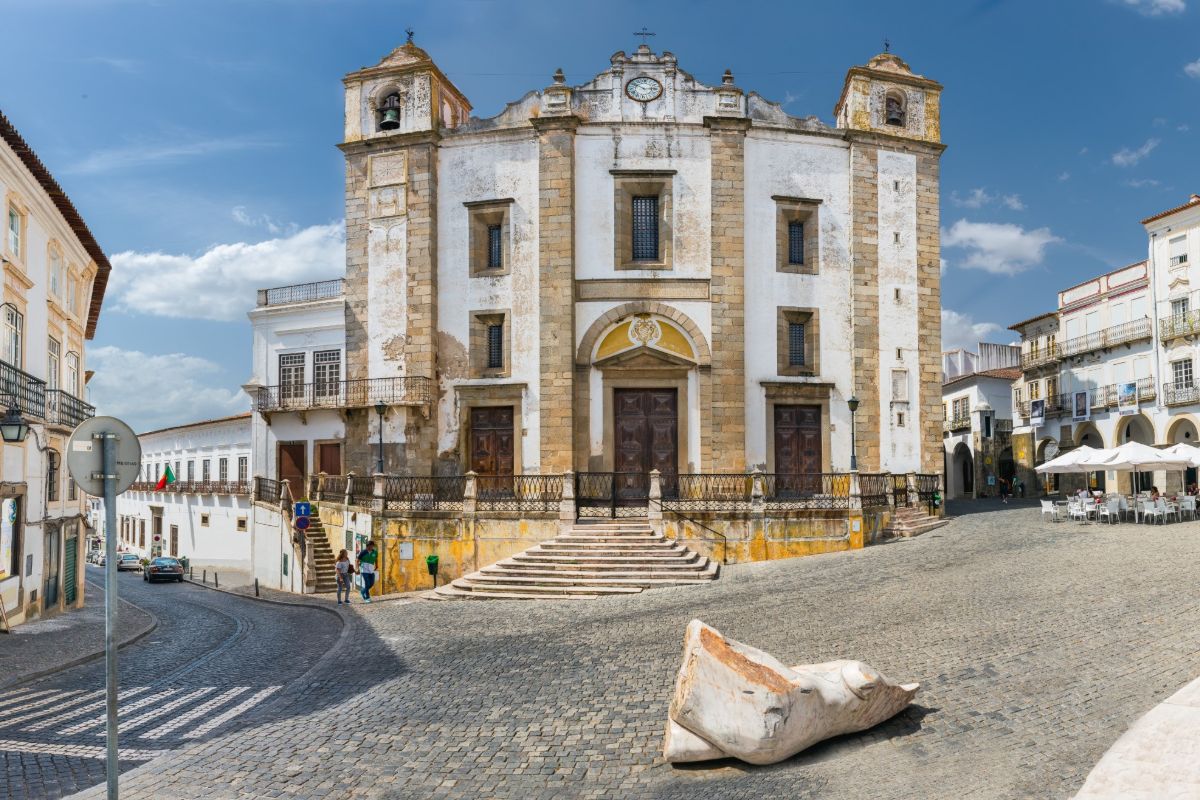
In the afternoon, the journey turns toward the medieval heart of Evora, a UNESCO World Heritage city enclosed by ancient walls. Beyond its Roman Temple of Diana and cathedral towers, Evora preserves workshops devoted to heritage crafts born from rural necessity. Here you can explore the craft of samarra coats, heavy woolen outerwear trimmed with sheepskin collars that protected shepherds against winter winds on the open plains.
You will also discover how modern Portuguese makers are reimagining cork itself. Far from simple coasters, supple sheets of cork fabric are stitched into travel bags, umbrellas, and soft-soled shoes that are water-resistant and feather-light. In quiet leather ateliers near the square of Praca do Giraldo, cobblers cut and stitch traditional country boots, using techniques passed down from grandfathers who shoed the farmhands of the great estates.
An Afternoon Shaped by Quiet Encounters
What makes a day in the Alentejo truly memorable is not simply seeing objects on a shelf, but meeting the people who preserve these traditions against modern haste. Because your private driver and guide can shape the day around your personal interests, an impromptu conversation with a weaver working a wooden handloom or a stroll down an alley smelling of warm cedar and leather becomes the highlight of the afternoon.
As the sun dips toward the horizon, casting amber light across the golden plains, you return to the quiet comfort of your vehicle for the relaxed ride back toward Lisbon. The trunk holds carefully wrapped bowls, a sheet of hand-stitched cork, and perhaps a small bottle of olive oil from an estate off the beaten path. Yet the real treasure of the day is the stillness of the oak groves and the enduring warmth of the makers who call this sun-drenched earth home.
Plan your own day
Share your dates, group size and interests, and we will suggest a tailored plan with a local driver/guide.