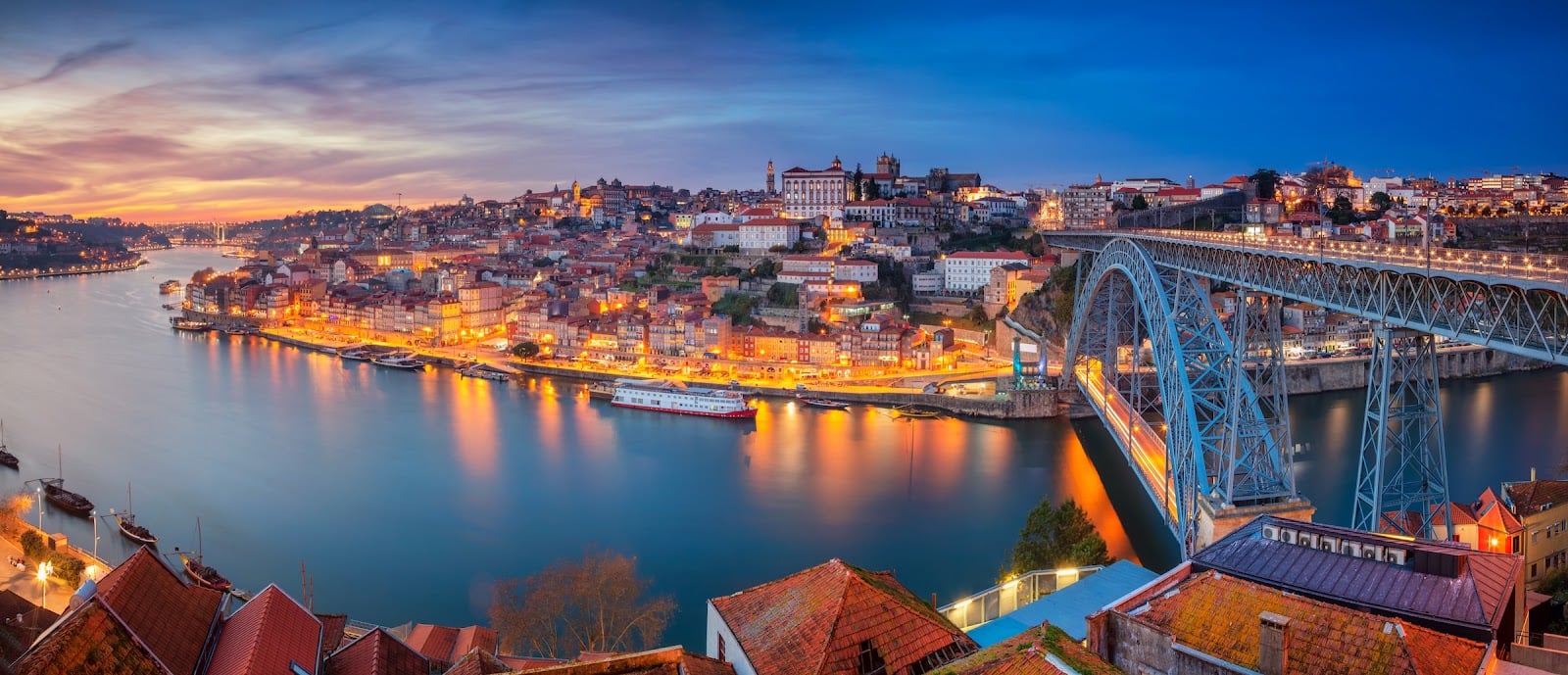
From walkable riverfront lanes to world-class dining that rivals Rome and Paris at a fraction of the stress, northern Portugal’s granite capital constantly exceeds expectations.
1. English is spoken with remarkable ease everywhere
Many Americans land in Porto bracing for the communication hurdles common in regional Italy or the French countryside. Instead, they find that hotel staff, market fishmongers at Mercado do Bolhao, and neighborhood cafe owners converse in fluid, welcoming English.
Because television and cinema in Portugal are subtitled rather than dubbed, younger generations grow up immersed in the language. Travelers can ask intricate questions about vintage port barrels or specific textile weaves without feeling like a burden, bringing an immediate sense of ease to the trip.
2. World class dining without the continental sticker shock
Well-traveled Americans often arrive prepared for European capital pricing, where a bottle of regional vintage and fresh seafood easily climbs into several hundred euros. Porto upends this expectation entirely, delivering exceptional quality at exceptional value.
A lunch of whole grilled sea bass, warm sourdough, olives, and crisp Vinho Verde at an unassuming taverna in Matosinhos often costs less than a casual pub lunch back home. Even Michelin-starred establishments overlooking the Douro River, such as The Yeatman across the water, provide tasting menus that feel refreshingly fair compared to equivalent tables in Manhattan or San Francisco.
3. The compact scale means short, effortless transfers
American travelers accustomed to massive metropolitan sprawl find Porto delightfully human in scale. Highlights that seem distant on a map, from the baroque curves of the Clerigos Tower to the sweeping Atlantic promenade in Foz do Douro, sit only minutes apart.
Exploring with a private driver from Portugal Magik allows couples and families to bypass the city’s steep granite inclines in climate-controlled Mercedes-Benz comfort. Your local driver can shape the day around your personal interests, dropping you directly at the door of the Serralves Museum before meeting you seaside for an ocean breeze.
Browse our travel inspiration for ideas, or tell us what kind of day you have in mind.
4. A sense of safety that lets you truly unwind
Safety is frequently cited by American couples and retirees as their primary pleasant surprise. Walking along the Ribeira waterfront after dusk, past buskers playing acoustic guitars and families eating gelato, carries none of the tense vigilance required in some major southern European hubs.
Violent crime is practically nonexistent, and even petty street distractions remain rare. You can comfortably stroll cobblestone lanes beneath laundry-strung balconies, taking in the illuminated arches of the Dom Luis I Bridge with genuine peace of mind.
5. The architecture is an open air blue tile gallery
While photographs of Portuguese azulejos are widespread online, Americans are rarely prepared for their monumental physical scale. The grand hall of Sao Bento Railway Station alone displays over twenty thousand glazed ceramic tiles depicting historical Portuguese battles and rural harvests.
Just up the street, the twin churches of Carmo and Carmelitas present an entire exterior sidewall wrapped in intricate cobalt panels. Experiencing these massive masterpieces integrated into functional civic buildings makes an ordinary morning stroll feel like an unhurried museum walk.
6. The food scene reaches far beyond traditional cod
Before arriving, many travelers assume northern Portuguese food consists solely of heavy salted cod and rustic stews. Porto quickly shatters that narrow view with imaginative preparations of octopus, wood-fired seasonal vegetables, and delicate duck rice.
Food lovers can sample artisan cheeses from the Serra da Estrela, savor thinly sliced presunto from acorn-fed pigs, and taste traditional tripe dishes alongside bright coastal wines. The city balances deeply rooted grandmother recipes with innovative young chefs who highlight the ocean’s morning catch with clean, bright flavors.
7. World famous wine cellars right across a footbridge
Most wine regions require hours of rural driving to reach historic cellars. In Porto, you simply cross the river to Vila Nova de Gaia, where centuries-old aging lodges sit clustered right along the riverbank.
Walking into caves like Graham’s, Taylor’s, or Ferreira, visitors are greeted by massive oak casks holding vintages dating back to the nineteenth century. Having a private driver waiting nearby ensures you can enjoy a layered tasting of aged tawnies and single quinta vintages without navigating unfamiliar roads afterward.
8. An easy rhythm that respects your personal pace
Americans frequently remark on how calm Porto feels compared to Lisbon or Florence. There are fewer aggressive queues, and shop owners encourage lingering over handmade pottery or castile soaps rather than rushing through a transaction.
Because the city center is manageable, your guide can tailor each afternoon on the fly, adding an unexpected stop at the historic Lello bookshop or pausing for espresso and warm pastel de nata at a quiet plaza cafe. The journey never feels like an exhausting checklist.
9. Gateway to river canyons and granite villages in under an hour
Perhaps the biggest revelation is Porto’s strategic position. Within forty-five minutes of your hotel lobby, the scenery transforms from urban granite into the birthplace of the nation at Guimaraes, or the dramatic terraced vineyards of the lower Douro region.
You can spend a sunny morning exploring seaside fortress walls, enjoy lunch at a terrace overlooking terraced vineyards, and return to Porto in time for dinner. It delivers all the richness of European travel without long, tiring travel days between regions.
Plan your own day
Share your dates, group size and interests, and we will suggest a tailored plan with a local driver/guide.