Experience the bright waterways and storied coast of central Portugal, where historic wooden boats glide past Art Nouveau facades and ocean dunes cradle candy-striped fishing homes.
The Morning Light Across the Ria
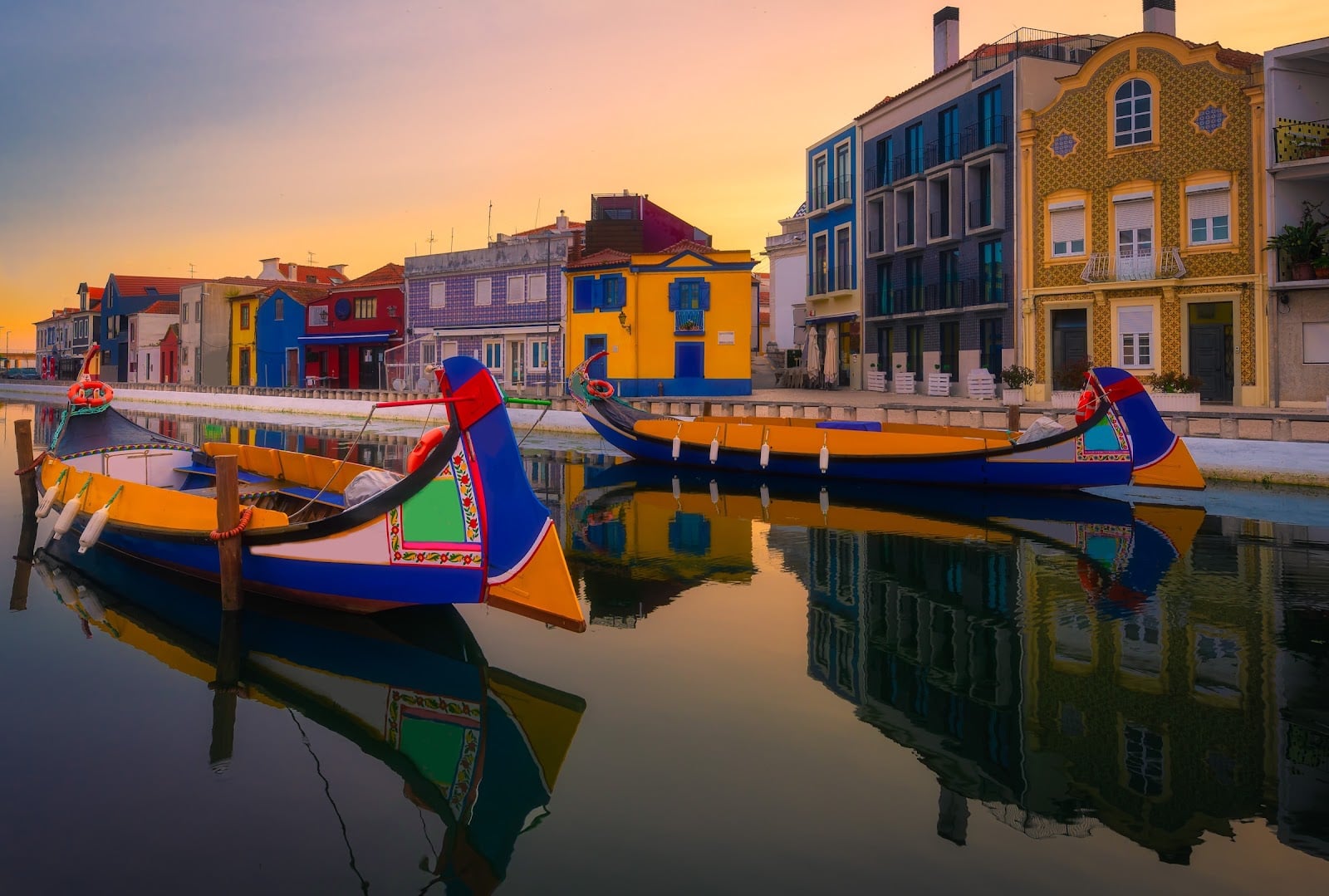
Morning arrives quietly over the Ria de Aveiro. A silver mist often clings to the mirror-like surface of the lagoon before the Atlantic breeze rolls inland and sweeps it away. By nine o’clock, the sun warms the pale stone quays along the Canal Central, where long, brightly painted wooden boats rest tied to iron bollards. These are the moliceiros, vessels shaped like crescents with slender, pointed prows that rise toward the sky. Centuries ago, local watermen pushed them across shallow flats to harvest moliço, the underwater seagrass used as natural fertilizer across coastal vegetable patches.
Today, the moliceiros tell folk stories in vibrant oil paints. Their prows display colorful depictions of saints, humorous regional caricatures, and scenes from everyday maritime life. Walking along the quayside, the smell of sea salt mixes with roasted coffee from neighborhood cafes. Having a dedicated local driver and guide allows travelers to step into this watery world without worrying about train timetables or parking, settling instead into the rhythm of a historic town shaped by the tides.
Art Nouveau Facades and Sweet Secrets
Just beyond the canal edge lies a remarkable architectural showcase. During the early twentieth century, families who found success abroad returned to Aveiro and built graceful residences reflecting the Belle Epoque. Along Rua Dr. Barbosa de Magalhaes and Rua de Joao Mendonca, facades curve with wrought iron balconies, carved stone water lilies, and glazed ceramic tiles that catch the sun in soft greens and blues. A short stroll leads to the Museu de Arte Nova, housed in the Casa Major Pessoa, where floral plasterwork and peacock motifs celebrate this brief, exuberant era.
No morning in Aveiro is complete without pausing at a local pastelaria for ovos moles. These sweet delicacies are deeply woven into the identity of the town. Created centuries ago by nuns at the Convent of Jesus, egg yolks and sugar are beaten into a thick golden velvet and encased inside thin, crisp communion wafers shaped like clam shells, fish, and wooden barrels. Biting into one offers an authentic taste of Portuguese convent heritage, light and intensely rich at the same time.
The Living Salt Flats of Troncalhadas
A short drive across the canal leads to the marine pans known as the salinas. For nearly a millennium, Aveiro has coaxed white gold from ocean water. At the Ecomuseu Marinha da Troncalhadas, wooden gates control the flow of Atlantic seawater into a patchwork of shallow clay basins. As summer heat and gentle winds evaporate the liquid, brilliant white salt crystals form on the surface, ready to be harvested by hand using long wooden rakes called ropudos.
Walking the narrow clay paths between basins reveals a peaceful, sun-bleached landscape inhabited by coastal birds. Black-winged stilts pick through the shallows on thin red legs, while small pyramids of coarse salt dry under open skies. The guide can adjust the day to spend time chatting with the marnoto, the master salt maker whose family has worked these pans for generations, explaining how the delicate fleur de sel is skimmed before the heavier crystals sink to the clay floor.
Browse our travel inspiration for ideas, or tell us what kind of day you have in mind.
Crossing to the Striped Shores of Costa Nova
Leaving the city center behind, the road winds west across the lagoon toward the narrow spit of land that separates the calm waters of the ria from the open Atlantic. Here lies Costa Nova do Prado, an old fishing settlement unlike anywhere else along the Iberian coast. Along the shore of the lagoon stand the famous palheiros, wooden houses painted in bold vertical and horizontal stripes of vermilion, navy blue, forest green, and sunny yellow.
Originally built as single-story timber shacks by nineteenth-century fishermen to store nets, ropes, and heavy tackle, these buildings gradually welcomed families who sought seaside breezes during warm summers. Today, they form a cheerful village streetscape where lace curtains flutter behind tall sash windows and potted geraniums stand on crisp white steps. The quiet lagoon side invites slow, unhurried walking while gulls call out from wooden fishing piers.
Ocean Flavors at the Edge of the Dunes
Just a few hundred yards behind the striped cottages, tall marram grass ripples across high white sand dunes leading down to the Atlantic Ocean. The air here turns crisp and cool, carrying the full roar of rolling surf. Lunch in Costa Nova honors the deep ocean traditions of the region. Local dockside taverns celebrate the catch brought in by trawlers each dawn.
A table fills with steaming caldeirada de enguias, an earthy eel stew simmered with potatoes, saffron, and sweet onions that reflects ancient lagoon cooking. Others opt for fresh sea bass grilled whole over hot coals, seasoned simply with coarse sea salt from the Troncalhadas pans and drizzled with green olive oil. Afterward, travelers often seek out a street kiosk for a tripas de Aveiro, a soft, warm folded crepe left slightly undercooked inside and sprinkled with fragrant cinnamon, eaten while looking out over the rolling sea.
A Seamless Path Home
As the afternoon winds down, the low sun paints the painted homes of Costa Nova in warm amber tones. The wide beaches stretch for miles toward the lighthouse at Barra, where Portugal’s tallest beacon has guided mariners past coastal sandbars since 1893. There is no rush to conclude the afternoon when traveling with a knowledgeable driver, who can easily detour down a quiet sand track or pause at a lagoon overlook where traditional dories rest on the mudflats.
Stepping back inside the quiet comfort of a private vehicle, guests can rest while the journey back to Porto or Lisbon unfolds effortlessly along smooth highways. The day leaves behind vivid impressions of wooden hulls painted with humor, salt pans gleaming white beneath the coastal sky, and colorful timber stripes standing proud against the Atlantic wind.
Plan your own day
Share your dates, group size and interests, and we will suggest a tailored plan with a local driver/guide.