Discover the maritime charm of central Portugal through the storied waterways of Aveiro and the wind-swept, candy-striped cottages of Costa Nova.
Morning Light Across the Ria de Aveiro
The morning fog lifts slowly from the shallow waters of the Ria de Aveiro, revealing a silvery world where land and saltwater weave together in delicate patterns. Unlike the steep hills of Lisbon or the granite ledges of Porto, this coastal corner of central Portugal rests on horizontal horizons. Long mirrored basins, wooden piers, and gentle breezes set an immediate, contemplative pace. Travelers arriving from the south or north step into a region whose identity has been dictated by the Atlantic tides and the shifting sands of the lagoon for centuries.
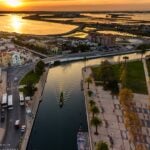
At the heart of the town, calm canals branch off from the main central waterway, leading deep into quarters that still carry the memory of fisherfolk and salt merchants. Walking along the quayside of the Canal Central, you watch the slender wooden boats rock gently against stone embankments. The smell of clean sea air blends with the aroma of freshly roasted espresso from nearby cafe terraces, inviting you to slow down and listen to the gentle lap of the water.
Art Nouveau Facades and Ancient Salt Pans
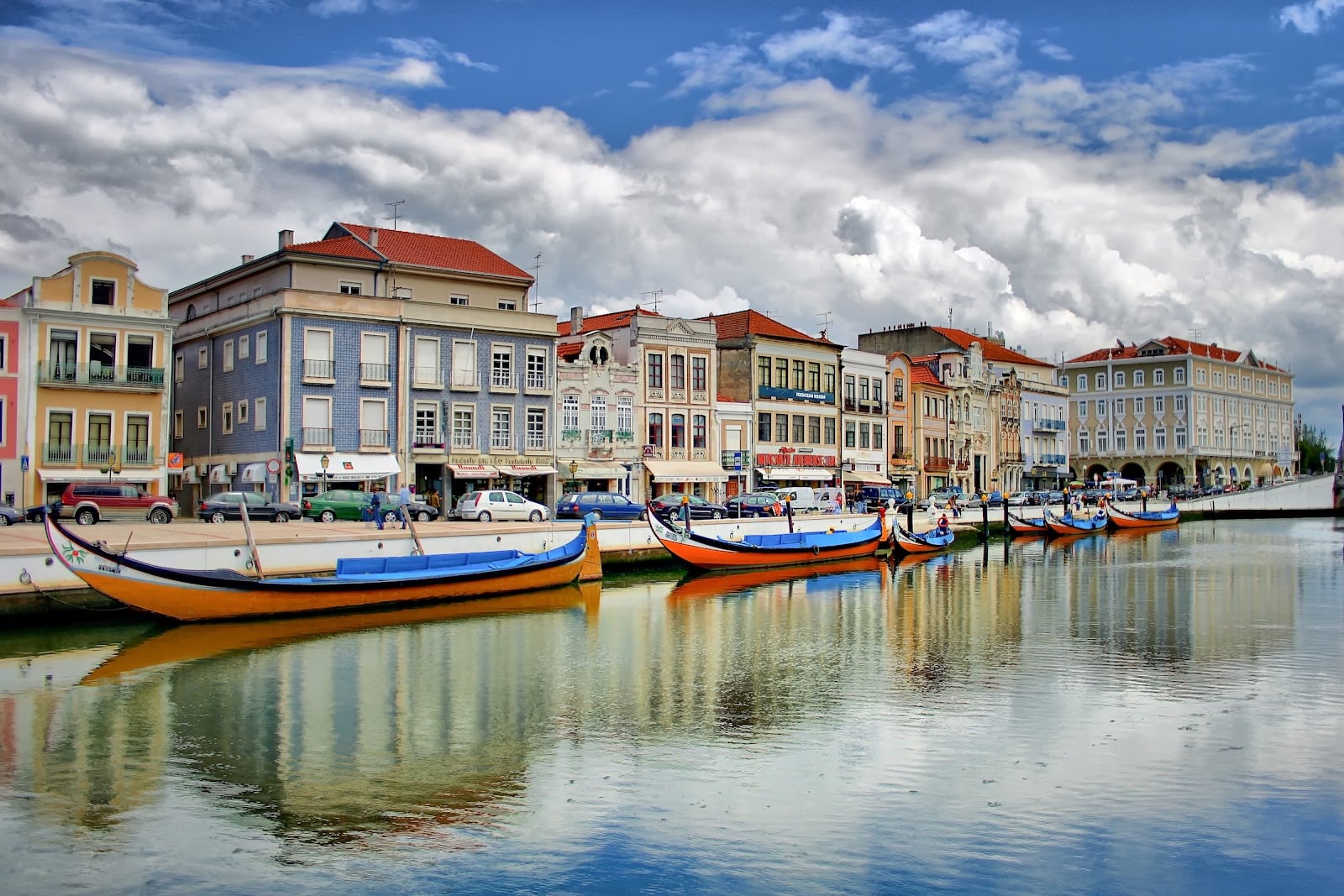
Aveiro experienced a golden era at the turn of the twentieth century, driven by families who amassed wealth through salt pans, trading fleets, and agricultural ventures. Returning merchants brought back a passion for the decorative arts, commissioning waterfront residences adorned with undulating stone balconies, floral ironwork, and striking hand-painted ceramic tiles. Strolling along Rua Joao Mendonca reveals an outdoor gallery of Art Nouveau architecture, where pastel facades reflect gracefully on the canal surface below.
A short distance from the decorative town center lie the Troncalhao salt pans. These rectangular evaporation pools have supplied sea salt to European kingdoms since the tenth century. White pyramids of freshly harvested salt crystals glisten in the late morning sun, tended by salt masters who still use traditional wooden rakes called rodoes. The mineral-rich sea salt produced here is revered by cooks across the country, prized for its purity and delicate sea crunch.
The Storied Moliceiro Boats of the Central Canal
Nothing captures the spirit of Aveiro quite like the moliceiro. These long, flat-bottomed wooden boats were originally designed to harvest moliche, the submerged seaweed used by coastal farmers to fertilize sandy inland fields. Today, they glide through urban canals with quiet grace. Their upturned prows are decorated with hand-painted folk art scenes, displaying colorful depictions of maritime saints, heroic rescues, and cheeky everyday humor.
Stepping aboard one of these historic craft offers a vantage point that streets cannot provide. You drift beneath the iron arches of the pedestrian bridges, past the historic fish market at Praca do Peixe, and into quiet residential canals where stone laundry steps still lead straight down to the waterline. The boatmen steer with quiet confidence, sharing tales of winter storms and coastal resilience that have bound these families to the water across generations.
Browse our travel inspiration for ideas, or tell us what kind of day you have in mind.
Sweet Convent Traditions and a Market Lunch
Before departing the town center, a visit to a traditional confectionery is essential. Aveiro is the birthplace of ovos moles, a treasured sweet created centuries ago by nuns residing at the Convent of Jesus. Legend tells that egg whites were used to starch religious habits, leaving sisters with an abundance of yolks. By blending yolks with pure sugar syrup, they created a rich golden cream sealed within thin rice paper shells shaped like fish, barrels, and sea shells. The crisp casing gives way to a velvety, honeyed center that pairs perfectly with a bitter bica.
Lunch is best taken near the old docks, where local restaurants showcase the daily catch brought in from nearby fishing ports. Grilled sea bass served with olive oil and boiled potatoes, rich monkfish rice cooked in clay pots, or the region’s famous eel stew flavored with bay leaves and mild saffron offer an authentic taste of coastal Portugal. Having a knowledgeable local driver and guide allows travelers to bypass crowded tourist terraces and settle into family-run dining rooms where the seafood is sourced directly from morning market stalls.
The Striped Palheiros of Costa Nova
A ten-minute drive west brings you over the lagoon bridges to Costa Nova do Prado, a narrow sandbar resting between the calm waters of the Ria and the wild Atlantic Ocean. Costa Nova is instantly recognizable by its beloved palheiros. These picturesque wooden cottages, painted with vertical and horizontal stripes of bright red, navy blue, and emerald green, line the waterfront promenade with cheerful precision.
Originally built in the nineteenth century by local fishermen, these simple structures served as storage sheds for nets, oars, and fishing tackle. Over time, as sea bathing became popular among Portuguese families, owners raised the buildings on timber piles and converted them into seaside summer homes. Today, their vivid facades stand as a bright tribute to maritime heritage, providing one of the most delightful walks anywhere along the Portuguese coastline.
Wild Atlantic Dunes and Wind-Swept Horizons
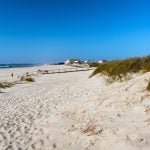
Walking just two blocks west from the sheltered lagoon side of Costa Nova brings you to an entirely different world: the Atlantic shore. Here, elevated wooden boardwalks stretch across fragile sand dunes covered in sea lavender and marram grass. The ocean arrives in long, rolling swells, crashing against wide golden beaches that stretch toward the horizon in both directions. The salt spray hangs in the air, creating a cool coastal mist that invigorates the senses.
At the nearby fishing harbor of Barra, the tallest lighthouse in Portugal stands watchful over the canal entrance where the lagoon meets the open sea. Watching modern fishing boats return home accompanied by flocks of sea gulls provides a grounded reminder that this coast remains deeply connected to maritime work. Traveling with a dedicated local driver and guide means the rhythm of the afternoon can shift effortlessly, whether lingering over coffee beside the striped cottages or watching the Atlantic surf roll in until late afternoon.
Plan your own day
Share your dates, group size and interests, and we will suggest a tailored plan with a local driver/guide.