
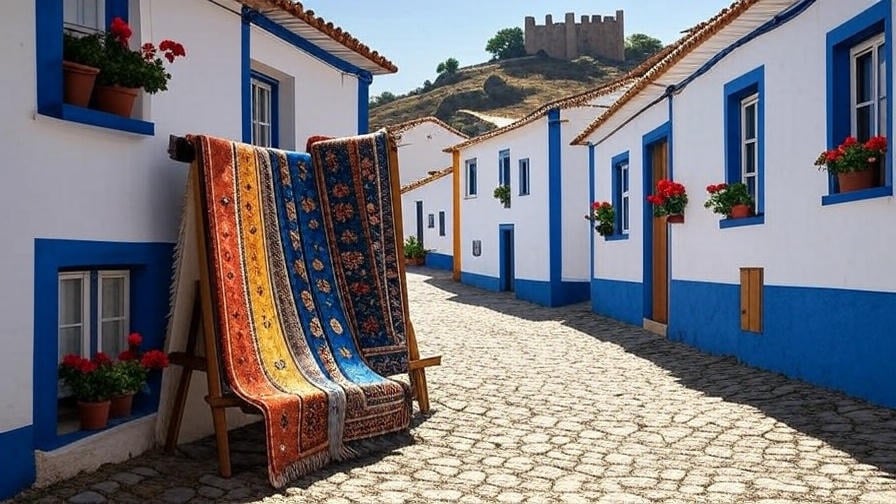
It is one thing to read about the Middle Ages in books. It is quite another to walk through a city gate built when knights still rode through its arch, to step across cobblestones worn smooth by centuries of footsteps, or to look up at castle battlements silhouetted against a sky that has watched a thousand sunsets before you.
Portugal, though small in size, has an astonishing collection of medieval towns — many still vibrant, lived-in communities where the past is not just remembered, but woven into everyday life. From the granite ramparts of the north to the sunlit plains of the Alentejo, these towns tell stories of battles, devotion, prosperity, and resilience.
While the country’s major cities have their share of history, it’s in these smaller towns where the medieval spirit truly thrives. Their compact centers, fortified walls, and preserved architecture transport you instantly to another era.
Exploring them is a journey best done slowly — and luxuriously. Imagine arriving in a chauffeured Mercedes-Benz, stepping out at the foot of a centuries-old fortress, and being greeted by a guide who knows not only the town’s history, but the baker who still uses the 18th-century oven, or the family whose ancestors once guarded the castle. This is the Portugal Magik Private Tours way — private, unrushed, deeply immersive.
Here are twelve medieval towns that stand among the most captivating in mainland Portugal, each offering a unique window into the country’s rich and layered past.
1. Óbidos — The Queen of Portugal’s Medieval Jewels
Perhaps the most famous of Portugal’s walled towns, Óbidos is a place where history and beauty are in perfect harmony. Encircled by medieval ramparts, its whitewashed houses are adorned with bright bougainvillea, and every turn reveals a new tableau worthy of a painting.
Once a gift from King Dinis to his queen in the 13th century, Óbidos has retained a regal air. The castle, now a luxury pousada, dominates the skyline, while narrow streets lead to charming shops selling Ginja de Óbidos, the town’s signature cherry liqueur, often served in chocolate cups.
Visiting early in the morning or after sunset allows you to experience Óbidos at its most magical, when the day-trippers have gone and the town hums quietly with its own rhythm.
2. Monsaraz — A Whitewashed Sentinel over the Alentejo
High above the shimmering Alqueva Lake, Monsaraz is a town where time slows and the landscape seems endless. Its whitewashed streets, medieval castle, and surrounding olive groves create a scene of quiet grandeur.
Originally a stronghold in the Christian reconquest, Monsaraz’s strategic position near the Spanish border made it an important defensive site. Today, it is one of the best-preserved medieval towns in Portugal, and its panoramic views at sunset are legendary.
Artisan workshops offer handmade pottery and woven goods, while traditional restaurants serve hearty Alentejo dishes — the perfect way to end a day of exploring.
Other Visitors are reading now:



3. Sortelha — Timeless in Granite
One of Portugal’s “Aldeias Históricas” (Historic Villages), Sortelha feels almost untouched by modernity. Entering through its original stone gateway is like stepping into another century. The entire town is encircled by medieval walls, with a castle perched on a granite outcrop above.
The houses, built from the same stone as the surrounding hills, blend seamlessly into the landscape. Locals still greet visitors warmly, proud of their home’s place in Portugal’s history. It is a place of extraordinary atmosphere, especially on misty mornings when the past feels close enough to touch.
4. Marvão — Eagle’s Nest of the Alentejo
Perched on a narrow ridge high in the Serra de São Mamede, Marvão commands jaw-dropping views over the surrounding plains. This fortified town is so well-situated that it has been called an eagle’s nest — a fitting metaphor for its sense of watchful isolation.
Marvão’s narrow cobbled streets wind between whitewashed houses and flowering balconies. The castle, built in the 13th century, is remarkably intact, and from its battlements you can see well into Spain on a clear day.
In autumn, the surrounding hills turn shades of gold and russet, making it one of the most beautiful times to visit.
5. Almeida — The Star Fortress
Almeida stands apart for its remarkable 12-pointed star-shaped fortifications, designed in the 17th century during Portugal’s Restoration War. Walking along the wide ramparts, you can still see the intricate defensive design that made Almeida one of the most impregnable fortresses in the country.
Within the walls lies a small town of cobbled streets, traditional houses, and a peaceful main square. History enthusiasts will enjoy the military museum, while others may simply appreciate the unique perspective from the fort’s high vantage points.
6. Monsanto — The “Most Portuguese Village”
Built among massive granite boulders, Monsanto is as much a feat of nature as of architecture. Houses are fitted around, under, and sometimes even inside the stones, creating an unforgettable streetscape.
Monsanto has been recognized as the “most Portuguese village in Portugal,” yet it also feels unlike anywhere else in the country. Its medieval castle crowns a rocky hilltop, offering 360-degree views that stretch for miles.
The climb to the top is rewarded with one of the most dramatic panoramas in the country — especially at sunset, when the stones turn warm gold.
7. Idanha-a-Velha — Layers of Civilizations
Though small, Idanha-a-Velha is dense with history. Founded by the Romans and later fortified in the Middle Ages, it has been home to Visigoths, Moors, and Christian settlers. The ruins of a cathedral, Roman inscriptions, and medieval walls all stand within a few minutes’ walk of each other.
The village’s golden stone glows in the afternoon sun, and the surrounding olive groves produce some of the finest oils in Portugal. It’s a quiet, contemplative place that rewards slow exploration.
8. Castelo Rodrigo — Guardian of the Frontier
Overlooking the vast plains near the Spanish border, Castelo Rodrigo is a town of narrow streets, medieval walls, and a castle that has guarded this frontier for centuries. The town’s history includes periods of Jewish settlement, and traces of that heritage remain in architectural details.
The climb to the castle is short but steep, and from the top, the views reveal why this was such an important watchpoint in times of conflict. Today, its peace is broken only by the wind and the occasional church bell.
9. Trancoso — Where History Meets Market Day
Trancoso’s medieval walls enclose a town that still feels lively and lived-in. Known for its weekly market — a tradition since medieval times — it is a place where past and present mingle naturally.
The castle dominates the skyline, while the old Jewish quarter offers intriguing glimpses into the town’s multicultural history. Walking the streets during market day is an experience in itself: stalls overflow with produce, cheeses, and cured meats, and the air is filled with the sound of bargaining.
10. Évora — The Alentejo’s Timeless Capital
Though a city by size, Évora’s UNESCO-listed historic center is a perfectly preserved medieval core that makes it worthy of inclusion here. Roman ruins, Gothic cathedrals, and a labyrinth of narrow lanes create an irresistible blend of eras.
The medieval walls still encircle much of the old town, and walking them offers beautiful perspectives over the Alentejo countryside. Évora’s lively squares and excellent restaurants make it a perfect base for exploring nearby towns and villages.
11. Guimarães — Birthplace of a Nation
Known as the cradle of Portugal, Guimarães is where the country’s first king, Afonso Henriques, established his court in the 12th century. Its historic center is beautifully preserved, with timber-framed houses, cobbled plazas, and the imposing Guimarães Castle.
The town exudes a youthful energy thanks to its university, yet its medieval heart remains intact. The blend of history and vitality makes it a compelling stop for any traveler.
12. Elvas — Fortress City of the East
Near the Spanish border, Elvas boasts the largest set of bulwarked dry-ditch fortifications in the world, recognized by UNESCO. Its star-shaped layout, massive aqueduct, and hilltop position made it a key stronghold for centuries.
Inside the walls, whitewashed streets lead to lively squares and historic churches. The view from the top of the fortress is spectacular, especially when the late afternoon light bathes the plains in gold.
Experiencing Medieval Portugal in Style
Visiting these towns independently is possible, but to experience them with depth — to know which gate offers the best morning light for photographs, which small chapel hides an astonishing fresco, or where to enjoy a private tasting of local wine — requires insider knowledge.
Portugal Magik Private Tours has spent over 14 years curating journeys for discerning travelers, connecting the grandeur of these medieval sites with the small human moments that bring them to life. Guests travel in luxury Mercedes-Benz vehicles with English-speaking driver-guides, enjoying a pace that suits them and the comfort to simply savor the journey.
Many of our guests combine four or five of these towns into a custom multi-day tour, weaving together the north’s granite fortresses with the Alentejo’s sunlit citadels. The result is an unforgettable immersion into Portugal’s living history.
Book Your Portugal Experience:
-
Explore our bestseller tours: https://portugal-magik.com/multi-day-tours/
-
Best Private Day Tours Around Lisbon: https://portugal-magik.com/private-day-tours/
-
Read Top Guests Reviews: https://portugal-magik.com/reviews/
-
Contact Us: https://portugal-magik.com/contact/
-
Fill in the form below to request your custom itinerary.