Beyond Lisbon and Porto, Portugal’s hilltop villages reward travelers who leave room for one slower day. Choose a single destination, settle into its stories, and let lunch last a little longer.
1. Óbidos, where the morning begins beneath painted tiles
Enter Óbidos through the Porta da Vila and look up before following everyone else uphill. The gateway’s blue-and-white tiles depict scenes from Christ’s Passion, turning an entrance into a small introduction to Portuguese storytelling. Around an hour’s drive north of Lisbon, depending on traffic, this walled town makes a manageable addition for Americans who want medieval atmosphere without moving hotels. Its long association with Portugal’s queens includes King Dinis’s gift of the town to Queen Isabel in 1282. Beyond the busy Rua Direita, whitewashed lanes offer quieter corners, flowerpots and doorways that deserve more than a passing photograph.
Build the day around the village rather than a race along its ramparts. Sections of the walls have unprotected drops and uneven steps, so families and anyone uncomfortable with heights can enjoy the streets instead. Visit the Church of Santa Maria, then settle down to lunch before browsing the bookshops that helped Óbidos become a UNESCO City of Literature. Ginja, the local sour-cherry liqueur, makes a small adult tasting rather than the whole story. English is commonly spoken in visitor-facing businesses here, easing the practical details while leaving plenty of room for a friendly obrigado.
2. Monsaraz, where an afternoon opens onto the Alentejo
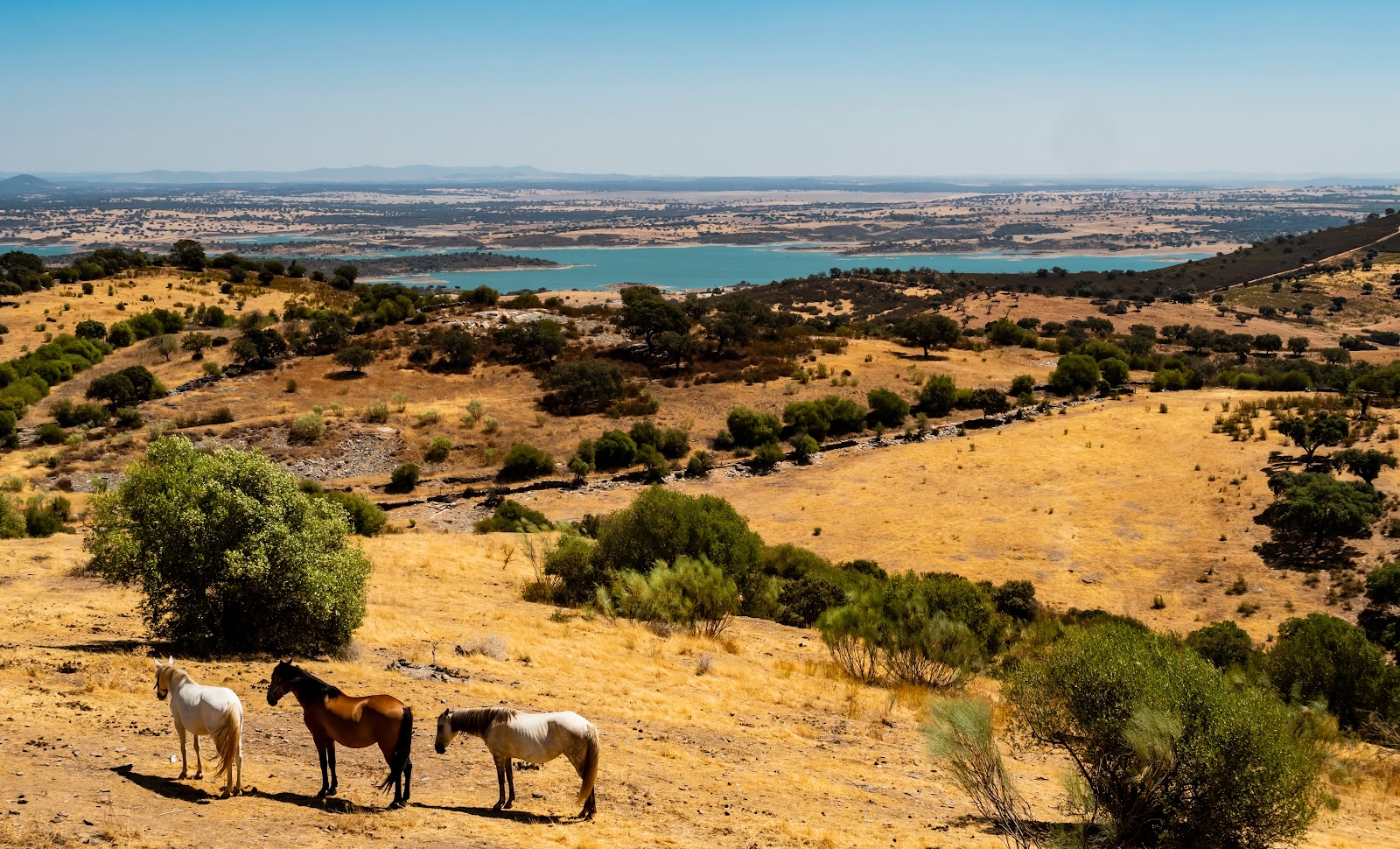
Monsaraz is best approached with enough time to notice how suddenly the landscape changes. Olive groves and open country give way to a compact settlement of pale houses, stone paving and a castle above the Guadiana valley. From Évora, allow roughly an hour by road. The great sheet of water below is the Alqueva reservoir, a modern landscape surrounding a much older frontier town. Inside the village, seek out the medieval fresco commonly called The Good and Bad Judge, preserved in the former council building. Its contrasting figures make corruption and justice feel startlingly immediate across the centuries.
Lunch can carry the story into the surrounding countryside: Alentejo pork dishes, sheep’s cheese and bread-based migas belong naturally on the table. A wine from nearby Reguengos de Monsaraz keeps the meal rooted in place. For Americans accustomed to celebrated French or Italian wine regions, the appeal is not a promise that everything costs less, but the chance to devote the budget to regional food, wine and time rather than several hotel changes. Portugal Magik’s Mercedes-Benz vehicles make the approach comfortable, while a local driver/guide can shape the day around the guests, allowing a longer lunch or a gentler walk as the afternoon unfolds.
3. Marvão, where the border becomes the day’s great story
At Marvão, the memorable moment often comes when you reach the castle and realize how much country lies below. Perched on a granite ridge in the Serra de São Mamede, the village looks toward Spain across a landscape once watched for approaching armies. Its name is associated with Ibn Marwan, the ninth-century rebel who established a stronghold here. Later fortifications reflect centuries of Portuguese border defense. Walk slowly through the whitewashed streets before exploring the castle’s cistern and defensive spaces. The setting explains the history more vividly than a list of royal dates ever could.
This is a rewarding day from a base in the northern Alentejo, not a casual short excursion from Lisbon. Nearby Castelo de Vide is roughly 20 to 30 minutes away by road, making it a possible second stop rather than an obligation. In cooler weather, look for regional chestnuts, especially associated with the Marvão area, or choose roast kid when it appears on the menu. Sturdy shoes matter on the stone surfaces, and exposed castle areas deserve care in wind. For couples and retirees comparing Portugal with busier European circuits, the pleasure is a day organized around one extraordinary place, without taking on the winding approach themselves.
Browse our travel inspiration for ideas, or tell us what kind of day you have in mind.
4. Monsanto, where granite sets the rules
Monsanto does not simply stand on a hill. It seems to negotiate with it. Huge granite boulders become walls, shelter doorways and sometimes serve as roofs, giving each turn through the village a different architectural surprise. Set in the municipality of Idanha-a-Nova, this is an inland choice for travelers exploring central Portugal rather than seeking an easy coastal detour. The village received its first charter from Afonso Henriques in 1174, and the ruined castle above recalls its strategic importance. Yet the most absorbing story is domestic: how generations made workable homes in a landscape that refused to be flattened.
Start with the lower lanes and decide about the castle climb only after assessing the footing and the weather. The ascent is steep and uneven, with exposed areas near the ruins; the village itself offers plenty if that walk is not right for everyone. At lunch, look for regional goat or lamb dishes and local cheeses, asking what is available that day. English is less dependable in smaller inland establishments than in Lisbon, so help interpreting a menu can be welcome. For a multigenerational American family, the boulder-built houses provide a shared fascination without requiring everyone to follow the same strenuous route.
5. Sortelha, where a quiet lane can fill an afternoon
Sortelha, in the municipality of Sabugal, offers a particularly concentrated encounter with Portugal’s granite borderlands. Its medieval enclosure follows the rocky hill, with a castle rising above stone houses and narrow lanes. Sancho II granted the settlement a charter in 1228, strengthening a frontier whose political geography differed from today’s. Rather than hurrying straight to the highest viewpoint, notice the door surrounds, worn thresholds and rocks incorporated into the village fabric. The historic core invites a slow circuit, though its slopes and irregular paving mean short distances should not be mistaken for completely easy walking.
Make this a day from a nearby inland base, perhaps pairing it with Belmonte, roughly half an hour away by road, if another chapter appeals. Otherwise, leave space for lunch in the area and a second wander when the light changes. Regional lamb, cured meats and Beira Interior wines offer a satisfying alternative to another elaborate tasting menu. Parking outside the walls and continuing on foot preserves the village’s scale. That is the closing lesson of these hilltops: choose the one that fits your journey, not all five in a single sweep, and give its streets enough time to become a memory.
Plan your own day
Share your dates, group size and interests, and we will suggest a tailored plan with a local driver/guide.