From Azenhas do Mar to the lighthouse at Santa Marta, one unhurried coastal day reveals six very different faces of the Atlantic. Between photographs come grilled fish, village stories, and the pleasure of letting someone else handle the winding roads.
1. Azenhas do Mar, where the village becomes the photograph
Leave Lisbon after breakfast and begin on the coast northwest of Sintra, where Azenhas do Mar gathers its white houses above a narrow inlet. From the established viewpoint south of the village, the composition almost makes itself: red roofs, pale walls, a seawater swimming pool, and the Atlantic stretching beyond them. Morning often gives the buildings clearer definition than the bright western glare of afternoon, although coastal mist can soften everything. Take the wide photograph first, then look closer at the stairways and houses fitted into the slope.
The village’s name recalls watermills, a reminder that this much-photographed place had a working life long before camera phones. For Americans accustomed to covering long distances between scenic stops, this coastline offers a welcome change of scale. Portugal Magik’s local driver/guide can shape the day around the guests, using a Mercedes-Benz vehicle and adjusting time for photographs, coffee, or gentler walking. You can watch the scenery rather than negotiate village lanes and parking.
2. Praia das Macas, a beach with a tramway story
A short drive south brings you to Praia das Maçãs, whose broad beach makes a useful contrast with the tight cliffside arrangement at Azenhas. Walk toward the seafront and photograph the sand, the small river mouth, and the houses along the northern edge. The beach’s name means Beach of Apples, traditionally linked to fruit carried downstream from orchards inland. It is the sort of modest local story that turns a pleasant view into a place you remember.
The historic Sintra tramway reached Praia das Maçãs in 1904, connecting the hills with the sea. Its operating days and departures vary, so treat a passing tram as a possibility rather than an appointment. This is a good coffee stop, with a pastel de nata if breakfast now feels distant. English is widely spoken in the visitor-facing businesses around Sintra and Cascais, making these small exchanges straightforward. Keep beach photographs separate from swimming plans: Atlantic surf and currents deserve respect, even on an inviting morning.
3. Praia da Adraga, where lunch belongs beside the ocean
Continue through the countryside around Almoçageme to Praia da Adraga, reached by a descending road between rugged slopes. Here the Atlantic feels less domesticated. Dark rock formations interrupt the sand, cliffs contain the beach, and changing cloud cover can turn the water from silver to deep blue within minutes. Photograph from the beach entrance before deciding whether to walk farther. That first view already holds the essential scene, particularly useful for anyone who prefers not to cross a long stretch of soft sand.
Make Adraga the lunch pause rather than another hurried stop. Restaurante da Adraga sits beside the beach and is known for fish and seafood; reserve ahead, particularly for weekends and summer visits. Ask which fish is available and whether it is priced by weight before ordering. Simply grilled fish, boiled potatoes, and a bottle of Portuguese white wine suit the setting beautifully. For travelers comparing Portugal with France, Italy, or Spain, this is a sensible way to assess value: consider the whole meal and location, not assumptions that every coastal restaurant will be inexpensive.
Browse our travel inspiration for ideas, or tell us what kind of day you have in mind.
4. Cabo da Roca, an edge with a poet’s words
After lunch, head to Cabo da Roca, the westernmost point of continental Europe. The lighthouse began operating in 1772, and the headland’s monument carries words by Luís de Camões describing where the land ends and the sea begins. For American visitors, looking west here gives the map an emotional dimension. The ocean that separates home from Europe suddenly becomes the subject of the photograph, rather than merely its background.
Include the monument or lighthouse in one frame to establish scale, then make another image of the cliffs and open water alone. Wind is part of the experience, and a light jacket earns its place even when Lisbon was warm at breakfast. Stay behind barriers and on designated paths; the cliff edges are not places to improvise a better angle. Cabo da Roca can be busy, but patience often improves a photograph more than extra walking. Allow time to stand still and hear the water far below.
5. Guincho, where the wind writes across the sand
The road south toward Cascais opens onto Guincho, a sweeping beach beneath the western slopes of the Serra de Sintra. After the enclosed drama of Adraga and the height of Cabo da Roca, the space feels enormous. From the southern end near Forte do Guincho, look north across the bay toward the hills. In suitable conditions, windsurfers and kitesurfers add small flashes of color, though the beach is equally compelling without them.
Guincho rewards photographs that leave room for the sky. Windblown sand, white surf, and the dark hill profile provide the structure without much embellishment. Use established access routes and boardwalks rather than crossing protected dunes. Families can keep this stop brief if the wind is uncomfortable, while keen photographers may want longer as clouds move across the ridge. The pleasure of not driving yourself is especially clear here: there is no need to divide your attention between coastal scenery, unfamiliar roundabouts, and finding the next stopping place.
6. Santa Marta, a lighthouse for the day’s last frame
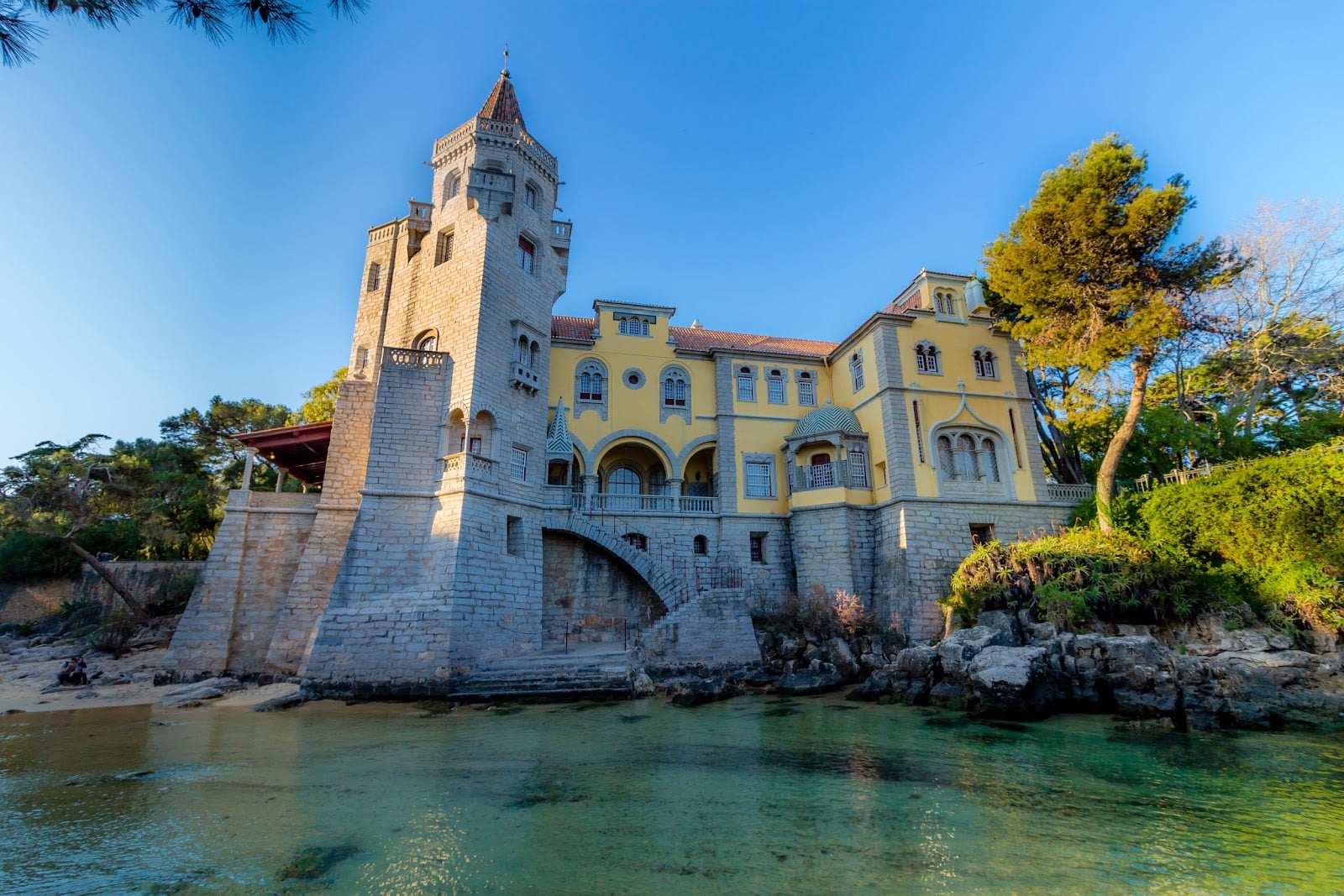
Finish in Cascais beside the small inlet at Santa Marta. The blue-and-white lighthouse, which entered service in 1868, stands beside the former home of Jorge O’Neill, now the Casa de Santa Maria. From the public roadside by the inlet, the combination of water, architecture, and lighthouse gives you a more intimate coastal photograph than the afternoon’s open headlands. Late light can warm the buildings, although the season and cloud cover determine the effect.
Stay in Cascais for an early dinner or a waterfront stroll before returning to Lisbon. Walking distances here can be modest, a welcome finish for couples, families, and retirees who want a full day without an endurance test. The six viewpoints tell one continuous story: a village shaped by water, a beach reached by tram, a seafood lunch, a continental edge, windblown sand, and a lighthouse. The photographs bring it home; the pauses make it yours.
Plan your own day
Share your dates, group size and interests, and we will suggest a tailored plan with a local driver/guide.