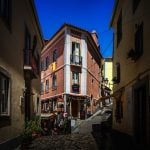
The best day outside Lisbon is not necessarily the one with the most stops. These six escapes offer something more lasting: a palace story, an Atlantic lunch, or a quiet encounter with centuries of Portuguese history.
1. Sintra, where a royal retreat becomes your own forest day
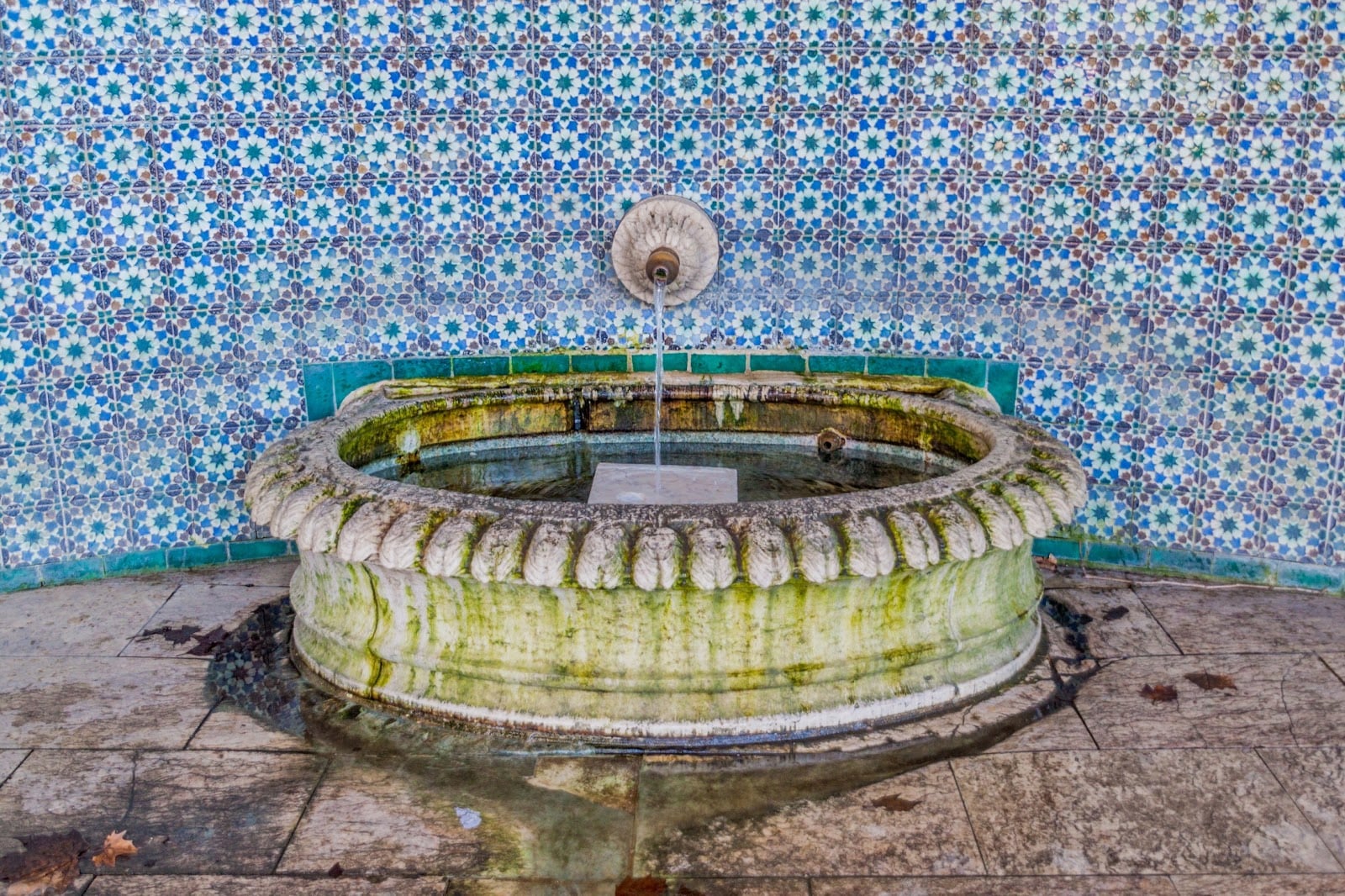
Sintra rewards the traveler who resists collecting palaces. Roughly 40 minutes from Lisbon by road in light traffic, this wooded hill town feels far removed from the capital. Choose Pena Palace for its theatrical colors and the story of Ferdinand II, the nineteenth-century king consort who transformed a former monastery into a Romantic retreat. Or choose the National Palace of Sintra, whose twin kitchen chimneys rise above the old town. Its rooms tell a longer royal story, with painted ceilings and remarkable tilework rather than a hilltop panorama.
Afterward, leave room for a warm travesseiro, the puff pastry filled with almond cream associated with Sintra. For Americans accustomed to ambitious European sightseeing schedules, the pleasure here is permission to do less. Pena requires advance planning around timed admission, and its slopes deserve consideration. A local driver/guide can shape the day around the guests, balancing palace visits, walking tolerance, and lunch rather than treating every landmark as compulsory.
2. Cascais, for a seaside day without changing hotels
In Cascais, start beside Praia dos Pescadores, where the fishing heritage remains visible beneath the town’s polished holiday identity. King Luís I began spending part of the summer here in 1870, helping turn a fishing settlement into a fashionable retreat. Today, the appeal is wonderfully straightforward: a compact historic center, sea air, and lunch within walking distance of the waterfront. From Lisbon, allow around 40 minutes by road before traffic, with additional time if you follow the scenic coast.
Order grilled fish and ask what is fresh that day; a glass of Bucelas white makes a particularly Portuguese companion. Later, choose the shaded paths of Parque Marechal Carmona or the dramatic rock formations at Boca do Inferno. This is a strong option for couples or multigenerational families who want atmosphere without a demanding monument itinerary. English is widely spoken in visitor-facing businesses, while leaving the driving to someone else removes the search for parking from the afternoon.
3. Obidos, a medieval town best enjoyed below the walls
About an hour north of Lisbon, Óbidos announces itself through a fortified gateway and a tangle of whitewashed lanes. Its long association with Portuguese queens includes King Dinis’s gift of the town to Queen Isabel in 1282. Yet the most memorable hour may involve no royal history at all: step away from Rua Direita, the principal shopping street, and follow quieter passages past flowerpots, painted doorframes, and the irregular geometry of old houses.
The walls tempt photographers, but sections are narrow, uneven, and lack protective barriers. Families and travelers concerned about balance can enjoy the town perfectly well from street level. Browse a bookshop, visit the Church of Santa Maria when open, and try ginjinha, the sour cherry liqueur often served here in a chocolate cup. For lunch, look for regional dishes such as pork or salt cod rather than making sweets the entire meal. Arriving before the busiest excursion hours gives this small town more room to tell its story.
Browse our travel inspiration for ideas, or tell us what kind of day you have in mind.
4. Evora, where Roman stones lead to an Alentejo lunch
Évora asks for a longer drive, usually around 90 minutes each way, but offers a remarkable concentration of history once you arrive. Its Roman temple dates to the first century AD; the nearby cathedral belongs to the medieval city that grew around those ancient remains. Walk between them slowly, noticing how granite, whitewash, and yellow trim change the light. Travelers familiar with Italy’s layered cities will recognize the pleasure of encountering several centuries within a few streets.
Make lunch the center of the day. Açorda alentejana brings together bread, garlic, coriander, and olive oil in a dish whose simplicity reflects the region’s cooking traditions. Lamb stew and local sheep’s cheeses offer other routes into the Alentejo, accompanied by regional wine if desired. Restaurant choice matters more than countrywide assumptions about value: compare menus rather than expecting every Portuguese table to cost less than France, Italy, or Spain. In summer, plan outdoor walking early and give the hottest hours to lunch or an indoor visit.
5. Arrabida and Setubal, for Atlantic scenery with something good to eat
South of the Tagus, the Serra da Arrábida rises above startlingly clear water. Setúbal is roughly 45 to 60 minutes from Lisbon by road, while the coast beyond deserves its own unhurried allowance. This is a landscape day rather than a checklist day: wooded limestone slopes, glimpses of sheltered coves, and the sudden blue sweep near Portinho da Arrábida. Beach access and traffic arrangements can change seasonally, so the prettiest route is not always the simplest one.
In Setúbal, seek out choco frito, strips of cuttlefish fried in a seasoned coating and commonly served with fries. A morning visit to Mercado do Livramento adds tiled walls and fish counters to the story, provided you check opening days first. Later, Azeitão offers buttery sheep’s cheese and the region’s Moscatel de Setúbal, a fortified wine. Any winery visit should be arranged ahead. Having someone else drive makes tasting easier, while a flexible schedule leaves space for either another viewpoint or a longer lunch.
6. Tomar, for a single monument that opens an entire history
Allow roughly 90 minutes from Lisbon to Tomar, where the Convent of Christ rises above the town. Founded by the Knights Templar in the twelfth century, the complex later became the seat of the Order of Christ. Its extraordinary Charola, the round church at its heart, provides the day’s defining encounter. Outside, the famous Manueline chapter-house window turns stone into ropes, foliage, and maritime imagery. Give the visit time: this is not a monument to squeeze between several distant towns.
Descend afterward for lunch and a walk beside the Nabão River. Portugal Magik’s Mercedes-Benz vehicles provide a comfortable base for the return, without asking you to navigate unfamiliar roads after a full day. Whichever escape you choose, keep one part of it unscheduled. Often the memory that travels home is the conversation over lunch, not the final stop.
Plan your own day
Share your dates, group size and interests, and we will suggest a tailored plan with a local driver/guide.