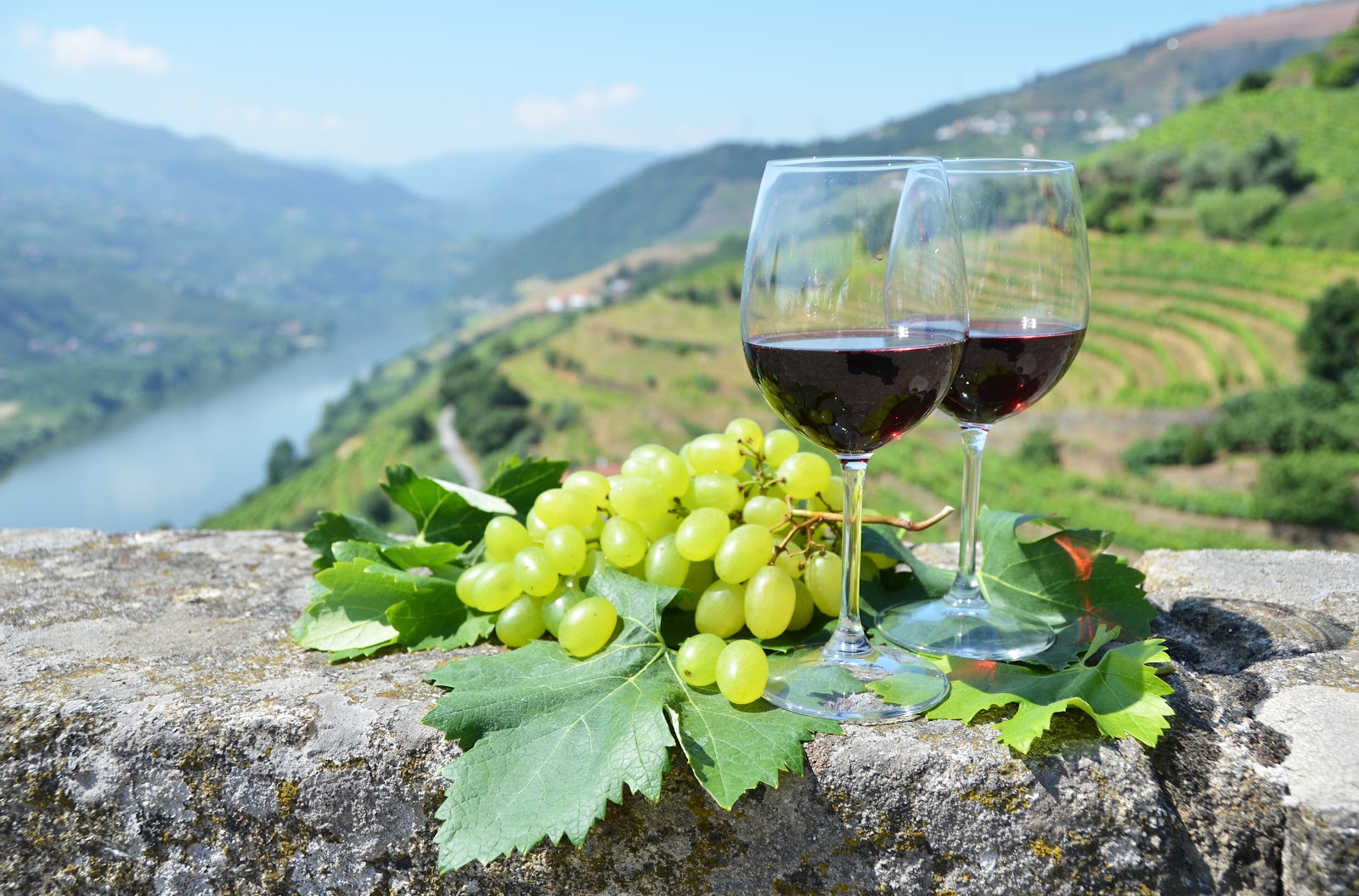
Follow northern Portugal from Porto’s riverside streets into the Douro vineyards, then onward to Guimarães and Braga. A lingering day among the vines anchors this six-day itinerary, with market tables, medieval stories and generous time between stops.
Day 1: Arrival in Porto, Tiles and the River
Arrive in Porto and keep the opening afternoon deliberately modest, allowing time to settle in before visiting São Bento station, where Jorge Colaço’s early twentieth-century tile panels turn a working railway entrance into a picture book of battles, royal arrivals and rural life. Rather than trying to decode every scene, notice the contrast between travelers hurrying toward their trains and visitors standing still beneath images that give the country’s past such theatrical presence. Continue downhill to Ribeira, where narrow houses face the river and the waterfront makes an inviting first walk, especially when the afternoon light begins to catch the upper windows. Over dinner, try bacalhau à Gomes de Sá, Porto’s comforting combination of salt cod, potatoes, onions, eggs and olives, a dish whose appeal lies in good ingredients rather than elaborate presentation. Overnight in Porto, leaving the evening open for an early bedtime or one last look at the river.
Day 2: Porto’s Market and the Port Cellars
Begin at Mercado do Bolhão, the historic market reopened in 2022 after restoration, and take time to look beyond the handsome ironwork to the produce stalls, fish counters and everyday exchanges that keep it connected to the city. A coffee and something small at a market counter make a better opening than a large breakfast, particularly when the pleasure is watching shoppers compare vegetables while stallholders arrange the morning’s deliveries. Cross the river to Vila Nova de Gaia for a booked visit at Graham’s Lodge, established here in 1890, where rows of casks introduce the connection between the vineyards inland and the cooler conditions traditionally used for aging port. During the tasting, compare a tawny’s nutty, oxidative character with a ruby-style wine’s darker fruit, asking how wood, time and blending create differences that are easy to appreciate without specialist vocabulary. Return to Porto for the night, with an unhurried dinner rather than another round of sightseeing.
Day 3: Into the Douro, the Journey’s Memorable Day
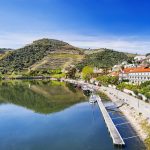
Leave Porto for the Douro after breakfast, letting this be the day the journey opens out: Portugal Magik’s local private driver/guide handles the driving in a Mercedes-Benz vehicle and shapes the pacing around whether guests prefer longer vineyard conversations or more time simply looking. At São Leonardo de Galafura, the river bends far below a landscape associated with writer Miguel Torga, and the view reveals something a wine label cannot convey: how steeply cultivation has been fitted to the hills. Continue to Quinta do Bomfim in Pinhão for a prebooked visit, where the Symington family’s working estate offers a tangible introduction to the grapes, terraces and decisions behind its Douro wines and ports. Let lunch be the day’s long pause, with roasted kid if available and a glass of Douro red, carrying the morning’s landscape into a conversation about farming, family ownership and the labor behind every harvest. Overnight in Pinhão, without adding another destination after such a satisfying afternoon.
Browse our travel inspiration for ideas, or tell us what kind of day you have in mind.
Day 4: Pinhão, Vineyard Stories at a Slower Pace
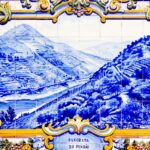
Stay in the valley for a second day rather than treating it as a scenic detour, beginning at Pinhão railway station, whose blue-and-white tile panels depict vineyard work, grape gathering and the river transport that once connected this landscape to the coast. After yesterday’s expansive views, these images bring the story back to human scale, showing baskets, bodies and boats rather than the seemingly effortless geometry seen from a distant hillside. Follow the winding road to Quinta do Seixo for a booked estate visit, using the journey itself to notice how vineyard orientation and elevation change from one bend to the next. At lunch, choose a local menu featuring river fish or a slow-cooked meat dish, and try a Douro white, whose freshness provides a useful counterpoint to the powerful reds and fortified wines most visitors already associate with the region. Overnight again in Pinhão, with enough unscheduled time to sit by the water and let the valley become familiar.
Day 5: Guimarães, Where the Kingdom’s Story Takes Shape
Travel west to Guimarães, allowing the morning for the road before beginning at Guimarães Castle, whose origins reach back to the tenth century and whose later history is closely associated with Portugal’s first king, Afonso Henriques. The city’s description as the birthplace of Portugal is best understood through those early struggles for independence, particularly the Battle of São Mamede in 1128, rather than as a claim that the kingdom appeared fully formed in one moment. Nearby, the Paço dos Duques de Bragança adds a different chapter, its fifteenth-century origins and conspicuous brick chimneys contrasting with the castle’s defensive silhouette, while its extensive twentieth-century restoration deserves acknowledgment during the visit. Spend the late afternoon around Largo da Oliveira, where the medieval church and Gothic commemorative monument reward a slow circuit before a café stop for a torta de Guimarães, a local pastry made with ingredients including almonds and egg yolks. Overnight in Guimarães, enjoying the old center after the day’s excursions have departed.
Day 6: Braga, Sacred Architecture and a Sweet Finish
Make the short journey to Braga and begin at the Sé, the cathedral whose foundation predates the Portuguese kingdom, looking for the layers of Romanesque, Gothic and later decoration rather than expecting one consistent architectural style. This is a city where religious history remains part of everyday life, and a leisurely walk afterward gives you time to notice church doors opening, café tables filling and shopping streets carrying on around the monuments. Continue to Bom Jesus do Monte, where the monumental stairway turns the hillside into a devotional route and the water-powered funicular, inaugurated in 1882, offers an alternative ascent when operating. Allow time at the top for the view and the sanctuary before returning for bacalhau à Braga, typically served with fried potatoes and an onion-based topping, followed by a pudim Abade de Priscos, the rich egg-yolk pudding traditionally made with a small amount of pork fat. Overnight in Braga, bringing the itinerary to a close with northern Portugal’s food, faith and landscape still closely intertwined.
Plan your own day
Share your dates, group size and interests, and we will suggest a tailored plan with a local driver/guide.