From a royal kitchen in Sintra to grilled fish beside the Atlantic, one day west of Lisbon shows what a private driver really adds: fewer decisions, better context, and time to enjoy being somewhere new.
1. Your morning begins with the journey, not the logistics
Imagine leaving Lisbon after breakfast, with a full day ahead and no rental counter to find. The city gives way to the wooded slopes around Sintra, roughly 30 kilometers west of the capital. Depending on traffic and your starting point, the drive often takes about 40 to 50 minutes. For Americans accustomed to covering long distances between sights, this proximity is part of Portugal’s appeal: a royal town, a distinctive wine region, and the Atlantic coast can belong to the same day.
Portugal Magik’s private driver and guided tour service uses Mercedes-Benz vehicles, giving couples, families, and retirees a comfortable base between walks. More importantly, someone else handles navigation, parking, and unfamiliar road rules. Sintra’s narrow roads and traffic restrictions make that particularly useful. A driver does not eliminate congestion or provide access everywhere, but removes the need to solve each practical problem yourself. You arrive ready to look up at the palace chimneys rather than down at a parking app.
2. A palace becomes a story rather than another stop
Begin with the National Palace of Sintra, whose two enormous white kitchen chimneys rise above the historic center. Unlike a single grand building created in one campaign, this palace carries the work of successive Portuguese kings. Much of its appearance reflects building under João I and Manuel I. Inside, painted ceilings, courtyards, and patterned tiles tell a story of court life that reaches beyond the familiar castles of northern Europe.
The kitchen makes an especially memorable pause. Beneath those towering chimneys, the scale of royal hospitality becomes easier to imagine: fires, provisions, and the work required to feed a court. A guide can connect that practical space with the ceremonial rooms, giving children something concrete to picture and experienced travelers a richer architectural thread to follow. Tickets and opening arrangements still need attention, and guided access depends on the monument’s rules. The benefit is interpretation, not an unrealistic promise of empty rooms or automatic priority.
3. There is room for a pastry and a change of mind
After the palace, Sintra deserves a little unstructured time. A travesseiro, the flaky pastry filled with a sweet almond and egg mixture associated with the town, is reason enough to pause. Piriquita, founded in 1862, is a longstanding address for one. Queijadas offer a different local taste: small cheese-based sweet tarts with thin pastry shells. Order coffee, share both, and let the palace visit settle into conversation instead of immediately collecting another attraction.
This is where a local driver/guide can shape the day around the guests. A family might prefer a shorter walk and an earlier lunch; a couple may want more time with the palace’s tilework. English is widely spoken in Portugal’s main visitor areas, so Americans generally need not approach ordinary exchanges with anxiety. Still, having someone explain a pastry name, discuss a menu, or coordinate the next stop smooths the day. Comfortable pacing means keeping choices open, not trying to fit every famous sight into the schedule.
Browse our travel inspiration for ideas, or tell us what kind of day you have in mind.
4. Lunch can include the wine without the driving calculation
From Sintra, head toward Colares and the coast for lunch. This is a small wine region with an unusually tenacious history. Its traditional vineyards include vines grown in deep sand, where the phylloxera insect that devastated European vineyards could not establish itself in the same way. Ramisco is the signature red grape; Malvasia de Colares produces white wines. Bottles can be scarce, so ask what is available rather than assuming every nearby restaurant pours them by the glass.
At Praia das Maçãs or nearby Azenhas do Mar, look for simply grilled fish, perhaps sea bass or sea bream, with boiled potatoes and vegetables. Ask which fish is available that day and check whether the menu prices it by weight. With a dedicated driver, neither partner has to become the designated driver after a glass of wine. That is a practical safety advantage, especially when the afternoon includes winding roads. The pleasure is straightforward: lunch can be lunch, rather than a negotiation about who will drive afterward.
5. The Atlantic feels close without requiring a road trip
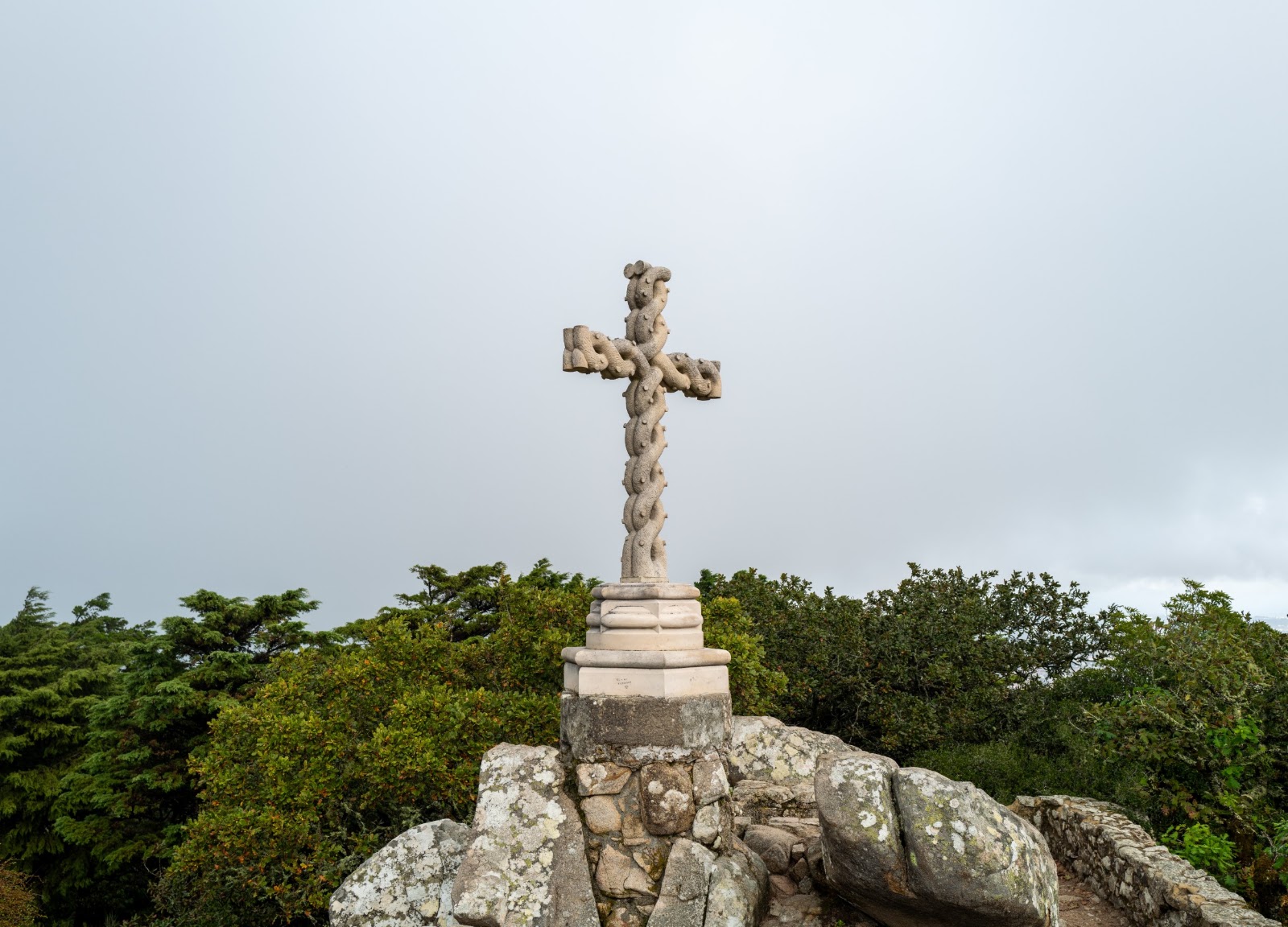
Continue to Cabo da Roca, the westernmost point of continental Europe. The landscape changes decisively here: low vegetation, exposed cliffs, and an ocean that makes the royal rooms of the morning feel far away. A stone marker carries words from Portugal’s great poet Luís de Camões describing where the land ends and the sea begins. Bring a layer, even when Lisbon felt warm, and stay behind the barriers. Wind and cliff edges deserve respect.
The route onward toward Cascais passes through the landscape of the Sintra-Cascais Natural Park, with the broad sands of Guincho along the coast. These are relatively short stages rather than an entire afternoon on a highway, although traffic can stretch them. For Americans comparing European itineraries, that compactness matters. The day offers architecture, food, wine, and open coastline without changing hotels. From the passenger seat, both travelers get to watch the scenery instead of one person concentrating on bends, signs, and the next turn.
6. The value lies in how much of the day remains yours
Finish with a stroll beside Cascais Bay before returning to Lisbon. The fishing town became a fashionable seaside retreat after King Luís I began spending summers here in 1870. Today, fishing boats and waterfront promenades give the afternoon a gentler closing scene. There is no need to turn it into another extensive visit; a bench overlooking the water may be enough.
Portugal can offer appealing value beside comparable trips in France, Italy, or Spain, particularly in everyday dining, but a private driver is an additional expense, not automatically the cheapest choice. Compare vehicle size, guiding, duration, and inclusions rather than headline rates alone. For travelers who value their time together, the return is a day without repeated parking searches or driving duties. What stays with you is simpler: those extraordinary chimneys, almond pastry crumbs, and the Atlantic wind.
Plan your own day
Share your dates, group size and interests, and we will suggest a tailored plan with a local driver/guide.