From a morning coffee in Lisbon to an evening beside the fishing boats in Cascais, a single day reveals Portugal’s reassuring appeal: approachable people, manageable distances, and room to travel at your own pace.
1. The morning starts with ordinary pleasures, not complicated logistics
Begin in Belém, Lisbon’s riverside district, with coffee and a warm custard tart at Pastéis de Belém. The bakery dates to 1837, and its blue-and-white tiled rooms make breakfast feel connected to the city rather than separated from it. There may be a queue, but the ritual itself is wonderfully straightforward: pastry, coffee, and a little time to notice where you are. For Americans arriving with memories of tightly scheduled European trips, this is a gentler opening chapter.
Portugal’s appeal is not that travelers can abandon common sense. Pickpocketing occurs in Lisbon, particularly on busy public transport and around major attractions. Keep valuables secured and avoid leaving belongings visible in a parked vehicle. Those practical habits belong alongside the pleasure of the morning, rather than dominating it. The reassuring feeling comes from a day built around lively public places, clear arrangements, and enough breathing room to pay attention.
2. English makes the small exchanges easier
Across Lisbon, Belém, and Cascais, English is widely spoken in visitor-facing businesses, including hotels, restaurants, and museums. That does not mean every person speaks it, or that every menu needs to be bilingual. It does mean American travelers can often ask about an ingredient, clarify a meeting point, or discuss a walking route without turning every exchange into a translation exercise. A greeting of bom dia still matters. Courtesy opens the conversation before vocabulary carries it further.
After breakfast, walk toward the Jerónimos Monastery, commissioned by King Manuel I in the early sixteenth century and closely associated with Portugal’s maritime expansion. Its carved stonework rewards slow looking: ropes, foliage, and religious symbols worked into pale limestone. Understanding what you are seeing makes a place feel more approachable, too. A guide can explain both the architectural achievement and the more difficult history of empire, giving curious adults and younger family members something substantial to discuss.
3. A change of scenery does not require a travel day
From Belém, continue west toward Cascais. The journey is roughly 25 kilometers by road, although the route and traffic determine how long it takes. This compact geography is one of Portugal’s most useful advantages: a monumental Lisbon morning can become a seaside lunch without changing hotels, packing bags, or spending half the day in transit. Where the coastal road follows the Tagus toward its Atlantic mouth, the transition becomes part of the pleasure rather than an interruption.
Travelers comparing Portugal with France, Italy, or Spain should compare individual routes, not assume one country is universally easier. Here, however, the combination is particularly convenient. With Portugal Magik, a local driver/guide can shape the day around the guests in a Mercedes-Benz vehicle, allowing more time at the monastery or an earlier departure for the coast. Nobody in the family has to navigate unfamiliar junctions, find parking, or miss the view while watching the road.
Browse our travel inspiration for ideas, or tell us what kind of day you have in mind.
4. Lunch offers both hospitality and clear choices
In Cascais, make lunch part of the itinerary rather than a gap between sights. Look for grilled fish served with boiled potatoes and vegetables, or arroz de marisco, a brothy seafood rice commonly prepared with shellfish. Ask what is available that day instead of expecting every species year-round. A glass of Bucelas white wine, from the region north of Lisbon and made principally from Arinto, offers a nearby connection to Portugal’s wine traditions. Having someone else drive leaves the adults free to enjoy it responsibly.
Value here is best understood through the whole meal, not a promise that Portugal is always cheaper than its neighbors. Tourist waterfronts can command substantial prices. Check whether fish is priced by weight, and ask about bread, olives, or cheese brought to the table: these are often charged separately if accepted and eaten. Such small clarifications remove uncertainty. For experienced American travelers, transparent choices and well-prepared local food can matter more than chasing the lowest bill.
5. The afternoon can accommodate different energy levels
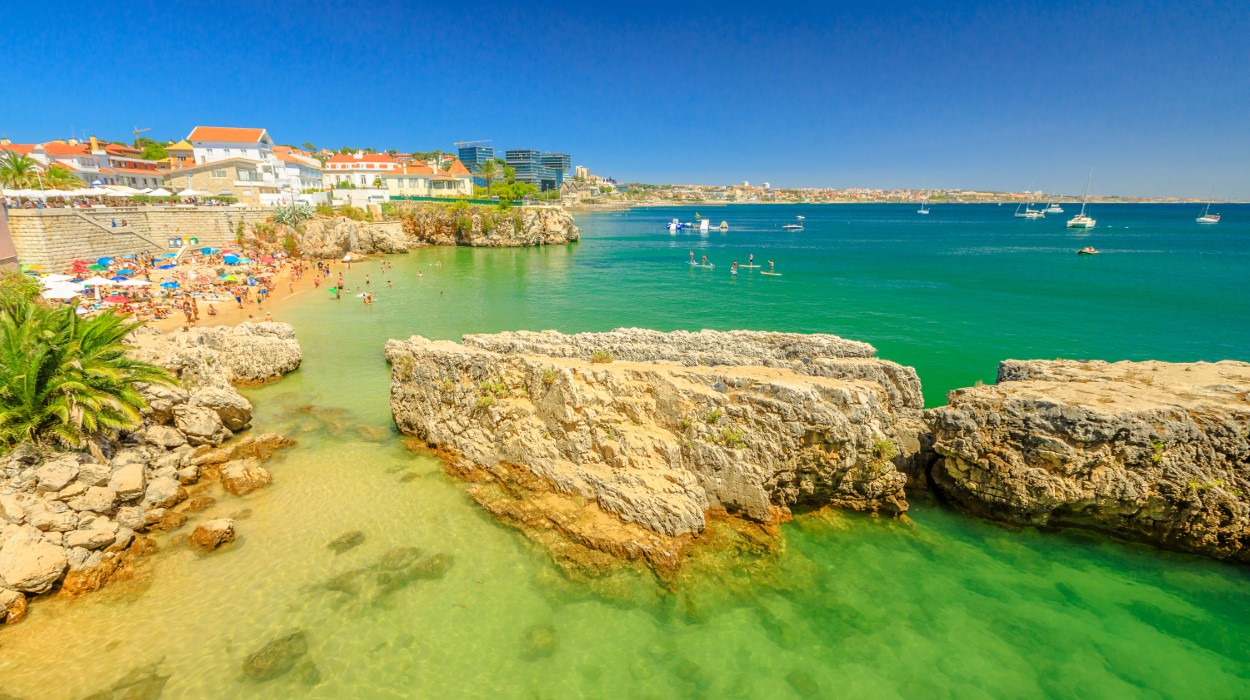
After lunch, Cascais allows a quieter kind of sightseeing. Around Praia dos Pescadores, fishing boats and the sheltered waterfront preserve a visible link to the town’s working past. Cascais also became a fashionable royal seaside retreat after King Luís I began spending summers here in 1870. That overlap, fishing town and royal escape, helps explain the handsome buildings behind the bay. You do not need to climb a fortress or cross an entire museum to begin reading its story.
For couples, families, and retirees traveling together, choice is a form of comfort. Some may want a longer waterfront walk while others prefer a café overlooking the beach. Central waterfront stretches are relatively level, but Portuguese stone paving can be uneven or slippery, and accessibility should be checked for specific sites. Comfortable shoes remain useful even on an easy day. The point is not to eliminate walking, but to choose it deliberately rather than discover too late that every attraction requires a steep ascent.
6. Reassurance comes from practical support, not promises
By early evening, linger near the bay before returning to Lisbon. The sea deserves the same sensible respect as the city: Atlantic water can be cold, conditions vary, and beach flags and lifeguard instructions matter. Portugal uses 112 for emergencies. Travel insurance, necessary medication, and a working phone remain worthwhile preparations. No destination can guarantee safety, but knowing the basics makes it easier to stop rehearsing what might go wrong and enjoy what is actually in front of you.
That is the welcome this day reveals: not a staged encounter, but a sequence of manageable moments. Breakfast has a history, lunch has a local accent, and the journey leaves space for conversation. For Americans choosing their next European destination, Portugal offers a persuasive possibility: a memorable day need not be a demanding one.
Plan your own day
Share your dates, group size and interests, and we will suggest a tailored plan with a local driver/guide.