From crisp coastal whites to bold granite reds, discovering native grapes across Portugal offers American travelers exceptional quality without the crowds or pretension of older European cellars.
1. Alvarinho from Moncao and Melgaco, the Atlantic white that rivals Sancerre
Many visitors from the United States arrive familiar with light, fizzy Vinho Verde, only to be astonished by the serious depth of pure Alvarinho produced in the northern sub-regions of Moncao and Melgaco. Grown on granite soils along the Minho River, these dry white wines balance bright citrus and stone fruit with an intense mineral finish. They easily compete with premier French Chablis or Sancerre, yet they appear on local menus at a fraction of the cost.
Sipping a chilled Alvarinho paired with grilled sea bass or fresh octopus in a sunlit northern village offers an effortless introduction to native Portuguese grapes. Having a local driver and guide handle the winding country roads allows guests to enjoy regional tastings without ever worrying about navigation, stone walls, or tight mountain switchbacks.
2. Touriga Nacional from the Douro Valley, the sovereign grape of dry red wines
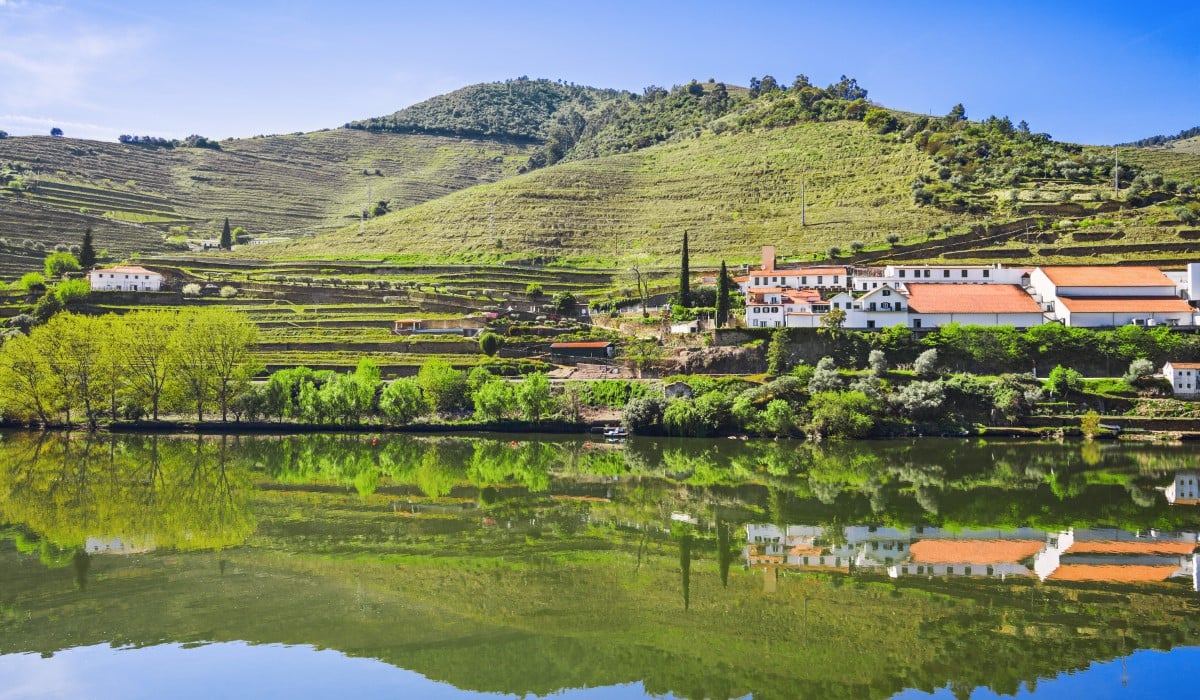
While American collectors know the Douro Valley for fortified Port, the region has spent recent decades proving itself as one of the great dry red terroirs of the world. Touriga Nacional is the centerpiece of this quiet revolution. In the glass, it shows deep violet hues, floral aromas of bergamot and rockrose, and rich, structured dark fruit that appeals instantly to lovers of Napa Valley Cabernet or Bordeaux.
Visiting a historic quinta perched high above the river terraces reveals how steep schist slopes and hot summer afternoons concentrate these flavors. The cellar staff speak fluent English, welcome questions with warm hospitality, and present library vintages alongside local olive oils and rustic sheep cheeses.
3. Encruzado from the Dao, the white grape built for Burgundy lovers
Nestled on a high plateau sheltered by pine forests and granite mountain ridges, the Dao region produces wines marked by natural elegance and cool acidity. The star white grape here is Encruzado. When aged lightly in French oak barrels, it develops a creamy texture, hazelnut complexity, and lemon curd notes that evoke classic Puligny-Montrachet.
American travelers who prefer structured whites with dinner find Encruzado to be an immediate revelation. Tasting it inside a centuries-old granite estate near Viseu feels worlds away from the packed commercial tasting rooms of Italy or California, offering genuine connection with winemakers who pour their own bottles.
Browse our travel inspiration for ideas, or tell us what kind of day you have in mind.
4. Alicante Bouschet from the sun-drenched plains of the Alentejo
Originally brought from France in the nineteenth century, Alicante Bouschet found its true spiritual home across the golden rolling hills and ancient cork forests of the Alentejo. It is a rare red-fleshed grape, meaning the pulp itself is red, resulting in inky, full-bodied wines with notes of wild blackberries, eucalyptus, cocoa, and supple tannins.
For Americans accustomed to plush Sonoma Zinfandel or robust Australian Shiraz, old-vine Alentejo reds feel instantly inviting. A private Mercedes-Benz transfer across the plains turns a vineyard afternoon into a relaxing day trip from Lisbon, leaving travelers free to linger over slow-roasted lamb and deep, velvety pours.
5. Baga from Bairrada, a northern red with the soul of Barolo
Grown on clay and limestone soils between the sea and the central mountains, Baga is a grape of fierce character. In youth, it displays firm tannins, high acidity, and tart red cherry notes. With ten or fifteen years in the bottle, however, it transforms into an ethereal, perfume-rich wine remarkably similar to aged Piedmontese Nebbiolo or classic red Burgundy.
A visit to Bairrada is incomplete without ordering the region’s famous roast suckling pig, known as leitao. The crackling crisp skin and tender meat cut right through Baga’s crisp backbone, creating one of the most memorable regional food and wine pairings anywhere on the continent.
6. Arinto from Bucelas, the historic mineral white born just north of Lisbon
Less than an hour north of the capital lies Bucelas, an ancient appellation celebrated since Roman times and famous in England during the Napoleonic Wars. The hero grape is Arinto, renowned for retaining its electric, mouthwatering acidity even under warm summer sunshine. It carries green apple, lime zest, and chalky salinity from limestone hills.
Bucelas proves how remarkably short travel distances are in Portugal. A traveler can spend the morning exploring maritime monuments along the Tagus River, head north with a dedicated driver for an unhurried vineyard lunch, and return in time for evening concerts in the city center.
7. Colares Ramisco, rare ocean vines planted directly in sand dunes
Perched above the crashing Atlantic surf near Sintra, Colares is one of the most singular wine regions on earth. Because its vines are planted deep into seaside sand dunes, the phylloxera pest could never survive here, leaving rare ungrafted nineteenth-century Ramisco vines intact. The sea spray and constant maritime winds produce a savory, tart red wine laced with cedar, dried rose petals, and iodine.
Production is tiny and historic cellars are modest, making access feel like stumbling upon an artisanal secret. Tasting Ramisco right where the sand meets the pines offers an unforgettable sensory detour that mass-market tour buses simply cannot navigate.
8. Vintage and Tawny Port from Vila Nova de Gaia, the classic conclusion
No exploration of Portuguese wine is complete without walking the cool, shadowy lodges of Vila Nova de Gaia, directly across the river from Porto. Here, millions of liters of fortified wine rest in massive oak casks. Sampling a twenty-year-old Tawny reveals layered nuances of dried fig, toasted walnut, and orange peel, while a young Vintage Port delivers staggering power and rich blackberry concentration.
For Americans, the discovery lies in how approachable these legendary cellars are. Rather than requiring reservations months in advance or charging astronomical tasting fees, the grand riverfront lodges welcome visitors with genuine enthusiasm and encyclopedic knowledge. Exploring these diverse indigenous grapes with an experienced local guide allows guests to adjust stops on a whim, unlocking the country’s deepest cellars at a tranquil, customized pace.
Plan your own day
Share your dates, group size and interests, and we will suggest a tailored plan with a local driver/guide.