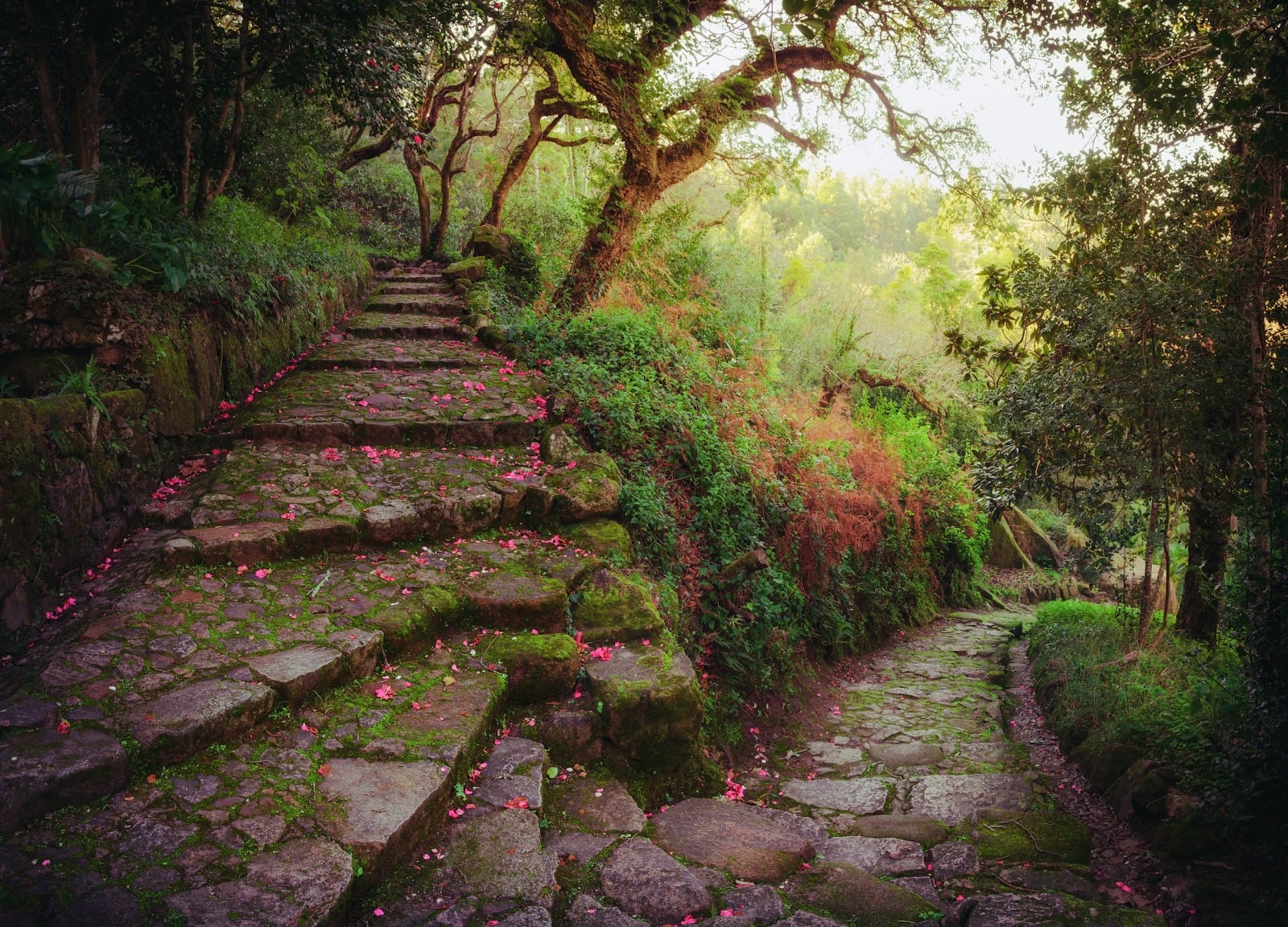
Close to Lisbon but wonderfully different in mood, Sintra turns a single day into a journey through royal ambitions, forest paths and pastry-shop traditions. Its strongest appeal is not how much you can see, but how vividly you remember it.
1. The day feels like an escape without changing hotels
Leave Lisbon after breakfast and the city gradually gives way to the wooded slopes of the Serra de Sintra. The historic town lies roughly 30 kilometers west of the capital, close enough for a rewarding day without repacking a suitcase. Driving time depends on your starting point and traffic, but the change in atmosphere is unmistakable: cooler air, mossy walls and houses half hidden behind garden gates.
For Americans accustomed to covering long distances between highlights, that compact geography is persuasive. Sintra offers a different chapter of Portugal while keeping the same Lisbon base. Bring a light layer even when the capital is sunny; mist and Atlantic weather are part of the landscape’s character.
2. Pena Palace has a story behind its extraordinary appearance
Make Pena Palace the day’s main morning visit. Its yellow and red walls may look theatrical, but the setting tells a specific nineteenth-century story. Ferdinand II, the German-born consort of Queen Maria II, transformed a former monastery into a Romantic retreat, combining architectural references rather than following one historical style. The result rewards curiosity as much as photography.
Americans who have already toured French royal apartments or Italian Renaissance palaces find a different sensibility here: personal, imaginative and inseparable from the mountain. Sintra’s cultural landscape entered UNESCO’s World Heritage List in 1995. Reserve the appropriate timed palace ticket ahead, and allow for the uphill approach between the park entrance and the palace itself.
3. Someone else can handle the roads while you enjoy the mountain
On a map, Sintra’s monuments appear conveniently clustered. On the ground, steep lanes, traffic restrictions and scarce parking complicate that impression. Short distances do not necessarily mean quick transfers, especially in busy months. Leaving the driving to someone familiar with the area removes a practical distraction from a day that deserves your attention.
With Portugal Magik, a local driver/guide can shape the day around the guests, using a Mercedes-Benz vehicle for comfortable transfers and adjusting the balance of monuments, walking and pauses. That flexibility matters to couples who want time for photographs, families managing different energy levels and retirees who prefer fewer hills. It does not eliminate queues or walking, but it makes the plan more considered.
Browse our travel inspiration for ideas, or tell us what kind of day you have in mind.
4. The old town makes room for small discoveries
By late morning, return to the historic center rather than racing immediately to another entrance gate. The twin white chimneys of the Sintra National Palace rise above the town, an instantly recognizable reminder that Sintra was a royal residence long before Pena’s colorful transformation. Those enormous chimneys belong to the palace kitchens, a wonderfully practical explanation for such an arresting silhouette.
Around Praça da República, the pleasures become smaller: a tiled facade, a shop doorway, the first welcome seat after a morning uphill. English is widely spoken in visitor-facing businesses, making everyday exchanges straightforward. The center can be crowded, so keep an eye on belongings and take care on uneven paving. Ease here comes from sensible planning, not from pretending a popular destination is undiscovered.
5. Lunch and pastries belong to the place
Lunch is a chance to step away from palace grandeur and meet Portugal at the table. Depending on the menu, choose grilled fish or bacalhau à Brás, the comforting mixture of shredded salt cod, finely cut potatoes, onions and eggs. A glass of Portuguese wine gives the meal its own sense of occasion without requiring an elaborate tasting itinerary.
Afterward, save room for Sintra’s signature pastries. Queijadas are small cheese-based tarts, typically flavored with cinnamon; travesseiros are puff-pastry pillows with a sweet almond-and-egg filling. Casa Piriquita, founded in 1862, is a well-known stop for the latter. Share one while it is fresh, letting the flaky crumbs become part of the afternoon rather than worrying about keeping everything tidy.
6. Quinta da Regaleira invites exploration rather than another formal tour
If energy allows for a second estate, give the afternoon to Quinta da Regaleira. Its early-twentieth-century transformation brought together owner António Augusto Carvalho Monteiro and Italian architect Luigi Manini. Gothic-looking stonework, garden structures and underground passages create a setting that feels closer to a puzzle than a conventional palace visit.
The Initiation Well is the best-known feature: a deep ceremonial structure encircled by a spiral stair, not an ordinary water well. Children and adults can enjoy following the garden’s changing levels without needing a lecture at every turn. Still, steps, dim passages and potentially slippery surfaces deserve respect. Anyone with mobility concerns may prefer the National Palace instead, after checking its current access arrangements.
7. The value lies in a full day, not a bargain claim
For travelers comparing Portugal with France, Italy or Spain, Sintra’s appeal is not that every purchase will be cheaper. Admission tickets, transport and a good lunch all belong in the budget, and restaurant choices matter. The stronger argument is how much variety fits into one day from Lisbon: mountain scenery, royal history, distinctive architecture and food with a local identity.
Choose two principal visits rather than collecting tickets for every famous gate. That leaves time to enjoy what you have paid to see. A seated lunch and an unhurried garden walk can deliver more satisfaction than another rushed interior, particularly for Americans who have crossed the Atlantic seeking a memorable experience rather than a completed checklist.
8. Sintra leaves you with moments rather than a monument count
By the return journey, the day’s strongest memories may be surprisingly modest: cloud moving across Pena’s terraces, the scale of the National Palace chimneys, cinnamon on a pastry, or cool air rising from Regaleira’s stone passages. Sintra holds these contrasts within a remarkably small area. Its appeal reaches beyond any single postcard view.
That is why it wins over travelers who already know Europe’s celebrated destinations. You can spend one day here without changing hotels, navigating mountain roads yourself or treating every hour as an appointment. Leave a little space between the sights, and Sintra becomes more than a day trip. It becomes a story you bring home.
Plan your own day
Share your dates, group size and interests, and we will suggest a tailored plan with a local driver/guide.