A day from Lisbon to Cascais reveals why Portugal makes such a welcoming introduction to Europe: layered history, Atlantic scenery, generous tables, and room to enjoy them at your own pace.
1. The first morning feels approachable
Begin in Lisbon with something small: a coffee, a pastry, and a few minutes watching a neighborhood wake up. In Belém, west of the historic center, the Tagus opens into a broad sweep of water. There is no need to begin your European education with three museums and a complicated subway connection. A seat at a café can be enough.
For Americans weighing unfamiliar destinations, that gentle beginning matters. English is widely spoken in Lisbon’s visitor-facing businesses, although not universally. A greeting of bom dia is still appreciated. You can ask about the pastry in the window rather than simply point, and the morning becomes a conversation instead of a test.
2. A pastry carries a story worth crossing the Atlantic for
At Pastéis de Belém, which began selling its pastries in 1837, breakfast comes with a connection to the nearby Jerónimos Monastery. The bakery traces its recipe to the monastery, whose religious community was dissolved during Portugal’s nineteenth-century suppression of religious orders. Today, the crisp pastry and custard filling offer a particularly edible introduction to that history.
These are pastéis de Belém; elsewhere, the familiar custard tarts are generally called pastéis de nata. Try one before reaching for cinnamon. The pleasure is in the contrast between the brittle shell and soft center. For families especially, this is history with an immediate reward, not a date everyone must memorize.
3. Major history fits into a manageable morning
Nearby, Jerónimos rewards a slower look. Construction began in 1501 under King Manuel I, and its Manueline stonework draws on maritime and religious imagery. In the church are the tombs of Vasco da Gama and Luís de Camões, linking the building to both ocean voyages and Portugal’s literary imagination.
The monastery also opens a more complicated conversation about empire, trade, and the human costs of Portuguese expansion. That depth need not require an exhausting day. Choose the church and, if desired, the separately ticketed cloister, checking current access arrangements beforehand. One carefully explored monument can leave a stronger impression than a succession of hurried entrances.
Browse our travel inspiration for ideas, or tell us what kind of day you have in mind.
4. City culture and Atlantic scenery are close neighbors
From Belém, continue west toward Cascais, roughly 25 kilometers away by road. Following the N6 offers stretches beside the Tagus and, farther west, the Atlantic. Traffic determines the timing, so this is a route to enjoy rather than a promise of a particular arrival hour. The changing water supplies much of the entertainment.
For Americans accustomed to long distances between contrasting landscapes, this compact geography is persuasive. A monumental Lisbon morning can become a seaside lunch without changing hotels. Compared with an itinerary that stitches together distant cities in France, Italy, or Spain, this particular Portuguese day asks less of the suitcase and leaves more time for the destination.
5. Nobody has to spend the day navigating
The coastal road is more enjoyable when neither partner is watching for a parking space. Portugal Magik provides private tours in Mercedes-Benz vehicles, and a local driver/guide can shape the day around the guests: a longer monastery visit, an earlier lunch, or fewer walking stops for someone conserving energy.
That flexibility serves different generations without making anyone feel like the difficult traveler. Couples can linger over coffee; families can make room for a beach pause; retirees can choose where to spend their walking energy. Reservations, monument opening times, and traffic still matter, but the day need not revolve around collecting a rental car or deciphering unfamiliar parking rules.
6. Lunch introduces a cuisine with its own identity
In Cascais, let lunch turn toward the sea. Depending on the restaurant and the day’s supply, that might mean grilled sea bass or arroz de marisco, a brothy rice dish with shellfish. Sardines are especially associated with the warmer months, rather than being an automatic year-round recommendation.
A glass of Bucelas, a wine region north of Lisbon known for Arinto-based whites, brings freshness to the table. Ask what is available by the glass instead of assuming every list carries it. Portugal is not a substitute for French or Italian dining: its rice dishes, salt-cod traditions, olive oil, and Atlantic fish give the meal a distinct vocabulary.
7. Value can mean enjoying more, not merely spending less
Over lunch, the case for Portugal becomes practical as well as romantic. Everyday cafés and traditional restaurants can offer appealing value against comparable stops in heavily visited parts of France, Italy, and Spain. That is not true of every address, and fashionable Cascais restaurants deserve the same menu check you would make anywhere.
Look at what the experience includes. Bread, olives, and other couvert items brought to the table are generally charged if consumed; decline them if unwanted. Choosing Portuguese wines and seasonal dishes can keep the meal rooted in place while leaving room in the travel budget for guiding, a special hotel, or another unhurried afternoon.
8. An easy afternoon still has character
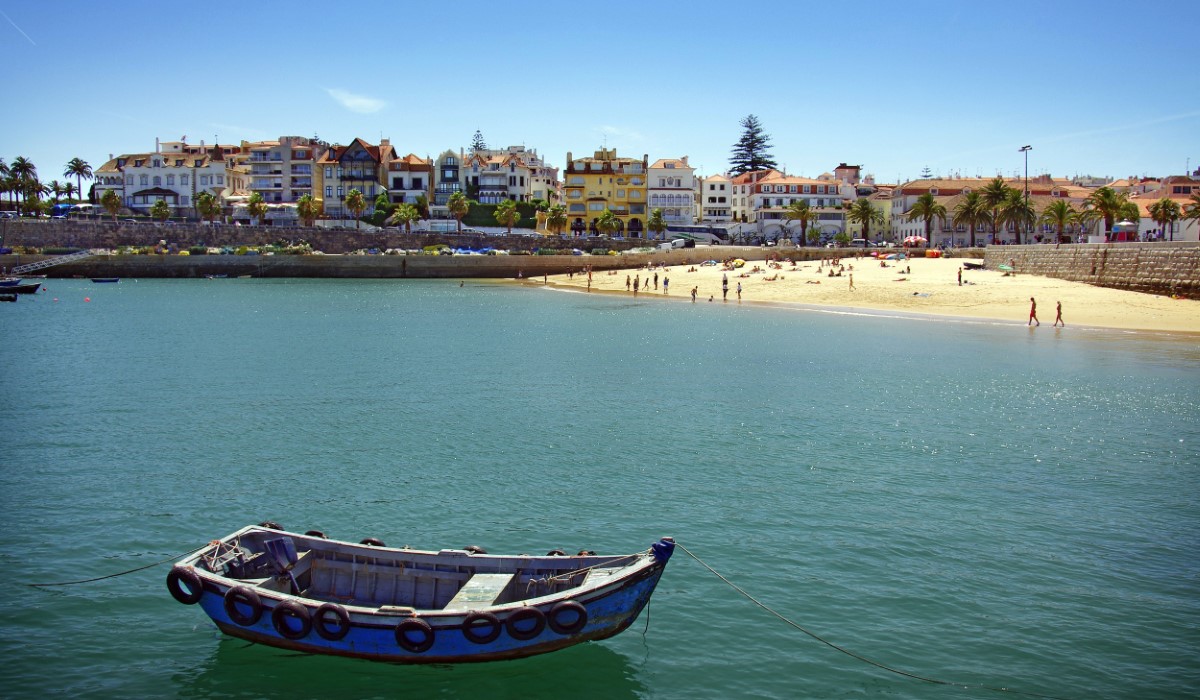
After lunch, walk through Cascais toward Praia da Ribeira, the small beach beside the town center. Fishing heritage sits alongside a later chapter: King Luís I’s choice of Cascais as a summer residence in 1870 helped establish its fashionable seaside reputation. The setting makes that transition easy to picture.
Portugal’s reputation for safety is reassuring, but ordinary precautions remain sensible. Keep belongings secure in busy areas, watch for slippery paving, and respect ocean conditions. Central Cascais offers relatively level waterfront strolling, a welcome contrast to Lisbon’s hills. Ease here does not require retreating from local life; it can simply mean choosing the right stretch of it.
9. The day leaves room for a personal memory
Before returning to Lisbon, consider Boca do Inferno, west of the center, where the Atlantic meets a dramatic rocky opening. Stay within designated viewing areas. On rough days, the water provides the spectacle; on calmer ones, the appeal is the coastline itself. Neither needs an elaborate activity attached.
This is Portugal’s quiet argument for a first European journey: one day can hold a monastery, a memorable lunch, and salt air without becoming an endurance exercise. You return remembering the crisp edge of a pastry or the color of the water, not simply the attractions you managed to finish.
Plan your own day
Share your dates, group size and interests, and we will suggest a tailored plan with a local driver/guide.