
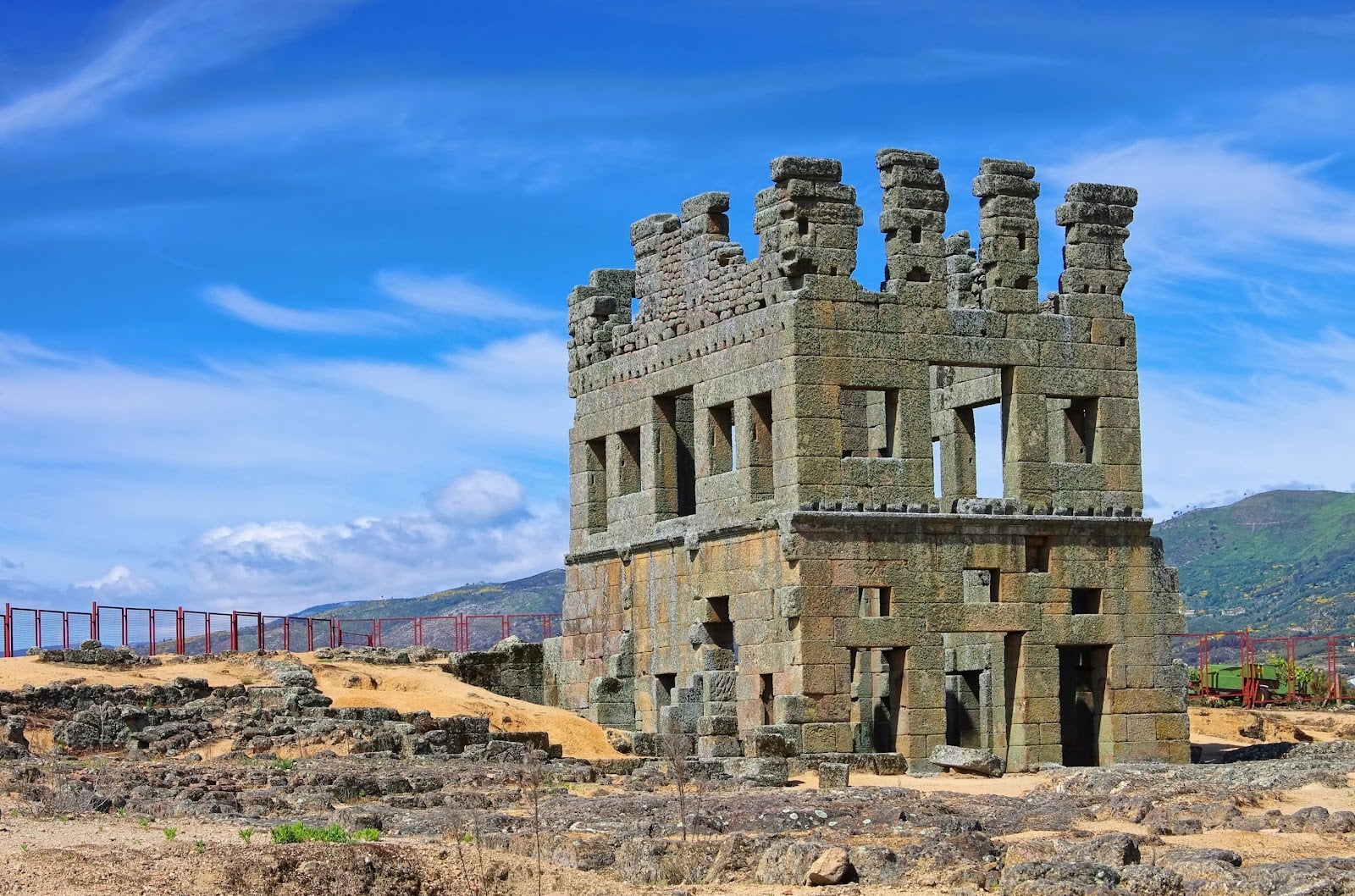
Guarda's historic judiaria, near the Porta d'El Rei, is well documented despite the absence of a surviving synagogue. This article explains what the evidence shows and addresses a common misconception about stone crosses.
A Documented Medieval Jewish Quarter
Guarda, a fortified hilltop city in central Portugal, had a significant medieval Jewish community, with a documented judiaria located near the Porta d'El Rei, one of the city's historic gates.
Historical records, including municipal and royal documentation, establish the presence and general boundaries of this Jewish quarter, making it one of the more clearly documented examples of a judiaria in the region, even without a surviving synagogue building.
The quarter's location near a major gate reflects how Jewish neighborhoods in many Portuguese towns were often situated near key points in the urban fabric, closely integrated with the town's defensive and commercial life.
No Surviving Synagogue Building
Unlike Tomar or Castelo de Vide, Guarda does not have a surviving synagogue building that can be identified and visited today, which distinguishes it from some other Portuguese towns with documented Jewish history.
This absence does not reflect a lack of historical Jewish presence, since the documentary record for Guarda's judiaria is substantial, but rather reflects the loss or repurposing of buildings over centuries of later construction and urban change.
Visitors interested in Guarda's Jewish history should therefore expect an experience grounded primarily in historical interpretation of the quarter's streets and records rather than a specific preserved religious structure.
A Note on Stone Crosses and Misconceptions
In Guarda, as in other Portuguese towns with historic Jewish quarters, visitors sometimes encounter stone crosses carved into building facades and assume these indicate specifically Jewish or converso history.
In fact, such crosses were a common feature across Portuguese towns for a range of religious and symbolic reasons unrelated specifically to Jewish or New Christian identity, and their presence alone does not constitute evidence of a building's connection to the Jewish community.
Responsible interpretation of Guarda's judiaria relies on documented historical sources rather than on architectural details like crosses, which require specific research to interpret correctly rather than being treated as automatic proof of Jewish heritage.
Life in the Judiaria Before 1497
Before the forced conversions of 1497, Guarda's Jewish community participated actively in the city's economic life, including trade and crafts, within the framework of the judiaria's defined streets and houses.
As with other Portuguese communities, residents of Guarda's judiaria were affected by the 1496 expulsion decree, after which many either left Portugal or were forced to convert, ending centuries of open Jewish communal life in the city.
The documentary record from this period, including references to specific streets and properties, continues to inform modern understanding of where and how the community lived within Guarda's urban structure.
Understanding Guarda Through Its Streets
Because no synagogue survives, a visit to Guarda's Jewish heritage focuses primarily on walking the streets near the Porta d'El Rei and understanding, through historical context, how the judiaria once functioned within the wider city.
This approach requires a degree of interpretive effort different from towns with a standing former synagogue, relying more heavily on historical explanation than on a single preserved building.
Guarda's judiaria nonetheless remains an important reference point for understanding the geography of Jewish settlement across central Portugal in the medieval period.
Guarda as Part of a Regional Itinerary
Iberian Heritage Journeys includes Guarda within its private multi-day Jewish heritage travel itineraries across Portugal and Spain, with private heritage driver-guides providing the historical context needed to interpret a quarter without a surviving synagogue.
Given its location, Guarda pairs naturally with nearby towns such as Belmonte and Trancoso within the 10-day complete immersion itinerary or the 12-day Iberian journey.
As with other stops, these itineraries do not include genealogy research or citizenship and legal services, focusing on accurate historical and cultural interpretation of each site.
Visitors planning a trip benefit from understanding this background in advance, since it adds depth to the experience of standing in these historic places and helps connect what is seen on site to the longer arc of Portugal's Jewish history across different regions and centuries.
Visitors planning a trip benefit from understanding this background in advance, since it adds depth to the experience of standing in these historic places and helps connect what is seen on site to the longer arc of Portugal's Jewish history across different regions and centuries.
Visitors planning a trip benefit from understanding this background in advance, since it adds depth to the experience of standing in these historic places and helps connect what is seen on site to the longer arc of Portugal's Jewish history across different regions and centuries.
Plan your Jewish heritage journey
Share your dates, interests and group size and we will suggest a tailored private itinerary with a local driver/guide, including heritage-focused visits. Access arrangements are confirmed before booking.