
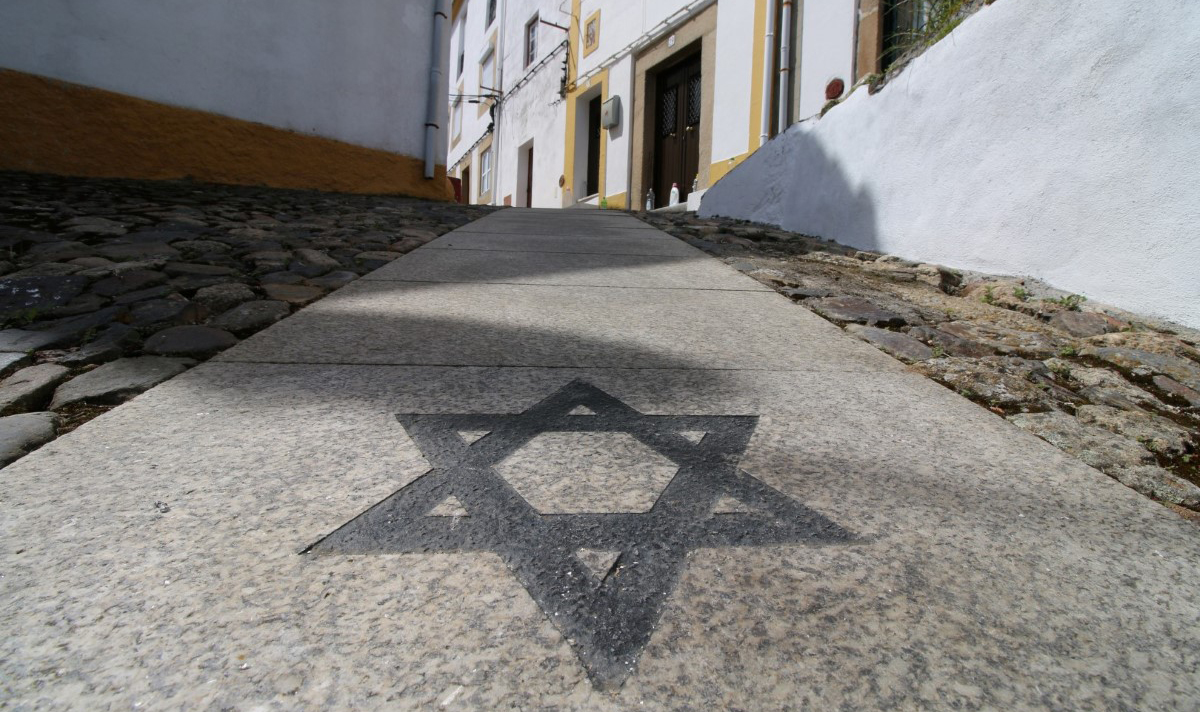
Perched on the gentle slopes of the São Mamede mountains in Portugal’s Alentejo region lies Castelo de Vide, a town of whitewashed houses, medieval ramparts, and winding alleys. Often called the “Sintra of the Alentejo” for its charm and gardens, it also holds one of the most remarkable Jewish stories in Portugal.
Here, the past remains palpable: narrow cobbled streets preserve the outlines of the Jewish quarter, mezuzah markings are still visible on doorframes, and a modest medieval synagogue — one of the best-preserved in the country — continues to tell the story of a community that thrived, endured, and left an indelible mark on Portuguese history.
For travelers interested in Jewish heritage, Castelo de Vide is one of Portugal’s essential destinations — a living open-air museum of Sephardic life in the Iberian Peninsula.
A Flourishing Jewish Quarter
Jewish life in Castelo de Vide dates back to at least the 13th century. The Jewish quarter, known as the Judiaria, developed at the base of the castle hill. Unlike in other Iberian towns, here Jews were not confined to ghettos — they lived side by side with Christians, though concentrated in specific streets for community cohesion.
By the 14th and 15th centuries, Castelo de Vide’s Jewish population was thriving. They were merchants, artisans, physicians, and scholars, contributing significantly to the town’s prosperity. Street names such as Rua da Judiaria and Rua Nova still echo with this history.
The Jewish community also played a vital role in welcoming Spanish Jews expelled in 1492, many of whom crossed into Portugal and settled temporarily in Castelo de Vide before moving elsewhere. For these families, the town was a first refuge after exile.
The Medieval Synagogue
The jewel of Castelo de Vide’s Jewish heritage is its medieval synagogue, located in the heart of the Judiaria. Dating back to the 14th century, it is one of only a handful of surviving medieval synagogues in Portugal.
The building, modest from the outside, was restored and now serves as the Museum of Castelo de Vide Synagogue (Rua da Judiaria, Castelo de Vide). Inside, visitors can see the original heikhal (ark) where the Torah scrolls were kept, and a small exhibition that interprets Jewish life in the town. The synagogue also preserves a mikveh (ritual bath) foundation, rare in Portugal and highly significant for Jewish ritual practice.
Walking into this intimate space is profoundly moving. Though simple, it connects visitors directly with the everyday lives of Jewish families who prayed here six centuries ago.
Marks in Stone
What makes Castelo de Vide unique is how its Jewish presence still permeates the urban fabric. As you wander the Judiaria’s narrow lanes, you can spot mezuzah grooves carved into stone doorposts — silent witnesses to a community that once thrived here.
These physical details bring history alive in a way few museums can. Unlike reconstructed heritage sites, Castelo de Vide is authentic and layered, its streets still echoing the footsteps of those who lived here centuries ago.
The Inquisition and Forced Conversions
Like the rest of Portugal, Castelo de Vide’s Jewish community was profoundly affected by the decree of King Manuel I in 1497, which forced all Jews to convert to Christianity. Many became “New Christians” or conversos, living outwardly as Catholics while secretly preserving elements of Jewish practice.
During the Inquisition, Castelo de Vide became a place of surveillance and fear. Records show many local families were investigated for Judaizing — secretly observing Shabbat, fasting on Yom Kippur, or following dietary restrictions.
Yet even in the face of persecution, traces of Jewish life endured. Oral traditions, family customs, and community memory kept identity alive, though often hidden.
Castelo de Vide and the Spanish Expulsion
One of Castelo de Vide’s most fascinating roles in Jewish history came in 1492, when Spain expelled its Jews. Thousands crossed the border into Portugal, many through the nearby town of Marvão. Castelo de Vide became a temporary refuge for these exiles.
The community’s synagogue, mikveh, and Jewish homes were filled with refugees seeking safety. Though their stay was often short-lived — many moved to Lisbon, Porto, or beyond — Castelo de Vide’s role as a place of refuge cemented its importance in Sephardic memory.
A Living Memory
Today, Castelo de Vide embraces its Jewish heritage. The synagogue museum is a highlight of any visit, and the town promotes cultural events and heritage trails focused on Jewish history.
Walking tours explore the Judiaria, pointing out mezuzah marks, Jewish street names, and significant houses. Each corner offers insight into how daily life unfolded in this unique setting.
For Jewish travelers, the experience is both historical and emotional: a chance to connect with a community that flourished, suffered, but whose traces remain tangible in stone and memory.
The Charm Beyond Heritage
While Jewish history is central to Castelo de Vide, the town also offers exceptional charm for all visitors. Its medieval castle towers above the whitewashed town, offering panoramic views of the Alentejo and nearby Marvão. The town is dotted with fountains and gardens, earning it a reputation as one of Portugal’s “greenest” historic villages.
Gastronomy is another highlight: hearty Alentejo cuisine, olive oils, cured meats, and mountain cheeses. Combined with its rich heritage, Castelo de Vide offers a complete cultural and sensory experience.
Other Visitors are reading now:

Staying in Castelo de Vide
For travelers who want to stay amid history, Castelo de Vide offers charming boutique accommodations:
-
Casa Amarela – Turismo de Habitação – Praça D. Pedro V, Castelo de Vide. A historic house with elegant rooms in the main square. Website
-
Hotel Sol e Serra – Avenida da Europa, Castelo de Vide. Comfortable 3-star hotel with views of the mountains, within walking distance of the Jewish quarter.
Nearby Marvão and Portagem also offer luxury pousadas and boutique stays for those combining Jewish heritage with the broader region.
Dining in Castelo de Vide
Alentejo cuisine is rustic, flavorful, and deeply tied to the land. In Castelo de Vide, travelers can enjoy refined versions of local dishes:
-
A Confraria – Largo de S. Tiago, Castelo de Vide. A cozy restaurant offering regional specialties like lamb stew and migas.
-
Dom Pedro V – Largo Mártires da República, Castelo de Vide. Traditional Portuguese cuisine in a historic setting.
A Gateway to Jewish Portugal
Castelo de Vide is often combined with other Jewish heritage towns in the Alentejo and Beira Interior:
-
Marvão/Portagem – A mountain fortress town where Jewish families once lived; Portagem’s name (“toll”) recalls passage taxes that affected Jewish merchants.
-
Belmonte – Home to Portugal’s living Jewish community, where traditions endured in secret for centuries.
-
Trancoso – With its Isaac Cardoso Jewish Interpretation Centre and new synagogue.
-
Lisbon – Shaaré Tikvah Synagogue and the Jewish quarter of Alfama.
Together, these stops form a powerful journey through Portugal’s Sephardic heritage.
Luxury Travel Experience
Exploring Castelo de Vide is best done with expert guidance. The town’s Jewish quarter is full of subtle details — mezuzah markings, hidden mikveh remains, street names — that require explanation to truly understand.
Portugal Magik Private Tours has been specializing in Jewish heritage journeys for more than 14 years, offering tailor-made itineraries with private driver-guides. Guests travel in comfort in luxury Mercedes-Benz vehicles, enjoying exclusive insights and at-your-pace exploration.
Why Castelo de Vide Matters
Castelo de Vide is not just another pretty medieval town. It is one of the most important Jewish heritage sites in Portugal, preserving architecture, memory, and spirit that survived centuries of change. For travelers seeking to connect with Sephardic history, it offers an intimate, authentic, and unforgettable experience.
Here, in narrow streets and modest stone houses, you can still feel the heartbeat of a community that shaped Portugal and left its mark on Jewish history worldwide.
Plan Your Journey with Portugal Magik
To truly discover Castelo de Vide’s Jewish heritage, travel should be immersive, comfortable, and guided. With Portugal Magik Private Tours, guests enjoy exclusive itineraries that combine Castelo de Vide with Belmonte, Marvão, Trancoso, Lisbon, and Porto — a complete exploration of Jewish Portugal.
Book Your Portugal Experience:
-
Explore our bestseller tours: https://portugal-magik.com/multi-day-tours/
-
Best Private Day Tours Around Lisbon: https://portugal-magik.com/private-day-tours/
-
Read Top Guests Reviews: https://portugal-magik.com/reviews/
-
Contact Us: https://portugal-magik.com/contact/
Fill in the form below to request your custom Jewish heritage itinerary, and explore the story of Castelo de Vide — the Jewish heritage heart of Portugal.