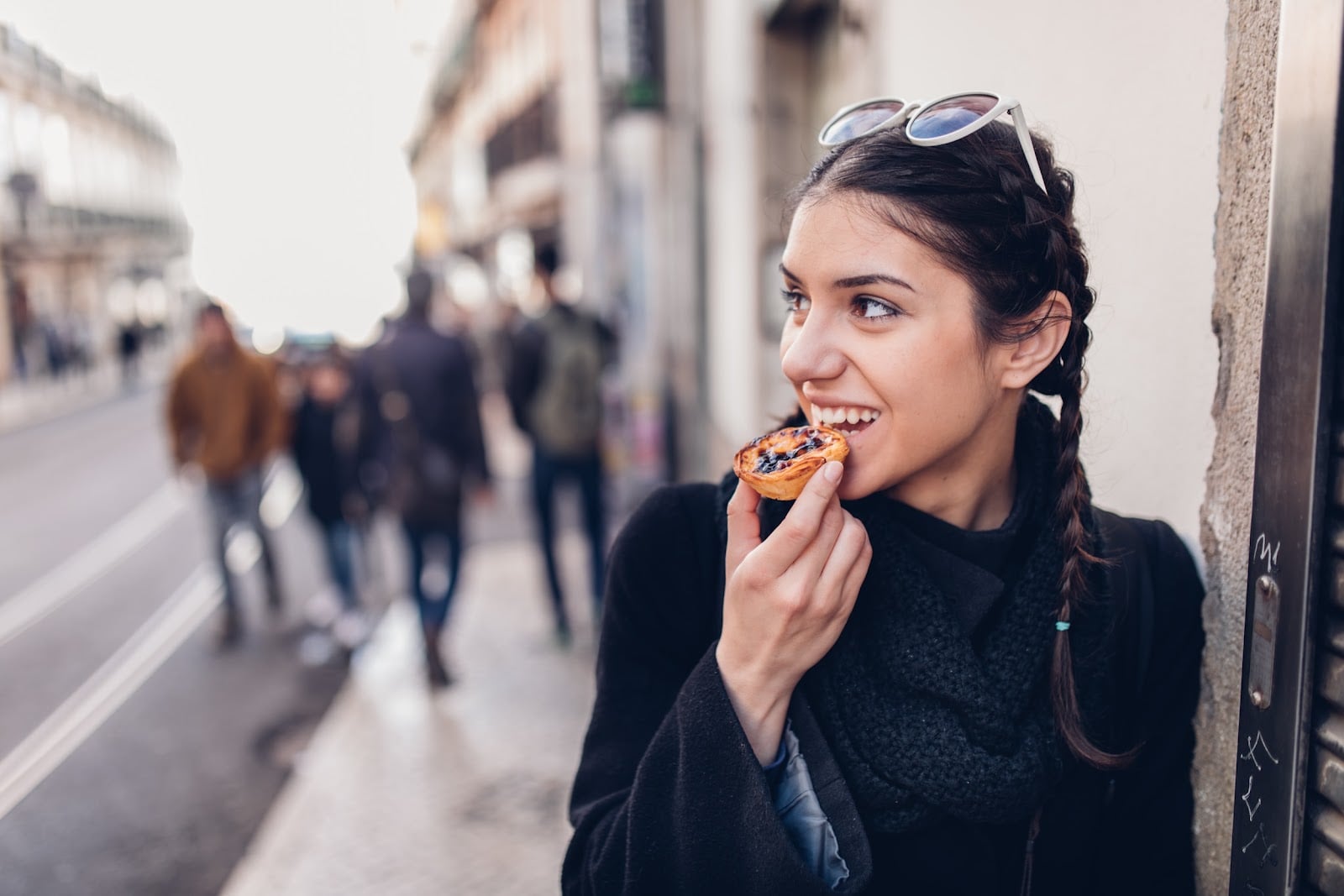
From a warm custard tart in Belem to a final scoop in Chiado, Lisbon offers a day of sweets with stories behind every counter. These six stops connect monastic traditions, old cafes and neighborhood rituals without turning the day into a race.
1. Pastéis de Belém, where the first bite comes with history
Begin in Belém, west of central Lisbon, with the pastry many Americans have crossed the Atlantic to taste. Pastéis de Belém began making its celebrated tarts in 1837, following a recipe associated with the nearby Jerónimos Monastery. The distinction matters: pastel de nata is the general name, while Pastéis de Belém identifies this establishment’s version. Order one with coffee, then pause before adding the cinnamon or powdered sugar. The shell should crack into flakes; the filling brings the softer pleasure of warm egg custard. It is a small breakfast with a surprisingly long afterlife in the memory.
Allow time to sit among the tiled rooms rather than treating the shop as a takeaway checkpoint. A walk toward the monastery afterward gives the morning some breathing room, although entering the monument requires separate planning. For couples or families, sharing tastes through the day is more enjoyable than ordering a full round everywhere. This is a tasting route, not an endurance contest, and Belém deserves more than a hurried photograph of a paper bag.
2. Confeitaria Nacional, Lisbon’s old confectionery tradition
Continue to Praça da Figueira, where Confeitaria Nacional has been part of Lisbon since 1829. Founded by Balthazar Roiz Castanheiro, it belongs to the city’s history of confectionery as a destination in its own right. Its strongest historical association is bolo-rei, the ring-shaped cake decorated with candied fruit and nuts that became a Portuguese Christmas fixture. The founder’s son is credited with bringing the recipe from France in the nineteenth century. For Americans accustomed to thinking of European pastry through Paris or Vienna, this counter opens a different chapter: Lisbon absorbed outside influences and made them part of its own calendar.
Bolo-rei is especially associated with the Christmas season, so do not build an October visit around finding it. Instead, ask what is available that day and choose something small from the pastry display. English is commonly spoken in central Lisbon’s visitor-facing businesses, though learning the pastry’s Portuguese name adds pleasure to the exchange. Step outside afterward toward Rossio, letting the squares and their patterned paving become part of the meal.
3. Pastelaria Benard, a Chiado pause with a French accent
The climb toward Chiado earns a change of pace. Pastelaria Benard, founded in 1868, stands on Rua Garrett and is particularly associated with croissants. A plain or filled croissant makes an interesting comparison with the morning’s tart: here the pleasure lies in buttery layers rather than a custard center. Not everything Americans seek in Portugal needs to be unfamiliar. Sometimes a recognizable pastry reveals how a city has folded wider European cafe habits into everyday life. Check the counter, choose the version that appeals, and give yourself permission to sit.
By now, a savory lunch is a sensible interruption. Chiado has plenty of places to turn toward soup, fish or a more substantial meal before continuing. A glass of Portuguese wine can belong here rather than being awkwardly paired with every sweet. Travelers comparing Lisbon with Paris, Rome or Barcelona should consider the whole experience, not assume every bill will be lower: historic surroundings, attentive service and time to linger can matter more than a simple price comparison.
Browse our travel inspiration for ideas, or tell us what kind of day you have in mind.
4. Manteigaria, the custard tart becomes a comparison
After lunch and a walk, head to Manteigaria on Rua do Loreto, near Largo do Camões. This is the moment to return to the pastel de nata with a more attentive palate. The shop’s visible production brings the process close: pastry shells, custard and baking become part of the attraction rather than work hidden behind a dining room. Compare this tart with the morning’s Belém version while both impressions are still fresh. Notice the thickness of the shell, the browned surface and the balance between sweetness and egg richness. There is no need to declare a winner.
For a family, that comparison can be the day’s simplest shared conversation. One person favors the crispest base, another the softest filling. Order a bica, Lisbon’s usual word for an espresso, if another coffee sounds welcome. The nearby streets reward wandering, but their slopes and polished paving call for sensible shoes, particularly after rain. Keep bags close in busy areas, as you would in other European capitals.
5. Alcoa, a window into Portugal’s convent sweets
Stay on Rua Garrett for Alcoa, whose origins are in Alcobaça, the monastery town north of Lisbon. Its Chiado shop makes that regional confectionery tradition accessible without adding another destination to the day. Here the story broadens beyond custard tarts into doces conventuais, the sweets associated with Portuguese religious houses. Egg yolks and sugar are recurring foundations, with almonds appearing in many recipes. The resulting pastries are often richer and denser than their size suggests, which makes sharing especially worthwhile.
Look for named specialties such as cornucópias, horn-shaped pastries with an egg-based filling, and ask staff to explain the choices on display. Availability can change, and the unfamiliar names are part of the discovery. These are not simply variations on an American bakery case. Their textures and concentrated sweetness invite smaller bites. For travelers who enjoy tracing food to place, Alcoa provides a useful reminder that Lisbon’s counters also tell stories from elsewhere in Portugal.
6. Santini, a cool finish before the ride home
Finish at Santini on Rua do Carmo, a short walk downhill from Chiado. Attilio Santini founded the business in Tamariz, Estoril, in 1949, bringing Italian ice cream expertise to the Portuguese coast. The Lisbon shop offers a different final texture after flaky pastry and rich egg sweets. Choose from the flavors available that day, perhaps something fruit-based for contrast, and let this be the last stop rather than the start of another checklist.
Portugal Magik’s local driver/guide can shape the day around the guests, using a Mercedes-Benz vehicle for the transfer from Belém and leaving room for walks, seated breaks or an earlier finish. Not driving means no searching for central parking, while the clustered afternoon stops keep transfers limited. Take home a modest box if you wish. The better souvenir is knowing why each sweet tasted different.
Plan your own day
Share your dates, group size and interests, and we will suggest a tailored plan with a local driver/guide.