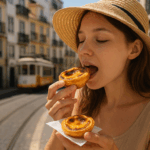
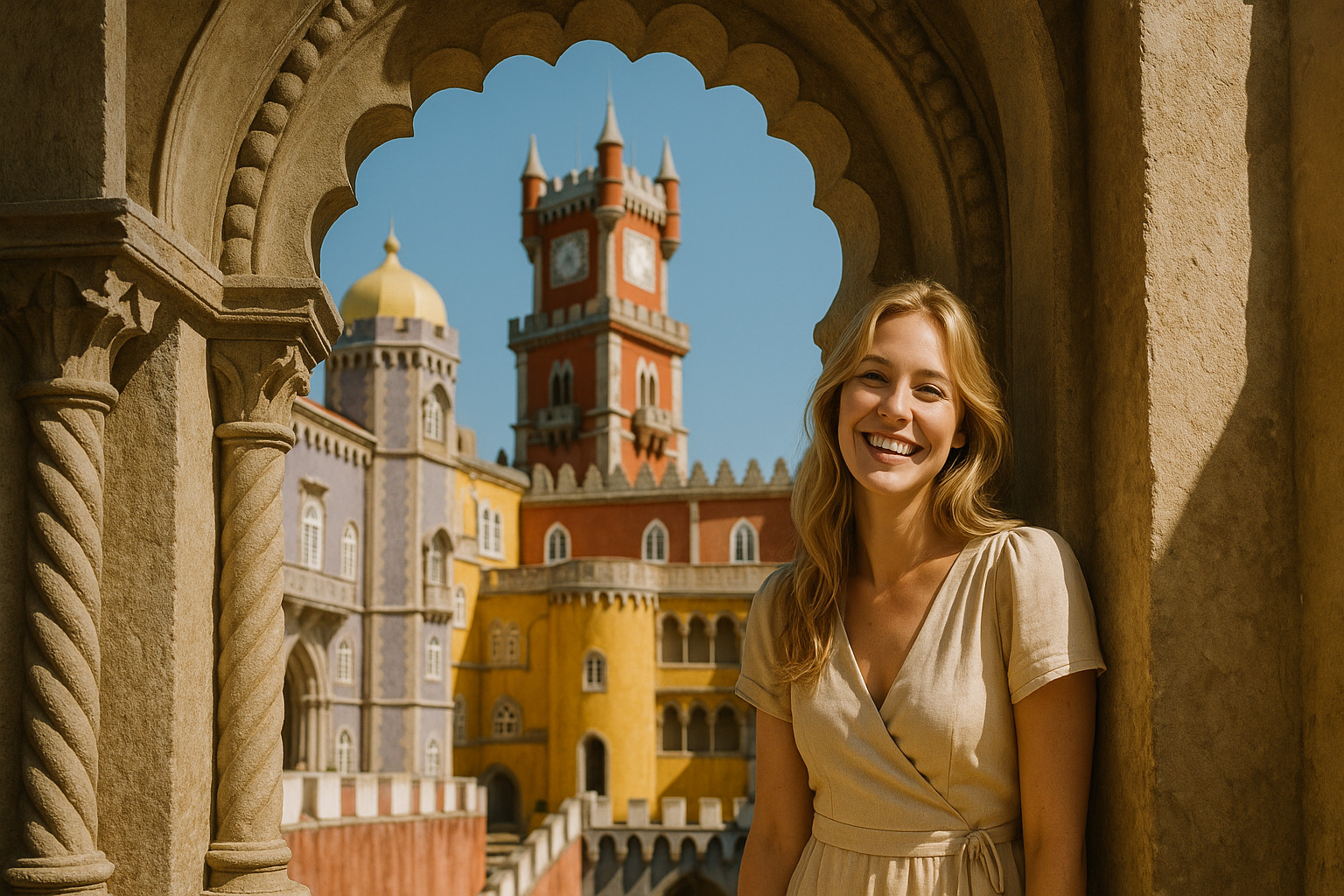
From a warm custard tart in Belém to Sintra’s cheese tartlets and almond-filled pillows, a day of Portuguese pastries reveals stories far richer than the sugar on your fingers.
Morning begins with a little ceremony
Begin in Belém, where the Tagus gives Lisbon room to breathe and breakfast can feel like an appointment with history. On Rua de Belém, the blue lettering of Pastéis de Belém announces a bakery that has been making its celebrated tarts since 1837. Before the first bite, there is the small ceremony of ordering: a coffee, a pastel, perhaps a second one to share. The plural is pastéis, a useful word to learn early.
Sit down if a table is available, rather than treating the visit only as a takeaway stop. The tiled rooms are part of the pleasure, and a freshly served tart deserves a moment of attention. Its shell breaks into delicate flakes; the custard is soft beneath a browned surface. Cinnamon and icing sugar are offered, but taste it plain first. Outside, trams and buses continue their morning rounds. Inside, the day has already found its pace.
The monastery behind the mouthful
A short walk away stands the Jerónimos Monastery, whose carved Manueline stonework belongs to a very different scale of ambition. The bakery traces its recipe to the monastery and to the upheaval surrounding the closure of Portugal’s religious orders in 1834. Commercial production began nearby in 1837. Those dates give the pastry a particular poignancy: a sweet associated with a religious community found a new life at a shop counter.
Across Portugal, many traditional sweets have connections with convents and monasteries, although not every pastry has a convent origin. Egg yolks, sugar and almonds recur in recipes whose histories reflect religious households, regional agriculture and Portugal’s trade networks. Sugar also carries the harder history of plantation economies and enslaved labor. You need not turn breakfast into a lecture, but the story is worth keeping beside the pleasure. These small, golden things belong to a much larger world.
Leave room for the road to Sintra
From Belém, continue toward Sintra, trading the broad riverside for wooded hills and streets that fold around the landscape. Resist adding every palace to the same itinerary. This is a day for tasting and looking, with enough walking between stops to make the next pastry welcome. A stroll through the historic center, below the National Palace’s distinctive twin chimneys, supplies plenty of atmosphere without turning the afternoon into a race.
With Portugal Magik, a local driver/guide can shape the day around the guests, whether that means more time over coffee, a longer walk or fewer tasting stops. Traveling between Lisbon and Sintra in a Mercedes-Benz vehicle keeps the journey comfortable, while the old town is best appreciated on foot where practical. Traffic, weather and the busy bakery counters all influence the rhythm. The best plan leaves room for them, and for a proper savory lunch before another round of sweets.
Browse our travel inspiration for ideas, or tell us what kind of day you have in mind.
Sintra’s small tart with a long memory
At Queijadas da Sapa, on Volta do Duche, change both texture and expectations. A queijada de Sintra is not a miniature custard tart. Its thin pastry casing holds a compact filling made with fresh cheese, sugar, eggs, flour and cinnamon. The cheese gives substance rather than a strongly savory taste. Compared with the yielding custard of breakfast, this is a firmer, gently grainy mouthful, fragrant with spice and easy to underestimate until the second bite.
Sapa traces its family tradition to 1756, while Sintra’s association with queijadas reaches further back. Historical references connect these little cheeses and sweets with payments in kind, a reminder that food once moved through local life as more than something bought for pleasure. Today, a small packet makes a sensible souvenir. Keep one to eat here, though. Beside a cup of coffee, with the afternoon unfolding beyond the window, the queijada tastes less like a keepsake and more like part of the town.
A pillow of pastry at Piriquita
Walk onward to Casa Piriquita on Rua das Padarias, close to the National Palace. Founded in 1862 by Amaro dos Santos and Constância Gomes, the bakery is inseparable from Sintra’s sweet reputation. Queijadas helped establish its name, but the travesseiro is the pastry that calls for your attention now. Its name means pillow, and the shape explains why: an oblong parcel of puff pastry, dusted with sugar, holding a sweet egg-and-almond filling.
Order one to share if the day’s earlier tastings are beginning to register. A travesseiro is generous in both sweetness and crumbs, and there is no particularly dignified way to keep every flake off your clothes. That is part of its charm. Take a bite, pause, then compare it with the queijada: airy layers against a close-textured filling, almond richness against the cheese tart’s cinnamon warmth. Two nearby counters tell quite different stories about the same town.
Back in Lisbon, one last comparison
Return to Lisbon in the early evening, when there may still be appetite for a final shared tart. At Manteigaria on Rua do Loreto, near Largo do Camões, the focus returns to the pastel de nata. Watching the work behind the glass makes a useful closing scene: dough, custard, ovens and practiced movements rather than a museum display. The pastry tradition is still being made, batch by batch, for people stepping in from the street.
Belém’s named specialty and the pastéis de nata found elsewhere belong to the same beloved family, but recipes and results differ. Notice the bake, the custard’s sweetness and the thickness of the shell without insisting on a winner. By now, the memorable part is not a ranking. It is the tiled room at breakfast, Sintra’s hill air and the sugar someone is still brushing from a sleeve. Portugal has told you several stories today, each small enough to hold in your hand.
Plan your own day
Share your dates, group size and interests, and we will suggest a tailored plan with a local driver/guide.