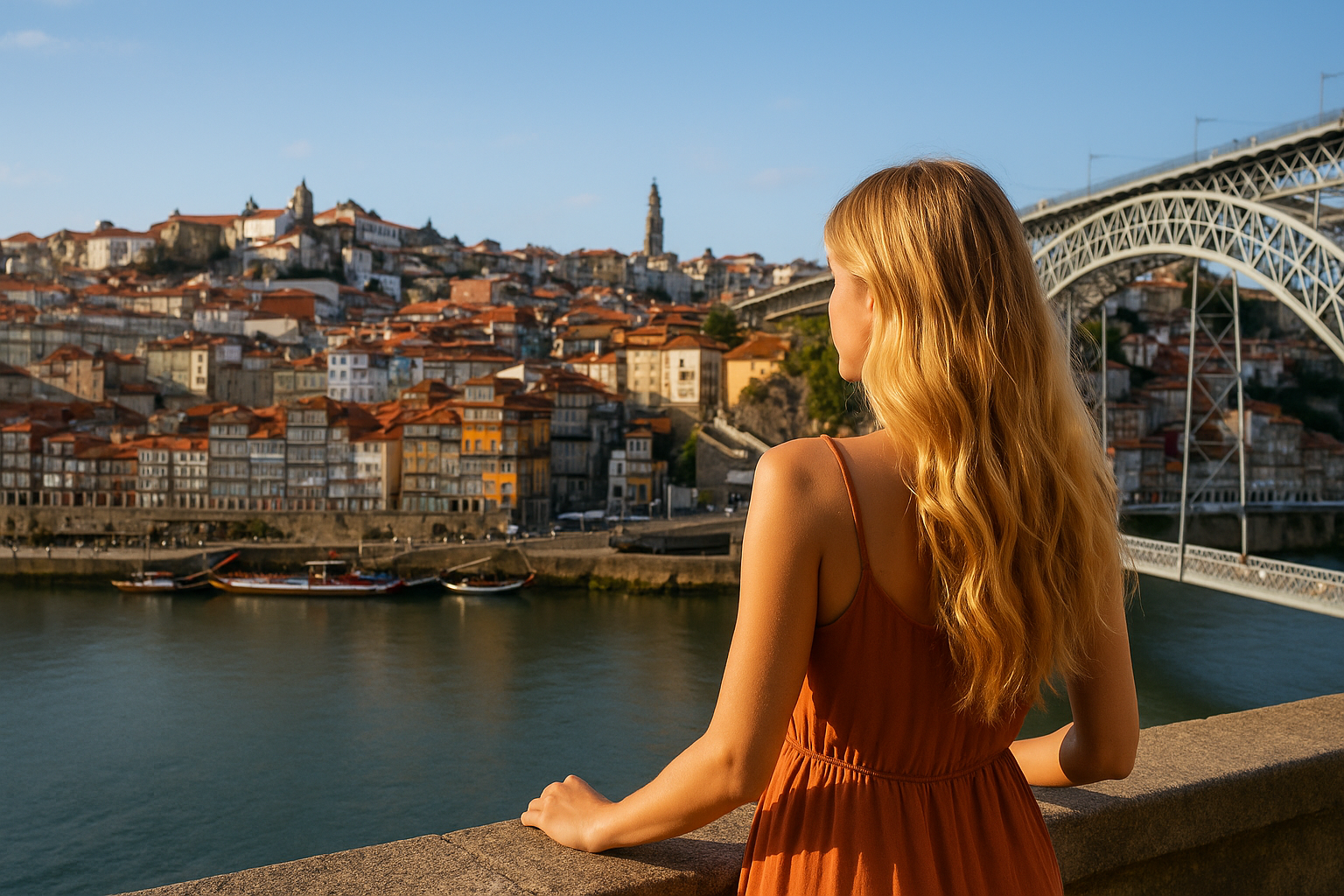
In one day, Porto moves from a working market to tiled railway walls, riverside wine cellars and an Atlantic sunset. For Americans who know Europe’s celebrated cities, its greatest surprise may be how naturally those experiences fit together.
1. The morning market still belongs to the city
Begin at Mercado do Bolhão, where Porto introduces itself through produce rather than monuments. The historic market reopened in 2022 after a major restoration, retaining its open central courtyard and working food stalls. Look for silvery fish on ice, bunches of greens and neatly arranged olives. Come in the morning, and check opening days before building your itinerary around it.
For Americans accustomed to European market halls becoming mostly places to eat, Bolhão offers a welcome balance: visitors are present, but groceries remain part of the story. Start with coffee and something small from a nearby bakery. There is no need to turn breakfast into an occasion. The pleasure is watching a city get on with its morning.
2. A railway station delivers the first great art encounter
Continue to São Bento, where the entrance hall makes an unusually persuasive argument for looking up from your phone. Around 20,000 azulejo tiles, painted by Jorge Colaço and installed in the early twentieth century, depict episodes from Portuguese history alongside scenes of rural life. Trains still depart behind this extraordinary introduction.
One panel recalls the conquest of Ceuta in 1415; others reward slower attention with cattle, carts and harvest work. Unlike a museum visit that can absorb half a day, this encounter sits directly within the morning’s route. For travelers comparing Porto with Paris or Rome, that is part of the appeal: a substantial cultural experience can happen between breakfast and the next street.
3. Its compact center feels intimate, but never flat
From São Bento, climb toward the Sé, Porto’s cathedral, whose origins reach back to the twelfth century. Its fortress-like presence makes sense above the old city, where roofs tumble toward the Douro. The cathedral terrace is a good place to understand the geography before descending into it: Porto occupies the northern bank, with Vila Nova de Gaia opposite.
The distances look manageable on a map, but steep lanes and uneven paving deserve respect, particularly for multigenerational families. A local driver/guide from Portugal Magik can shape the day around the guests, using a Mercedes-Benz vehicle for suitable transfers and leaving time for walks that genuinely appeal. Not driving also removes the puzzle of unfamiliar streets, parking and where a vehicle can legally stop.
Browse our travel inspiration for ideas, or tell us what kind of day you have in mind.
4. Everyday encounters are easier than you might expect
Descend toward Rua das Flores, laid out in the sixteenth century and now a lively pedestrian route lined with shops, cafés and historic façades. This is a place to pause rather than march through: notice the narrow buildings, wrought-iron balconies and occasional glimpse into an older doorway. Porto’s texture emerges at walking speed.
English is widely spoken in visitor-facing businesses, though a greeting of bom dia is always worthwhile. That makes ordering lunch or asking about a wine less intimidating for first-time visitors to Portugal. Ordinary city precautions still apply, especially around busy sights and transport hubs: keep bags close and phones secure. Feeling comfortable here should come from sensible habits, not the assumption that any destination is risk-free.
5. Lunch has a personality all its own
Porto’s famous francesinha is not a delicate sandwich. Typically layered with meats, covered in melted cheese and finished with a hot tomato-and-beer-based sauce, it is a substantial meal, often accompanied by fries. Recipes vary, and some versions add an egg. Ordering one to share, where welcomed, leaves room to taste without surrendering the afternoon.
For a different local story, look for tripas à moda do Porto, a tripe-and-white-bean stew associated with the city’s nickname, tripeiros. Less adventurous appetites can follow the fish specials. Compared with marquee dining rooms in France, Italy or Spain, a traditional Porto restaurant can offer satisfying value, particularly when choosing Portuguese wine. Read the menu rather than assuming everything is inexpensive, and remember that bread and olives brought to the table may be charged if consumed.
6. The famous riverfront is part of a bigger working story
After lunch, reach Ribeira, where tall, narrow houses face the Douro and the Dom Luís I Bridge frames the water. Opened in 1886, the bridge was designed by Théophile Seyrig, a former partner of Gustave Eiffel, rather than Eiffel himself. Its lower deck connects the riverbanks; the upper deck carries Metro trains and pedestrians.
The view is beautiful, but it becomes more interesting when you picture goods moving through this river corridor. Porto grew through commerce, and the wine lodges across the water are not decorative backdrops. Pause on the quay before crossing to Gaia. For couples or families juggling different interests, this stretch offers an easy compromise: engineering, photographs, river life and a seat when someone needs one.
7. Port wine makes more sense on the opposite bank
In Vila Nova de Gaia, a booked visit to an established lodge such as Graham’s or Taylor’s connects the glass with the landscape that produced it. Port comes from the demarcated Douro region inland, not from vineyards surrounding these waterfront warehouses. Gaia became the historic center for its maturation and export, linking the valley’s growers with overseas markets.
A tasting can clarify distinctions that American wine lists sometimes compress: ruby styles emphasize fruit, while wood-aged tawny ports develop nutty, dried-fruit notes. Follow the lodge’s own tasting format and reserve ahead. Some properties sit uphill from the quay, another reason not to confuse short distances with effortless walking. For families, check the visit’s suitability for children before booking.
8. The day can end at the ocean, not another monument
Finish with a drive west to Foz do Douro, allowing for traffic rather than treating the transfer as a fixed timetable. Near Jardim do Passeio Alegre, the river meets the Atlantic and the mood changes. Walk the seafront if conditions suit, with a layer ready for wind. In rough weather, admire the water from a safe distance and obey any access restrictions.
After the market, tiles, hills and wine, the open horizon gives the day breathing room. Porto’s surprise is not that it outdoes another European city. It is that so many different pleasures can belong to one day, without every hour needing to prove something.
Plan your own day
Share your dates, group size and interests, and we will suggest a tailored plan with a local driver/guide.