In the Alentejo, a memorable day might turn on a marble doorstep, a potter’s window, or lunch that deserves another hour. These five towns offer American travelers different ways to slow down, best enjoyed one or two at a time.
1. Estremoz, where a market morning opens the story
Begin on a Saturday in Rossio Marquês de Pombal, when Estremoz’s weekly market brings produce, cheeses, household goods, and antiques into the same generous square. Browse rather than hunt for a particular purchase. A basket of olives or an old ceramic platter can say as much about a place as its monuments. Above the lower town, the medieval keep recalls the royal importance of Estremoz, where Queen Isabel of Portugal died in 1336. The climb adds perspective, although uneven paving and summer heat make an early visit sensible.
The town’s other small-scale storytellers are its clay figures. The craftsmanship of Estremoz clay figures was inscribed on UNESCO’s Representative List of the Intangible Cultural Heritage of Humanity in 2017. Painted figures depict religious subjects, working lives, and local traditions, giving families something tangible to discuss beyond dates and dynasties. Stay for lunch rather than treating Estremoz as a photograph between destinations. For Americans accustomed to fitting several European landmarks into a morning, the appealing change is simple: a market, a little history, and a table can be enough.
2. Borba, where marble belongs to everyday life
About twenty minutes by road from Estremoz, Borba makes an easy second chapter rather than a major transfer. Here, marble is not confined to grand interiors. It appears in doorways, window surrounds, churches, and the eighteenth-century Fonte das Bicas fountain. The surrounding marble-producing landscape helps explain why this handsome stone feels almost domestic. Walk slowly through the center and notice the thresholds before looking for another monument. This is a good town for travelers who have enjoyed Italy’s celebrated stone cities but now want somewhere less dependent on a headline attraction.
Borba also sits within the Alentejo wine region, and Adega de Borba, founded in 1955, offers a useful introduction to the area’s cooperative winemaking story. Check current visiting arrangements and book ahead for a tasting. At lunch, look for regional dishes such as borrego assado, roast lamb, or migas, a bread-based preparation often served with pork. Portions and preparations vary, so ask before ordering several courses. Having someone else handle the driving makes wine part of lunch rather than a calculation, while leaving time to enjoy the meal at its proper pace.
3. Vila Vicosa, where a palace visit leaves room for lunch
Another short drive, roughly fifteen minutes from Borba, brings you to Vila Viçosa and the broad Terreiro do Paço. The marble-fronted Ducal Palace tells the story of the House of Braganza, whose Duke João became King João IV in 1640 following the restoration of Portuguese independence from Spanish rule. It is a substantial historical encounter without requiring a full day of museum-going. Check opening hours and tour arrangements before setting out, particularly if an English-language visit matters to your group. Beyond the palace square, the town rewards an ordinary walk past whitewashed houses and quiet doorways.
For couples or retirees comparing this day with a palace excursion in France or Spain, the attraction is the balance between major history and manageable distances. Estremoz, Borba, and Vila Viçosa are close together, but proximity is permission to linger, not an instruction to visit all three. Portugal Magik’s local driver/guide can shape the day around the guests, using a Mercedes-Benz vehicle for the stretches between towns and allowing more time for a palace, a shaded lunch, or fewer steps. Comfortable private pacing matters most when nobody feels obliged to keep up with somebody else’s checklist.
Browse our travel inspiration for ideas, or tell us what kind of day you have in mind.
4. Redondo, where pottery makes the best souvenir
Choose Redondo when the day calls for clay rather than marble. Its pottery tradition is explored at the Museu do Barro, while local workshops and shops offer opportunities to see how painted earthenware remains part of the town’s identity. Opening hours vary, so confirm any particular workshop you hope to visit. Around the old center and castle gateway, the pleasure is in looking closely: a painted dish, a narrow street, the contrast between white walls and strong sunlight. Children can follow shapes and colors; adults can take their time choosing something they will actually use at home.
Lunch provides another introduction to Alentejo resourcefulness. Açorda alentejana commonly combines bread, garlic, coriander, olive oil, and hot water, often with a poached egg, although versions differ. Ask what the kitchen is preparing that day. American travelers may find good value in straightforward regional restaurants compared with prominent visitor districts in France or Italy, but the comparison depends on the address and what is ordered. English is widely spoken in many visitor-facing businesses, though less consistently in small workshops. A few Portuguese greetings and a guide’s help make the exchange warmer, not merely easier.
5. Monsaraz, where the afternoon belongs to the horizon
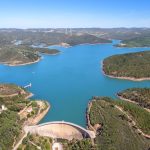
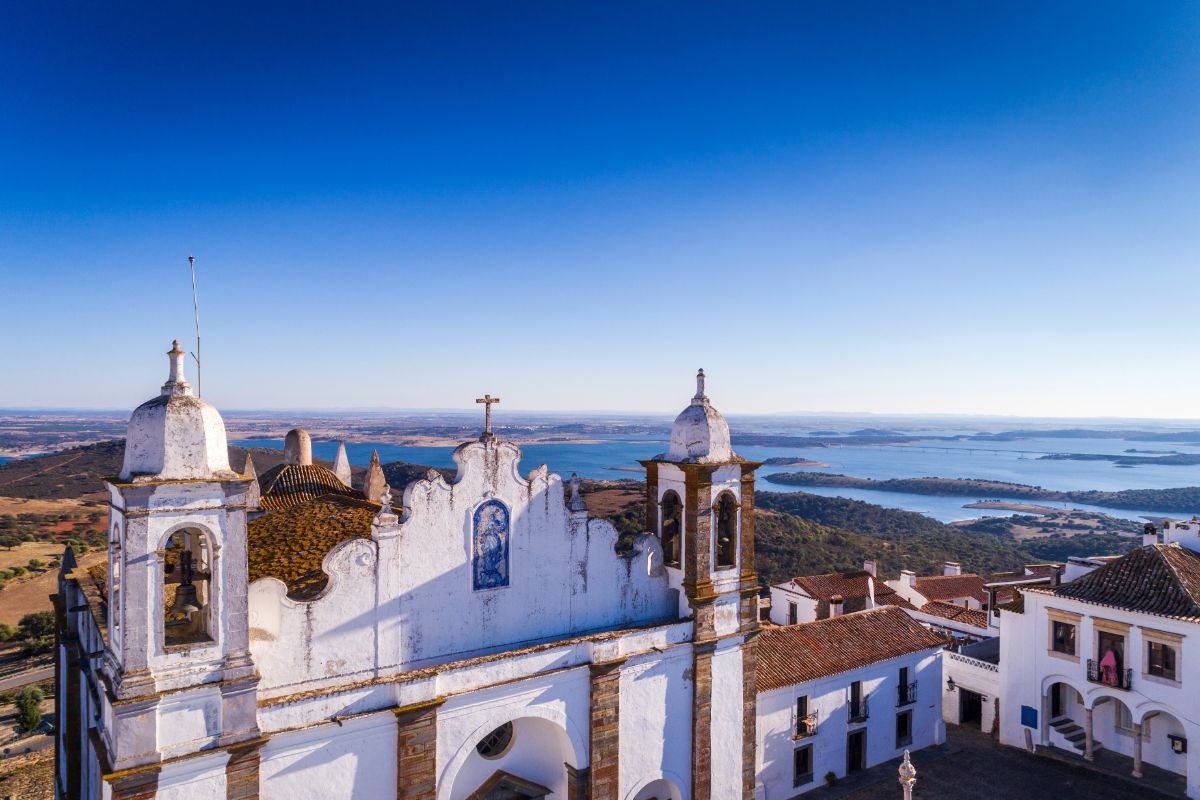
Save Monsaraz for a day when there is no need to hurry back. The fortified hilltop village looks across the Alqueva reservoir and a landscape that invites a longer gaze than most camera stops allow. Inside the walls, whitewashed houses line stone streets leading toward the castle. The reservoir is modern, its dam inaugurated in 2002; the settlement’s history reaches much further back. That contrast gives the view its story. Walk first, then sit down somewhere with shade and let the afternoon settle instead of immediately searching for the next sight.
Monsaraz is compact, but its gradients and uneven paving deserve consideration, especially for anyone with limited mobility. Comfortable shoes, water, and sensible timing help; ordinary precautions with belongings still apply even in a quiet village. A reserved dinner nearby can anchor the evening, perhaps with Alentejo pork and a regional wine. The closing thought for any of these towns is the same: choose fewer stops than the map permits. The day worth remembering is often the one that left room for a second question, another taste, and an unhurried look.
Plan your own day
Share your dates, group size and interests, and we will suggest a tailored plan with a local driver/guide.