Travel from Lisbon to Porto through Obidos, Coimbra and Aveiro, following royal stories, university traditions and the Atlantic appetite. Nine thoughtfully paced days leave room for the smaller moments that become the journey’s best memories.
Day 1: Arrival in Lisbon, Finding the River
Begin in Lisbon with an afternoon that asks little of you: a walk across Praça do Comércio, where the city opens toward the Tagus, followed by the straight streets of the Baixa. Rebuilt after the earthquake of 1755, this district offers an unusually orderly introduction to a capital better known for hills, staircases and unexpected views. Portugal Magik’s private driver/guide handles the driving and pacing in a Mercedes-Benz vehicle, shaping the day around your arrival time and appetite for exploring. Settle over grilled fish, boiled potatoes and a glass of Portuguese white wine rather than committing to an ambitious first dinner. Overnight in Lisbon, with the river providing your first bearings.
Day 2: Lisbon, Maritime Stories in Belem
Give the morning to Belém, beginning at the Jerónimos Monastery, commissioned under Manuel I in the early sixteenth century and closely associated with Portugal’s maritime expansion. Its carved cloister rewards slow looking, especially when you notice how ropes, foliage and religious symbols share the same limestone surfaces. Continue to the nearby Museu de Marinha, where ship models and navigational objects give practical dimensions to voyages too often reduced to heroic names and dates. At Pastéis de Belém, which began selling its custard pastries in 1837, pause for a warm tart and coffee, allowing the afternoon to remain deliberately open rather than adding another major monument. Overnight in Lisbon.
Day 3: Obidos, Beyond the Town Gate
Leave Lisbon for Óbidos, arriving through the Porta da Vila, whose tiled chapel makes the entrance feel more ceremonial than defensive. Along Rua Direita, look beyond the shopfronts toward side lanes, whitewashed houses and the flowers that soften the town’s tightly packed stonework. At the Igreja de Santa Maria, the story reaches back to the 1441 wedding of the young future Afonso V and Isabel of Coimbra, a reminder that royal marriages were instruments of state rather than fairy tales. Try a small glass of ginjinha, the sour cherry liqueur associated with the town, then linger as the busiest visiting hours pass. Overnight in Óbidos, when the lanes become part of your evening rather than a stop between destinations.
Browse our travel inspiration for ideas, or tell us what kind of day you have in mind.
Day 4: Alcobaca to Coimbra, A Royal Love Story
Travel north by way of the Mosteiro de Alcobaça, where the scale and relative austerity of the medieval church make the elaborate tombs of Pedro I and Inês de Castro especially arresting. Inês was killed in 1355 on the orders of Pedro’s father, Afonso IV, and the carved tombs turn a violent dynastic story into an encounter with individual grief and royal ambition. Leave time to examine the figures rather than relying on the more theatrical legends that later gathered around the couple. Lunch on roast chicken or a seasonal fish dish with a regional white wine before continuing to Coimbra for an easy introduction to the Mondego riverfront. Overnight in Coimbra, with its university hill reserved for tomorrow.
Day 5: Coimbra, The Day That Stays With You
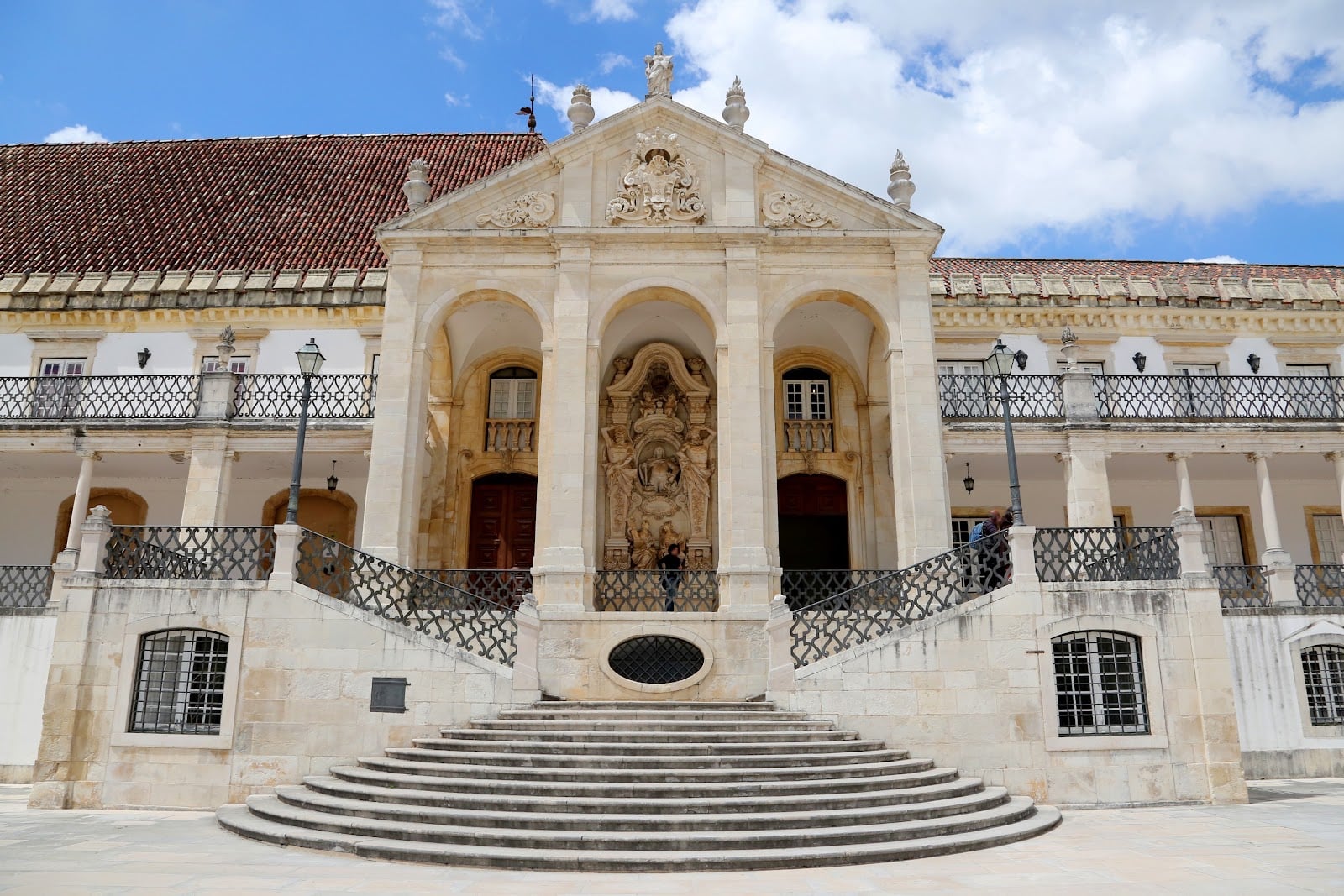
Make this the journey’s centerpiece: a morning inside the Paço das Escolas, where a former royal palace became the enduring home of the University of Coimbra after its permanent transfer here in 1537. Arrange admission ahead for the Biblioteca Joanina, an eighteenth-century library whose gilded shelves speak to the authority once invested in books, scholarship and the institution itself. Descend toward the Sé Velha, letting the steep lanes connect academic grandeur with a Romanesque cathedral that looks capable of defending its own congregation. Over chanfana, goat slowly cooked with red wine, consider how this city holds royal power, religious life and student traditions within walking distance. Overnight in Coimbra, remembering not a checklist but the changing sound of footsteps between courtyard, library and lane.
Day 6: Aveiro and Costa Nova, Where Water Shapes Work
Continue to Aveiro, beginning beside the Canal Central, where the colorful moliceiro boats recall the gathering of aquatic vegetation once used to fertilize nearby fields. Walk into the Beira Mar neighborhood to see a more intimate townscape of narrow streets and modest houses, then taste ovos moles, the local egg yolk and sugar confection often enclosed in delicate wafer shells. After lunch, head to Costa Nova, whose striped buildings descend from the practical waterfront structures used by fishing communities, although many have since been adapted or rebuilt. Your local driver/guide can shape the afternoon around the guests, allowing more time for photographs, a beach walk or a sheltered seafood lunch if the Atlantic wind rises. Overnight in Aveiro.
Want this route shaped around your own dates and pace?
Day 7: Porto, Arriving Through Tiles and Granite
Head north to Porto and begin at São Bento station, where Jorge Colaço’s tile panels turn a working railway concourse into a sequence of historical scenes and rural vignettes. Continue uphill to the Sé, the city’s cathedral, whose imposing position helps explain Porto before any map does: this is a place built through changes in elevation. Save the descent to Ribeira for later, when the riverfront’s stacked facades and narrow passages reveal the trading city beneath the postcard view. At lunch, try a francesinha, the substantial sandwich served under melted cheese and a hot tomato and beer sauce, with a local beer rather than another scheduled stop. Overnight in Porto.
Day 8: Porto and Gaia, Following the Port Wine Story
Begin at the Palácio da Bolsa, the nineteenth-century commercial association building whose elaborate interiors express the confidence of a city shaped by merchants and international trade. Then cross the Douro to Vila Nova de Gaia for a prebooked visit to Graham’s 1890 Lodge, where the history of port becomes easier to grasp among the casks and the hillside views. Taste contrasting styles, perhaps a ruby and an aged tawny, paying attention to fresh fruit, wood aging and texture rather than collecting technical vocabulary. Follow with lunch in Gaia, choosing grilled fish or octopus and a dry Portuguese wine to distinguish the country’s table wines from its fortified tradition. Overnight in Porto, with an unhurried return across the river.
Day 9: Porto, A Last Day Toward the Atlantic
Keep the final day close to Porto but change its mood, starting at Mercado do Bolhão, the restored historic market where produce, fish and everyday shopping provide a counterpoint to yesterday’s grand interiors. Browse without turning the visit into a tasting marathon, then head west to Foz do Douro, where the river meets the Atlantic and the city exchanges steep lanes for sea air. Walk the Pérgola da Foz if the weather invites it, leaving enough time simply to sit and watch the water. Choose a final lunch of grilled sea bass or sardines when in season, with a crisp Vinho Verde and no need to hurry toward another landmark. Overnight in Porto, ready for departure the following morning.
Plan your own day
Share your dates, group size and interests, and we will suggest a tailored plan with a local driver/guide.