Follow Portugal’s stories through royal landscapes, Roman streets and riverside wine country. This tailored itinerary gives each day a distinct character, with time for the meals and small discoveries that make a journey personal.
Day 1: Arrival in Lisbon, a First Look at the River
Begin gently at Praça do Comércio, where Lisbon opens onto the Tagus and the arcaded square occupies ground once belonging to the royal palace destroyed in the 1755 earthquake. Continue into Alfama, choosing a few shaded lanes rather than attempting every staircase on your first afternoon. At Miradouro de Santa Luzia, tiled panels and river views introduce the city’s enduring affection for both ornament and water. Lunch might be grilled fish with boiled potatoes and a glass of vinho verde, followed by an early finish if the overnight flight catches up with you. Overnight in Lisbon.
Day 2: Lisbon, Maritime Ambition and Everyday Pleasures
Spend the morning in Belém at the Jerónimos Monastery, commissioned under King Manuel I and closely associated with Portugal’s maritime expansion. Look carefully at the carved stonework, where ropes and botanical forms turn the architecture into something almost tactile, then pause at Pastéis de Belém for a warm custard tart dusted with cinnamon. Back in Chiado, browse a bookshop and settle into a café rather than adding another major monument to the afternoon. The contrast is the day’s pleasure: grand ambitions in stone, followed by the ordinary Lisbon ritual of sitting over coffee without watching the clock. Overnight in Lisbon.
Day 3: Sintra, a Royal Retreat Among the Trees
Make Sintra a day of atmosphere rather than a race between palaces, starting at Pena Palace, the nineteenth-century retreat shaped by King Ferdinand II around an earlier monastery. Its bright façades are famous, but the wooded setting explains why the royal court sought relief here from Lisbon’s summer heat. Descend to the historic center for a travesseiro, the flaky almond-filled pastry associated with the town, before exploring the symbolic gardens of Quinta da Regaleira. A Portugal Magik private driver/guide handles the driving in a Mercedes-Benz vehicle and shapes the pacing around your interests, with timed admissions arranged ahead. Overnight in Lisbon.
Browse our travel inspiration for ideas, or tell us what kind of day you have in mind.
Day 4: Evora, Roman Columns and Alentejo Tables
Leave Lisbon for Évora, where the landscape broadens into cork oak country and the historic center rewards a slower, more attentive walk. Begin at the Roman Temple, dating to the first century AD, then continue to the cathedral, whose substantial granite walls give the skyline its medieval weight. Around Praça do Giraldo, arcades offer shade and café tables provide a good excuse to watch the city rather than simply photograph it. At lunch, try açorda alentejana, a bread preparation with garlic, coriander and olive oil, often served with a poached egg, alongside a regional white wine. Overnight in Évora.
Day 5: Monsaraz, a Hilltop Day Above Alqueva
From Évora, travel to Monsaraz, where whitewashed houses gather beneath a castle and the streets are best appreciated before the strongest afternoon sun. Walk toward the fortifications for views over Alqueva, remembering that this immense reservoir is a modern addition to a much older border landscape. The day’s quieter discovery comes in São Pedro do Corval, a pottery village where working shops display dishes, bowls and painted pieces rooted in local traditions. Choose a leisurely lunch of black pork with an Alentejo red, leaving room to linger over the view rather than scheduling another stop. Overnight in Évora.
Day 6: North to Porto, with Coimbra Along the Way
This is the itinerary’s longest transfer day, so leave Évora after breakfast and give Coimbra one considered visit rather than trying to fit in several towns. At the University of Coimbra, established in Lisbon in 1290 and permanently transferred here in 1537, the hilltop setting makes the relationship between scholarship and city immediately visible. Reserve ahead for the Joanina Library if its gilded interiors and historic collections are a priority, allowing for the admission schedule. Take a proper lunch break for chanfana, goat slowly cooked in red wine and associated with the surrounding region, before continuing north. Overnight in Porto.
Want this route shaped around your own dates and pace?
Day 7: Porto, Tile Stories and the Working River
Start at São Bento station, where Jorge Colaço’s early twentieth-century tile panels depict historical events and scenes of Portuguese life in a building still busy with travelers. Walk downhill toward Ribeira, noticing how granite, narrow plots and steep streets give Porto a very different rhythm from Lisbon. Cross the lower level of the Dom Luís I Bridge to Vila Nova de Gaia for a prebooked port lodge visit, where aging casks help explain the wine’s connection to river trade. Lunch can be a francesinha, Porto’s substantial meat-filled sandwich under melted cheese and a hot sauce, best approached with an appetite. Overnight in Porto.
Day 8: Into the Douro, Where the Landscape Explains the Wine
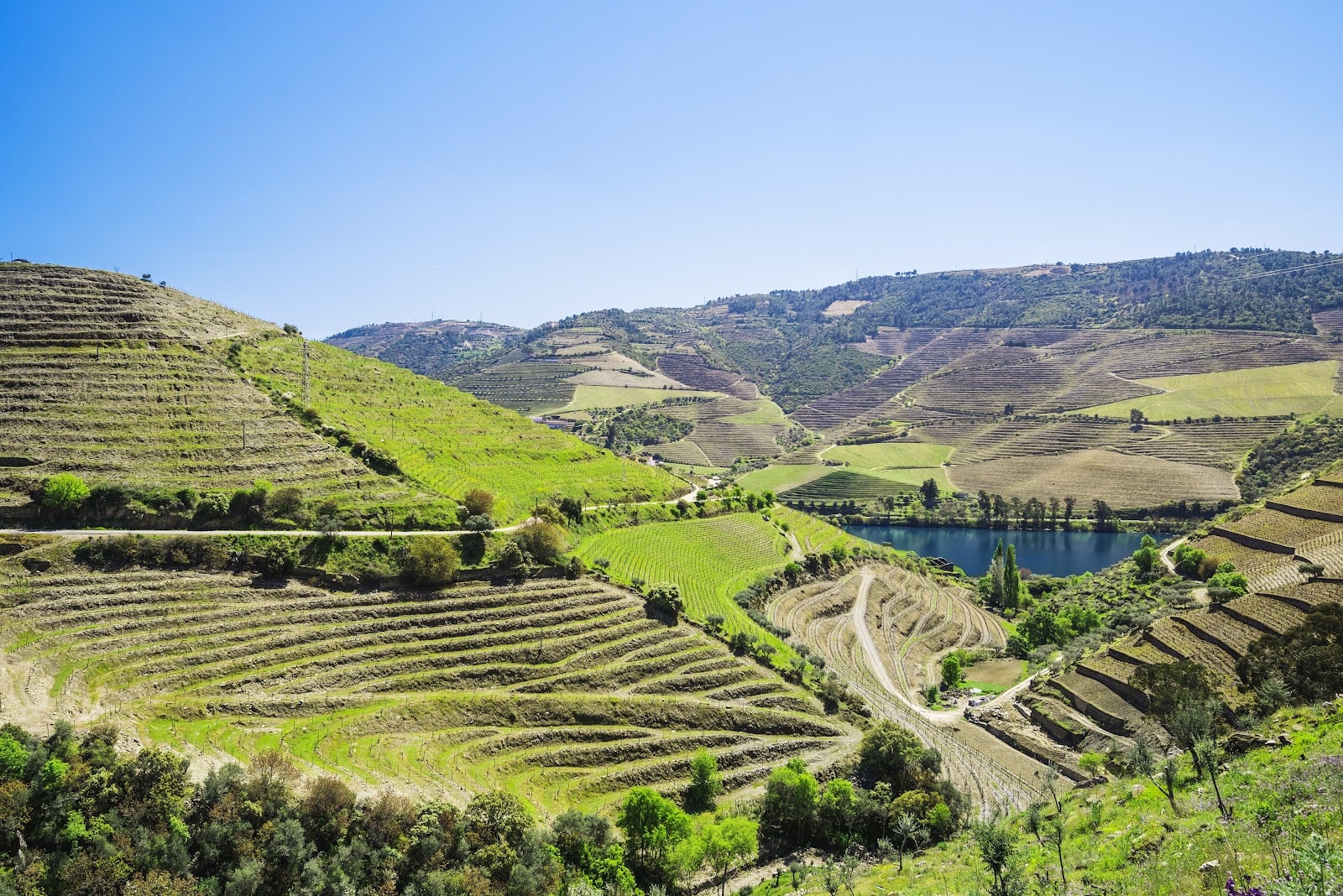
Leave Porto for Peso da Régua, using the Museu do Douro to understand the region before heading deeper into its terraced hills. Displays place vineyard labor, river transport and the wine region’s 1756 demarcation within a larger human story, making the landscape ahead more than a beautiful backdrop. Continue toward Pinhão along the river, allowing time simply to look at the stone-supported terraces climbing slopes that are still demanding to farm. Over lunch, taste a dry Douro red with roast kid if available, then keep the afternoon light rather than stacking tastings into your first valley day. Overnight in Pinhão.
Day 9: Douro, One Estate and a View Worth Keeping
Begin at Pinhão railway station, whose tile panels preserve images of vineyard work and the boats once used to transport wine downriver. Then visit Quinta do Bomfim, a working Symington estate with visits and tastings available by advance reservation, for a closer look at the relationship between grapes, terrain and port production. A tasting that compares styles is more revealing than a long succession of glasses, particularly when you have time to ask questions. After lunch featuring local olive oil and Portuguese cheeses, head to Casal de Loivos for the broad view over Pinhão and a bend of the river. Overnight in Pinhão.
Day 10: Back to Porto, with One Last Atlantic Afternoon
Return to Porto after breakfast, leaving the afternoon free of major reservations so the journey ends with breathing room rather than another checklist. At Foz do Douro, walk where the river meets the Atlantic, then continue toward Matosinhos for a final seafood lunch in a neighborhood closely connected to fishing. Order what is fresh that day, perhaps grilled sea bass or sardines when in season, with a crisp Portuguese white and an uncomplicated salad. Back in the city, use the remaining hours for a favorite café or a last riverside stroll before packing for the following day’s departure. Overnight in Porto.
Plan your own day
Share your dates, group size and interests, and we will suggest a tailored plan with a local driver/guide.