From Lisbon’s riverfront to Sintra’s wooded heights and the fishing traditions of Nazaré, this five-day journey balances celebrated sights with time to notice the details. Its most lasting memory may be an Atlantic afternoon, when a familiar postcard coast reveals a much older story.
Day 1: Arrival in Lisbon, River Light and Old Streets
Begin in Lisbon with an afternoon deliberately lighter than your ambitions: after an overnight flight from the United States, the broad river light at Praça do Comércio offers a gentler introduction than a museum schedule, with space to sit beneath the arcades and watch the city move around you. The square occupies the site of the royal palace destroyed in the earthquake of 1755, and its orderly proportions introduce the rebuilding that followed, a useful first chapter before you encounter the older, less predictable streets climbing away from the waterfront. Continue into Alfama, taking its slopes in short stages toward the Sé, Lisbon’s cathedral, whose origins reach back to the twelfth century, while leaving room for a coffee rather than treating every doorway as another appointment. At dinner, try bacalhau à Brás, shredded salt cod folded with eggs, onions and finely cut potatoes, alongside a Portuguese white wine; it is comforting, distinctly local food for a first evening when a long tasting menu might ask too much. Portugal Magik’s private driver/guide handles the driving and pacing in a Mercedes-Benz vehicle, shaping the day around your arrival and energy; overnight in Lisbon.
Day 2: Sintra, A Palace Above the Trees
Leave Lisbon after breakfast for Sintra, where the wooded hills change both the temperature and the mood, and give the morning to Pena Palace rather than attempting to collect several estates in a single, increasingly hurried sweep. Created in the nineteenth century under Ferdinand II around an earlier monastery, Pena combines architectural references with theatrical color, but its most compelling story is the transformation of a hilltop retreat into a royal landscape, with views that emerge and disappear as cloud moves across the ridge. Reserve the appropriate timed admission ahead, allow for the uphill approach, and bring a light layer even when Lisbon feels warm, since the weather here can make a terrace inviting one moment and distinctly brisk the next. Down in the historic center, settle into lunch before visiting Casa Piriquita for a travesseiro, the flaky almond-filled pastry whose name means pillow, and enjoy the contrast between the palace’s grand gestures and a small sweet served with an espresso. Let the remainder of the afternoon belong to browsing and conversation rather than another entrance queue, then return to Lisbon for dinner at your own pace and a second overnight in the city.
Day 3: Cascais, Royal Summers and Atlantic Air
Travel west to Cascais for a day that trades Sintra’s theatrical heights for a more horizontal pleasure: walking beside the water, stopping when a terrace looks welcoming, and noticing how a fishing settlement became a fashionable summer address without entirely losing its maritime character. Around the Citadel of Cascais, the fortifications recall the need to defend the approaches to Lisbon, while the royal residence within the complex connects the town to King Luís I, who established his summer residence here in 1870 and helped draw Portuguese society toward the coast. Continue to Praia da Rainha, a small beach tucked between rocks and town buildings, where the appeal is less an expansive seaside panorama than the intimacy of sand, balconies and everyday life sharing a compact corner of the shore. Lunch is the moment for grilled fish, chosen from what is available that day and served simply with potatoes and vegetables, perhaps with a glass of Arinto before an afternoon drive out to Guincho, where exposed dunes and Atlantic wind replace the town’s sheltered scale. Treat Guincho as a landscape to experience rather than an automatic swimming stop, then spend the evening and overnight in Cascais, with no need to rush back to Lisbon.
Browse our travel inspiration for ideas, or tell us what kind of day you have in mind.
Day 4: Obidos, Painted Tiles and a Queen’s Town
Depart Cascais after breakfast and head north to Óbidos, arriving with enough time to enjoy the walled town beyond its first photogenic impression, when whitewashed houses, bright borders and flowering corners begin to resolve into streets where people still live and work. Enter through Porta da Vila, pausing beneath its eighteenth-century blue-and-white tile panels, then follow Rua Direita at an unhurried pace, looking beyond the souvenir displays to the small architectural details that give the town its texture: stone door surrounds, iron balconies and passages opening suddenly toward quieter lanes. At the Igreja de Santa Maria, the story turns to royal Portugal, including the marriage of the young Afonso V and his cousin Isabel in 1441, while the town’s long association with Portuguese queens explains the regal thread running through its identity. Make lunch a leisurely affair with a warming bowl of caldeirada if it is on the menu, then sample a small measure of ginjinha, the sour-cherry liqueur associated with Óbidos, choosing a traditional glass if you prefer to taste it without the sweetness of a chocolate cup. The elevated wall walk has uneven footing and unprotected stretches, so staying at street level is a perfectly satisfying choice; overnight in Óbidos and enjoy its quieter evening rhythm.
Day 5: Nazare, A Headland Full of Stories
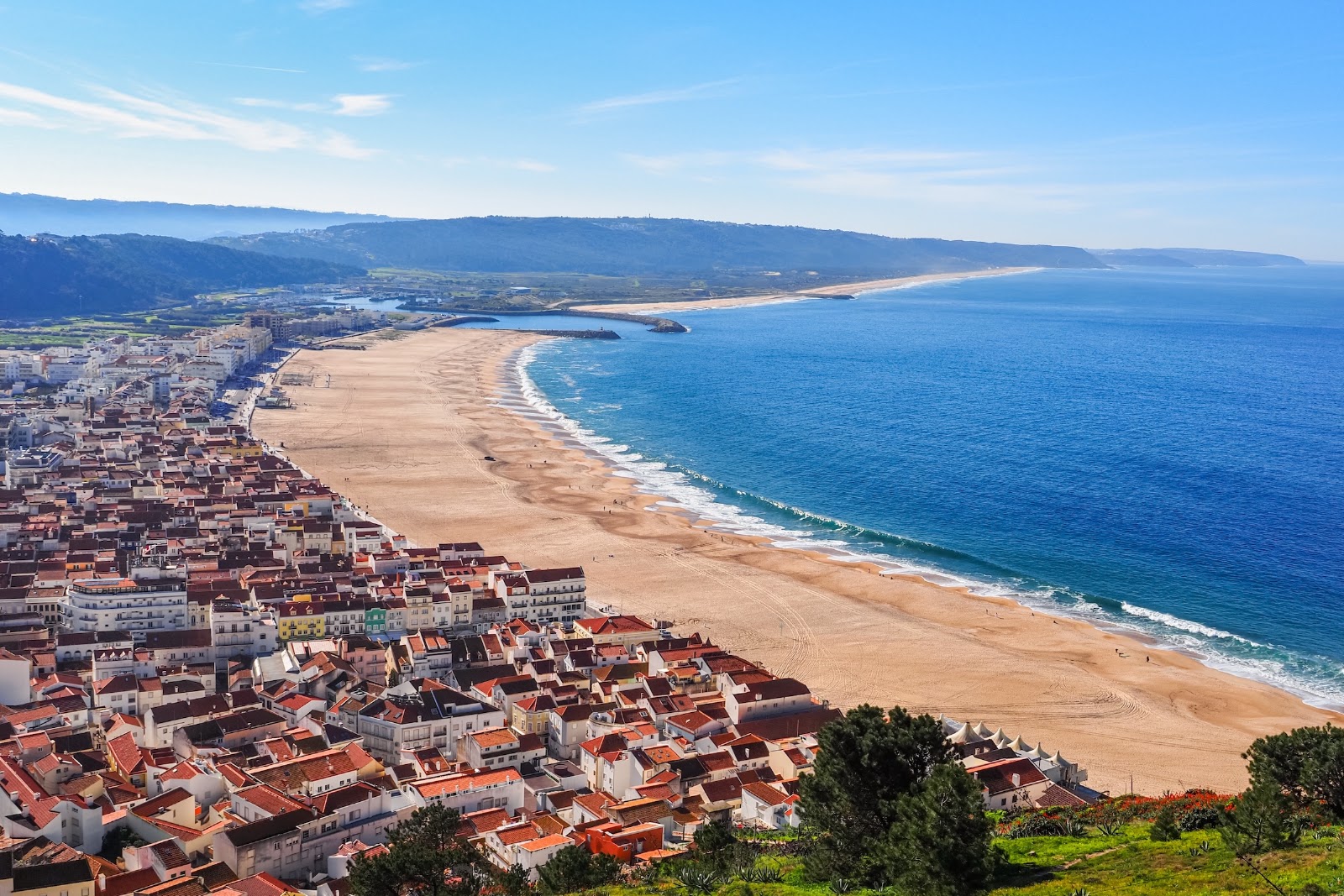
Make Nazaré the journey’s memorable final day, beginning above the sea in Sítio, where the view makes the town’s geography immediately clear: houses gathered below the cliff, an immense Atlantic horizon, and a coastline whose beauty has always come with the practical demands of making a living from the water. Here, the legend of the nobleman Dom Fuas Roupinho tells of a miraculous escape from a cliff while hunting in 1182, a story best heard as local tradition rather than documented fact, and a reminder that this headland inspired awe long before surfers brought it worldwide attention. Continue to the Forte de São Miguel Arcanjo overlooking Praia do Norte, where the offshore Nazaré Canyon helps explain the exceptional waves possible in suitable conditions, though the famous giants are most associated with autumn and winter swells and should never be treated as an everyday sight. Over lunch, order grilled sardines when in season, or ask what fish is freshest, and let the conversation return to the working coast: boats, weather, family livelihoods, and the difference between admiring the Atlantic for an afternoon and depending upon it throughout a lifetime. Leave time simply to watch the water before returning to Lisbon for your final overnight, carrying home not a promised spectacle but the quieter memory of a headland where legend, fishing history and modern surfing meet.
Plan your own day
Share your dates, group size and interests, and we will suggest a tailored plan with a local driver/guide.