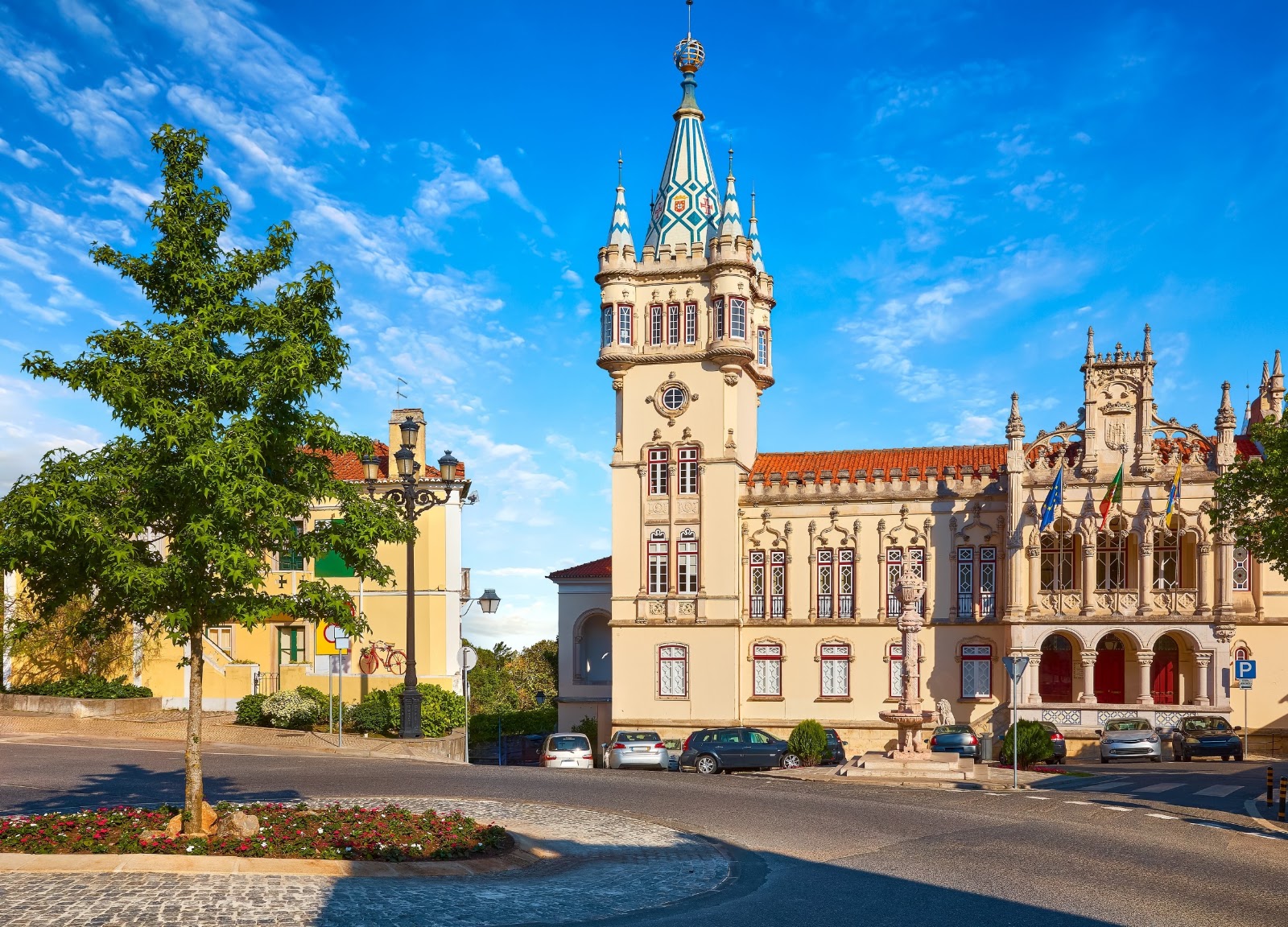
Beyond the crowded palace gates lies a Sintra of mossy woodland paths, ancient mountain sanctuaries, and wild coastal cliffs. Here is how to experience the mystical mountain at an unhurried, local pace.
The Forest Wakes in Mist
Most visitors arrive in Sintra with their eyes fixed firmly on pastel turrets and gilded ballrooms, unaware that the real soul of this granite mountain breathes in the damp silence of the woods. Long before royalty claimed the peaks, ancient Celtic tribes and Moorish ascetics revered the Serra de Sintra as the Mountain of the Moon. When morning light filters through the canopy of maritime pines, giant tree ferns, and moss-covered oaks, the mist rises off the forest floor in slow, drifting curls that soften every edge.
Beginning a journey away from the crowded town center lets you hear the water dripping from granite outcroppings and the wind rustling through lichen-draped branches. The air smells intensely green, carrying notes of crushed pine needles, damp earth, and distant Atlantic salt. Stepping into this microclimate feels less like arriving at a tourist attraction and more like entering an ancient preserve where nature has spent centuries reclaiming human handiwork.
Silence in the Cork Cells of Capuchos
Tucked deep into a fold of the hills, the Convento dos Capuchos offers the absolute antithesis of romantic royal grandeur. Founded in 1560 by Franciscan friars, this humble hermitage was built directly into the mountain, its tiny cells carved between monolithic granite boulders. To walk through its low stone doorways is an exercise in physical humility, requiring you to bend down and squeeze through passages barely wide enough for one person.
What makes Capuchos unforgettable is its raw simplicity. The friars lined their doors, ceilings, and walls with thick slabs of cork oak bark stripped from the surrounding woods, using it as natural insulation against the biting mountain damp. Sitting on a stone bench in the tiny cloister, listening only to the breeze in the umbrella pines, you understand why travelers like Lord Byron felt an uncanny pull here. There are no marble carvings or gilded altars, only raw granite, dark cork, and centuries of preserved silence.
Stone Cottages and Mountain Orchards in Penedo
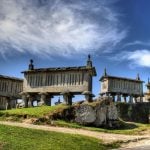
As the road winds down the western flank of the mountain, the deep forest gradually gives way to terraced orchards and dry-stone walls. Here sits Penedo, a traditional village clinging to a steep hillside that seems entirely detached from the modern world. The houses are built from golden mountain stone, with bright white lime borders framing traditional wooden shutters, while vivid pink bougainvillea spills over whitewashed courtyard walls.
Walking through Penedo requires navigating narrow cobblestone alleyways that stairs often replace entirely. Cats doze on warm threshold stones, and elderly neighbors chat across terracotta-tiled balconies while tending potted geraniums and lemon trees. Having a local driver and guide allows you to explore these quiet mountain hamlets without the strain of navigating impossibly tight lanes, shaping the day naturally around your curiosity and letting you pause whenever a hidden garden or stone fountain catches your eye.
Browse our travel inspiration for ideas, or tell us what kind of day you have in mind.
Deep Roots in the Sand of Colares
Just below the mountain slope, where the hills flatten toward the ocean, lies the historic wine hamlet of Colares. This is one of the most remarkable agricultural pockets in Europe. In the late nineteenth century, when the phylloxera pest decimated vineyards across the continent, the vines of Colares survived unscathed because their roots were planted deep in the loose coastal sand, where the aphid could not burrow.
At a rustic village tavern nearby, lunch becomes a celebration of both land and ocean. A plate of grilled sea bass, landed that very morning in nearby Cascais and seasoned simply with coarse sea salt and olive oil, pairs perfectly with a glass of Ramisco, the legendary Colares red wine known for its bright acidity, savory tannins, and distinct mineral character. To finish, there is nothing quite like a pair of traditional Travesseiros, warm almond-and-egg pastries with flaky, sugar-dusted puff crust that crunches softly with every bite.
The Edge of the Continent at Cabo da Roca
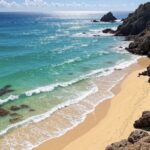
Leaving the vineyards behind, the road heads west toward the dramatic end of the Serra, where the mountains plunge sheer into the churning Atlantic. Cabo da Roca stands as the westernmost point of mainland Europe, a stark headland where the Portuguese poet Luis de Camoes wrote that the land ends and the sea begins. The sheer granite cliffs drop over four hundred feet down to crashing waves, their faces painted in yellow lichen and flowering sea figs.
While tour buses gather near the stone monument, walking a few hundred paces along the cliffside path leads you to pristine solitude. The wind here is fierce and invigorating, blowing clean across thousands of miles of open ocean. Standing on the precipice, looking out at the endless horizon, you feel the raw power of the Atlantic that once called Portuguese caravels out into the unknown.
As late afternoon approaches, your local driver and guide can adjust your route away from lingering coastal winds, gently guiding your Mercedes-Benz vehicle along scenic backroads toward the sheltered bays of Cascais or directly back to your Lisbon hotel. Ending the day this way leaves you with memories not of gift shops or ticket lines, but of wild granite ridges, quiet woodland paths, and the timeless rhythm of the Portuguese coast.
Plan your own day
Share your dates, group size and interests, and we will suggest a tailored plan with a local driver/guide.