Journey deep into Portugal only national park, where wild ponies graze high meadows, Roman milestones mark the mountain paths, and time slows to the rhythm of stone villages.
The Morning Ascent into Stone and Mist
The road climbs steeply out of the low valleys of the Minho region, trading terraced vineyards and citrus trees for dense stands of ancient pedunculate oaks. Long before you cross the boundary of Parque Nacional da Peneda-Geres, the air sharpens, smelling of pine needles, wild heather, and damp granite. This is Portugal only designated national park, spanning over seventy thousand hectares along the northern border with Galicia, yet it remains one of the country least understood treasures among international travelers.
Leaving the coastal plains behind in a quiet Mercedes-Benz touring vehicle, the journey unfolds without the pressure of unfamiliar navigation or tight mountain switchbacks. Traveling with a knowledgeable local driver and guide means the day takes shape around your curiosity, whether you want to pause beside a nameless mountain brook or spend an extra half hour watching morning fog lift from the reservoir waters below. As the timberline recedes, massive boulders emerge like sleeping giants scattered across the high plateau. These mountains carry an ancient silence that immediately commands attention.
Roman Footsteps on the Geira
History here is not preserved behind glass or ropes; it rests directly underfoot. Cutting through the heart of the national park is the Geira, the historic Roman military road that once linked Bracara Augusta, modern day Braga, with Asturica Augusta in Spain. Built during the first century under the Flavians, this mountain thoroughfare allowed legions, couriers, and merchants to cross rugged granite passes with remarkable efficiency.
Near the Albergaria forest, where sunlight filters green and gold through moss-draped branches, dozens of Roman milestones still stand along the dirt track. These heavy granite cylinders, carved with Latin inscriptions honoring emperors from Nero to Hadrian, bear the physical tool marks of ancient stonemasons. Walking among them feels less like touring a monument and more like stumbling upon forgotten footprints. A local guide can point out the subtle trail markers and explain how these dense woods served as shelter for local shepherds and outlaws through centuries of border conflict.
The Miradouros and the Living Water
Few places in southern Europe possess water as clear or abundant as Geres. Rain and winter snow melt off the Serra do Geres and filter through miles of granite bedrock, feeding crystalline rivers that tumble over polished rock faces into turquoise pools. At the Portela do Homem waterfall near the Spanish frontier, the river gathers in a deep basin before continuing down through the canyon. While the water is brisk enough to take your breath away, the visual reward of sitting beside the roaring cascade is unmatched.
Higher up, along the craggy ridges, lookouts like Pedra Bela offer sweeping panoramas across the entire valley. From this natural granite balcony, perched hundreds of feet above the Cávado River basin, you can gaze across forested valleys and see small settlements clinging to the mountain slopes. If you look closely at the open ridges, you might catch sight of Garrano horses. These small, sturdy wild ponies have roamed these mountain plateaus since the Bronze Age, recognizable by their dark coats, thick manes, and calm indifference to the wind.
Browse our travel inspiration for ideas, or tell us what kind of day you have in mind.
Village Life in Soajo and Lindoso
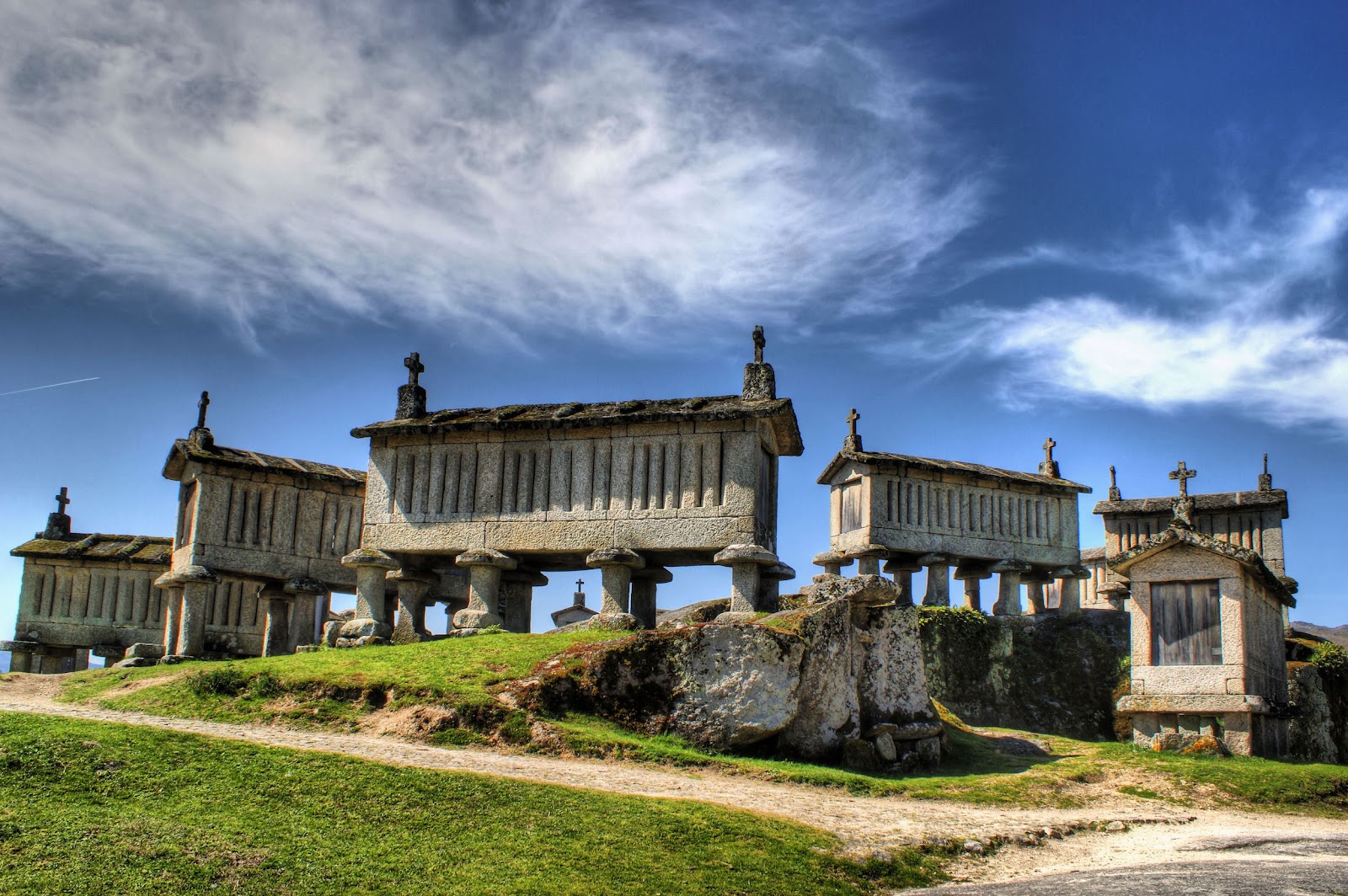
To truly understand Geres, you must spend time in its granite villages, where human life has adapted to harsh winter conditions for a millennium. In Soajo and Lindoso, the landscape is defined by espigueiros, communal stone granaries raised on heavy stone pillars topped with flat mushroom-shaped caps. Designed to protect harvested corn and grain from rodents and damp mountain air, these slate-roofed structures resemble small stone tombs, often adorned with simple granite crosses to bless the family winter provisions.
In Lindoso, more than fifty espigueiros cluster together beneath the imposing walls of the fourteenth-century Lindoso Castle, creating an extraordinary architectural scene that exists nowhere else in Europe. Walking these quiet cobbled lanes reveals the true rhythm of mountain life. You might hear the clatter of cowbells as a farmer leads Cachena cattle, a heritage breed known for their immense lyre-shaped horns, through the village square. There is no rush here; conversation happens over stone garden walls, and smoke from holm oak wood fires drifts gently into the afternoon sky.
A Table Set with Mountain Heartiness
Mountain air fosters an honest appetite, and traditional Geres dining reflects the rugged landscape. Lunch in a local village tavern avoids delicate garnishes in favor of deep, satisfying flavors born of mountain cattle, wild game, and stone-ground grains. The centerpiece of northern mountain cooking is Posta Arouquesa or Cachena beef, thick cuts of tender steak grilled simply over embers with sea salt, garlic, and fresh bay leaves, allowing the quality of the pasture-raised meat to speak for itself.
Alongside the meat comes batatas a murro, small potatoes roasted until tender and cracked open with a thumb, drenched in local olive oil and served with garlicky sautéed cabbage. Another regional specialty worth seeking out is broa de milho, the dense yellow cornbread baked in wood-fired stone ovens that has sustained families here for generations. Paired with a glass of crisp, mineral-forward Vinho Verde from the nearby Lima sub-region, the meal feels both celebratory and deeply grounded in its place.
Evening Shadows on the Mountain Road
As late afternoon light warms the pale granite peaks of the Serra da Peneda, the valley deepens into blue shadow. A scenic detour toward the Sanctuary of Nossa Senhora da Peneda reveals a breathtaking temple framed by a sheer rock wall three hundred meters high, its dramatic baroque staircase sweeping downward into the valley floor. It is a striking testament to human faith built right against the raw power of the mountain.
Turning back toward the coast, the comfort of your private vehicle offers a quiet space to reflect on the contrast between the bustling streets of Porto or Braga and the untamed wilderness behind you. Because Portugal Magik organizes each excursion with dedicated private transportation, your return journey requires nothing more of you than gazing out the window as the sun dips below the Atlantic horizon. You leave Geres with cooler air in your lungs and the lasting memory of a Portugal that remains wild, generous, and timeless.
Plan your own day
Share your dates, group size and interests, and we will suggest a tailored plan with a local driver/guide.