From royal summer retreats near Lisbon to dramatic cliffside fishing harbors in the south, these Atlantic ports capture American hearts with easy warmth and incredible seafood.
1. Cascais, where nineteenth century royalty met ocean breezes
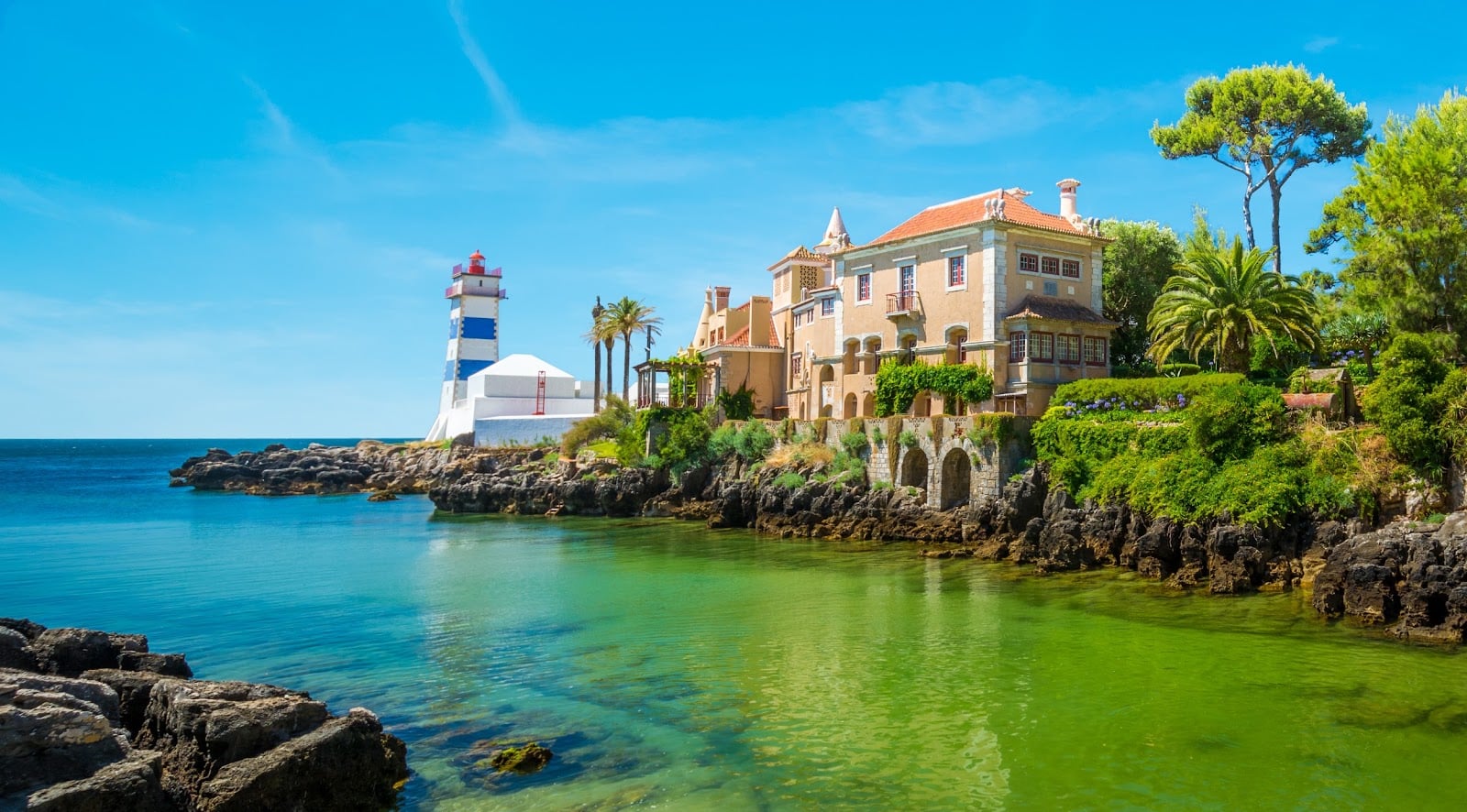
For American travelers accustomed to the bustling rhythms of modern life, stepping onto the polished limestone calçada of Cascais feels like an immediate exhale. Just thirty minutes west of Lisbon, this former fishing settlement became the favored summer residence of King Luis I in the late 1800s. Today, stately oceanfront mansions sit alongside small sandy coves like Praia da Rainha, named for Queen Amelia who cherished its sheltered waters. Visitors find it effortlessly walkable, remarkably clean, and warm with English spoken naturally in every cafe.
The true pleasure of Cascais lies in its balance of culture and coastal ease. You can stroll through the grounds of the Citadel, admire the dramatic ocean chasm of Boca do Inferno where the sea churns against limestone cliffs, and sit down to grilled sea bass paired with a crisp Arinto white wine from nearby Bucelas. It delivers the elegance of the French Riviera without the rigid pretense or steep costs.
2. Nazare, towering promontories and living fishing heritage
Nazare has captured American attention in recent years for the monstrous winter waves of Praia do Norte, conquered by record-breaking surfers. Yet visiting the town on a sunlit afternoon reveals a deeply rooted, authentic culture that feels untouched by modern trends. Along the main crescent beach, elderly fishmongers still wear traditional layered skirts and hand-embroidered aprons while drying rows of sardines and horse mackerel on wooden racks under the Atlantic sun.
A short funicular ride brings you up to the historic clifftop district of Sitio, perched over three hundred feet above the beach. Here, the Sanctuary of Our Lady of Nazare guards a sacred eighth-century black Madonna, and the nearby sixteenth-century fort of Sao Miguel Arcanjo frames panoramic views of the curving coastline. Enjoying a bubbling pot of caldeirada, the local fish stew layered with potatoes, peppers, and tomatoes, provides an unforgettable lunch while looking out over endless blue water.
3. Sesimbra, sheltered bays and castle battlements
Tucked beneath the pine-covered ridge of the Arrabida Natural Park, Sesimbra remains one of the best-kept secrets among travelers comparing southern European coastlines. The town faces south, shielding its broad sandy beach from the cooler northerly Atlantic winds. Towering high above the whitewashed houses sits the Moorish castle, captured by King Afonso Henriques in 1165, offering sweeping views over the turquoise bay and the bustling harbor below.
American visitors love Sesimbra for its exceptional seafood traditions and genuine maritime soul. Fishing vessels arrive daily at the western port, unloading octopus, swordfish, and red mullet that appear on tavern grills along the waterfront just hours later. A local driver guide can shape the day around your pace, perhaps adding a morning stop at the scenic sanctuary of Cabo Espichel before bringing you down into Sesimbra for a quiet seaside lunch.
Browse our travel inspiration for ideas, or tell us what kind of day you have in mind.
4. Tavira, gentle river tides and tiled merchant facades
In the eastern Algarve, Tavira offers a completely different rhythm from the rocky resort towns of the central south. Spanning both banks of the slow-moving Gilao River, connected by a Romanesque pedestrian bridge, Tavira feels like an open-air museum of Portuguese history. Renaissance church portals, Moorish castle gardens filled with oleanders, and eighteenth-century merchant homes adorned with ornate hipped roofs give the town an undeniable grace.
Tavira sits behind the barrier islands of the Ria Formosa natural park, where salt pans produce some of the finest flor de sal in Europe. After wandering through quiet cobbled alleys where bougainvillea cascades over whitewashed walls, travelers cross to the sandy sands of Ilha de Tavira via a brief ferry ride. Dining here centers on local shellfish, tender octopus rice cooked in clay pots, and fresh figs, offering a calm and authentic southern experience that outshines crowded Mediterranean alternatives.
5. Ericeira, cobblestone cliffs and ocean traditions
Perched on sandstone cliffs forty-five minutes northwest of Lisbon, Ericeira blends old-world seafaring grit with a vibrant, welcoming atmosphere. While celebrated globally as a premier surfing reserve, the heart of the village remains purely Portuguese. Narrow streets paved in white cobbles are lined with whitewashed fishermen’s cottages trimmed in cobalt blue, designed to deter evil spirits and mirror the surrounding ocean.
At the southern edge of town, the small harbor of Praia dos Pescadores is where the Portuguese royal family fled into exile in 1910 following the revolution. Today, visitors sit on oceanview terraces sampling fresh percebes, the prized goose barnacles harvested from treacherous sea rocks, alongside sweet spider crabs and chilled Vinho Verde. Having comfortable private transport means you can easily pair a morning among the monumental palaces of Sintra with an unhurried, salty afternoon wandering Ericeira.
6. Lagos, gilded chapels and golden sea arches
Rich in Age of Discovery history, Lagos appeals deeply to American retirees and history enthusiasts looking for substance alongside coastal scenery. This was the launch point for Henry the Navigator’s expeditions in the fifteenth century, and remnants of ancient defensive walls still wrap around the historic core. Tucked inside these streets is the Church of Saint Anthony, whose plain exterior hides an astonishing interior covered entirely in gilded baroque woodcarvings and hand-painted blue tiles.
Beyond the historic center lies Ponta da Piedade, a dramatic headland of golden limestone sea pillars, arches, and hidden grottoes sculpted by millions of years of Atlantic waves. Wooden walkways wind safely along the cliff edges, providing breathtaking panoramic views without demanding hikes. In the evening, the pedestrian quarter comes alive with acoustic street musicians and friendly wine bars pouring native southern grapes like Negra Mole.
7. Viana do Castelo, northern grandeur where the river meets the sea
In the verdant Minho region north of Porto, Viana do Castelo showcases an aristocratic maritime heritage rarely found in southern coastal towns. Manueline stone mansions and sixteenth-century granite fountains anchor the grand Praca da Republica, while the city’s jewelers remain famous for crafting delicate, traditional filigree gold hearts. Overlooking everything from the summit of Mount Santa Luzia is the monumental Byzantine-style basilica, reached by a scenic road through eucalyptus groves.
Viana sits where the Lima River meets the Atlantic, creating fertile grounds for exceptional gastronomy. Travelers savor salt cod prepared according to centuries-old regional recipes, accompanied by fresh cornbread and crisp, floral Loureiro wines produced in the neighboring valleys. The town offers remarkable value, spotless streets, and an authentic northern hospitality that leaves an indelible impression on thoughtful visitors.
8. Carvoeiro, dramatic coves and seaside tranquility
Once a modest community of tuna fishermen, Carvoeiro nestles snugly into a narrow gorge flanked by sheer golden cliffs. Whitewashed cottages with terracotta roofs climb the hillsides, framing a compact sandy beach where small painted wooden boats still rest on the slipway. Its gentle scale makes it an instant favorite for couples and families who prefer intimate village charm over sprawling resorts.
From the beach, a smooth wooden boardwalk leads eastward along the top of the cliffs toward the famous Algar Seco rock formations. Here, blowholes and sea caves hollowed out by the tide create natural marine sculptures, with stone balconies framing the deep turquoise water below. A private vehicle and dedicated driver guide make navigating these dramatic southern bluffs entirely seamless, allowing guests to relax and savor a glass of crisp regional wine at a clifftop table without worrying about foreign rental car contracts, tight parking, or winding unfamiliar roads.
Plan your own day
Share your dates, group size and interests, and we will suggest a tailored plan with a local driver/guide.