Six gentle days lead from Porto’s riverfront to Braga and the green country of the Minho. Along the way, a long lunch in Ponte de Lima becomes the afternoon you keep returning to in your mind.
Day 1: Porto, with time to find the river
A teaspoon taps against a coffee cup, somewhere behind an open café door. Down by the Douro, the first river breeze lifts the corner of a paper menu. This is a good way to begin six days in northern Portugal: not with a determined march through the sights, but with a seat, a coffee and time to notice where you are.
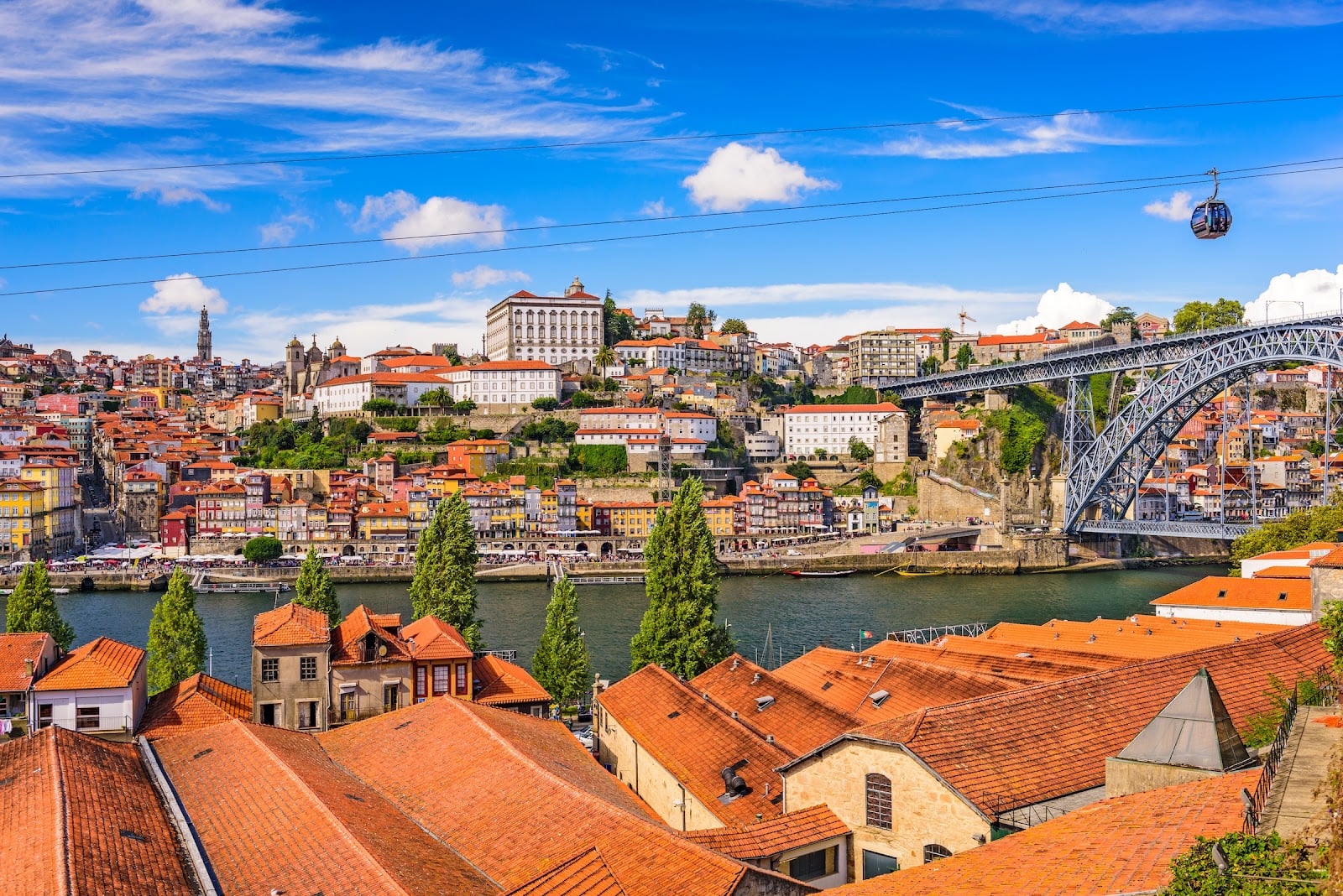
Start at São Bento station, where Jorge Colaço’s early twentieth-century tile panels turn a working railway entrance into a picture book of Portuguese history and rural life. Then wander downhill towards Ribeira. The lanes are steep in places, so take them slowly, allowing the river to appear in glimpses between buildings before reaching the waterfront.
Lunch can be a bifana, thin slices of pork tucked into bread, with the sauce that gives Porto’s version its character. Afterwards, leave the afternoon open for a riverside stroll or a rest. With Portugal Magik, a private driver/guide handles the roads and pacing in a Mercedes-Benz vehicle, and the plan can be reshaped around the guests’ own ideas. Tonight, sleep in Porto, with nothing more demanding ahead than choosing somewhere for supper.
Day 2: Market conversations and a little port
Give the morning to Mercado do Bolhão, Porto’s nineteenth-century market, restored and reopened in 2022. Beneath its open central courtyard, look for the ordinary details that make a market worth visiting: bunches of greens, stacked tins of fish, someone choosing fruit with considerable seriousness. There is no need to buy much. A little browsing and a second coffee are perfectly respectable plans.
Later, cross the Douro to Vila Nova de Gaia for one port lodge tasting, choosing an available scheduled visit rather than trying to fit several into the day. The story belongs to both banks of the river. Wine grown upriver in the Douro Valley was traditionally brought down to Gaia to mature before being shipped abroad. A taste of tawny port gives that history a pleasantly tangible ending.
Make lunch simple, perhaps grilled fish near the waterfront, and keep the rest of the afternoon free. You might linger on Gaia’s promenade, watching Porto rise across the water, or return to your room with a book. Stay a second night in Porto. Familiar streets already feel a little different when you no longer need to find your way.
Day 3: Braga, between bells and the wooded hill
Braga is roughly an hour from Porto by road, an easy change of scene after breakfast. Begin around the cathedral, whose origins reach back to the eleventh century, although later generations have added their own architectural marks. The city has Roman roots as Bracara Augusta, but its history is not confined to old stones. It carries on around you in shopping streets, café tables and people heading home for lunch.
Try a tíbia, an elongated pastry filled with cream, with your morning coffee. Then head to Bom Jesus do Monte, the pilgrimage sanctuary on the wooded hillside outside the centre. Its white stairways fold back upon themselves between granite fountains and landings. The water-powered funicular offers an alternative to the long climb when operating, while the upper terraces give you space to stop and look across Braga.
There is no prize for covering every step. Spend time where the view or the shade feels best, then return to town for a free afternoon. Dinner might be bacalhau à Braga, usually served with fried potatoes and an onion topping. Stay overnight in Braga, leaving the evening unplanned.
Your trip, your way
Tell us your ideas, we add ours
Share your dates, who is travelling and what you would love to see. We will match it with what we know works well on the road and send you a tailored private proposal.
Day 4: The afternoon that stays with you in Ponte de Lima
The drive to Ponte de Lima takes around forty minutes, but the change feels larger. Buildings give way to small fields, vines and wooded slopes. By the time you reach the Lima, the day seems to have found a slower rhythm. This is the afternoon I would leave most room for: a bridge, an old town and a lunch with no reason to end quickly.
Walk towards the historic bridge, whose surviving fabric includes Roman and medieval sections. Along the riverbanks, figures recall the story of Roman soldiers who feared that crossing the Lima would erase their memories. According to the ancient account, their commander crossed first and called his men by name to prove otherwise. It is a splendid story to carry over the water, with the town behind you and the river moving quietly below.
For lunch, look for arroz de sarrabulho, the local rice dish made with pork, blood and spices, often accompanied by rojões, chunks of pork. Its earthy flavour will not suit everyone; roast meat or fish makes an easy alternative. A glass of Loureiro from the Vinho Verde region belongs comfortably at this table.
Keep the afternoon free for wandering the old centre, sitting beside the river or doing very little. Stay in Ponte de Lima tonight. Without a return drive waiting, you can let lunch run long and come back to the waterfront as the light softens.
Our bestseller
Golden Portugal Unveiled, 10 days
Lisbon, Sintra, Evora, Porto and the Douro Valley with a private driver/guide, at an easy pace.
Day 5: Viana do Castelo and the Atlantic light
After breakfast, follow the Lima west towards Viana do Castelo, about half an hour away. The countryside opens towards the coast, and the light changes with it. Begin in the historic centre around Praça da República, where the sixteenth-century fountain and former town hall offer a compact introduction to a town shaped by trade and the sea.
In a pastry shop, try a bola de Berlim, the sugar-dusted doughnut commonly filled with egg cream. It is a gloriously impractical thing to eat neatly. Afterwards, take the road up to Santa Luzia. The sanctuary is much younger than its grand outline might suggest, with construction beginning in the early twentieth century. From the hill, you can trace the meeting of river, town and Atlantic.
Allow plenty of time simply to look. Then return to Viana for lunch, perhaps grilled fish with boiled potatoes, and an afternoon that belongs to you. Browse the centre, pause for coffee or settle into your accommodation early. Overnight in Viana do Castelo, close enough to the ocean for tomorrow to begin with a beach walk.
Day 6: A beach walk before Porto
Before turning south, spend an easy morning at Cabedelo, across the Lima estuary from Viana. The broad sandy beach is backed by dunes, and on breezy days you may see kitesurfers out on the water. Keep to the boardwalks through the dunes, then walk along the sand for as long as the weather and your appetite suggest.
Have lunch in Viana before leaving, with a bowl of caldo verde and bread if you want something modest after several generous days. Porto is around an hour away by road. There is no need to add another sightseeing stop just because the journey is short. Back in the city, leave the afternoon free for a favourite café, a little shopping or a quiet rest.
Spend the final night in Porto, returning perhaps to the river where the week began. You have seen celebrated places, but the memory that follows you home may be smaller: sugar on your sleeve, bells in Braga, or a Roman commander’s story told beside the Lima. Six days have left enough space for those things to matter.
Shape it around you
Every trip on this page is a starting point. Tell us how many days you have, the places you keep thinking about and the pace that suits you, and we will put our ideas next to yours and send a tailored proposal with a private driver/guide.
Tailored proposal
Plan your days in Portugal
Free, no commitment. A real person on our team reads every request.
See the 10-day bestseller trip