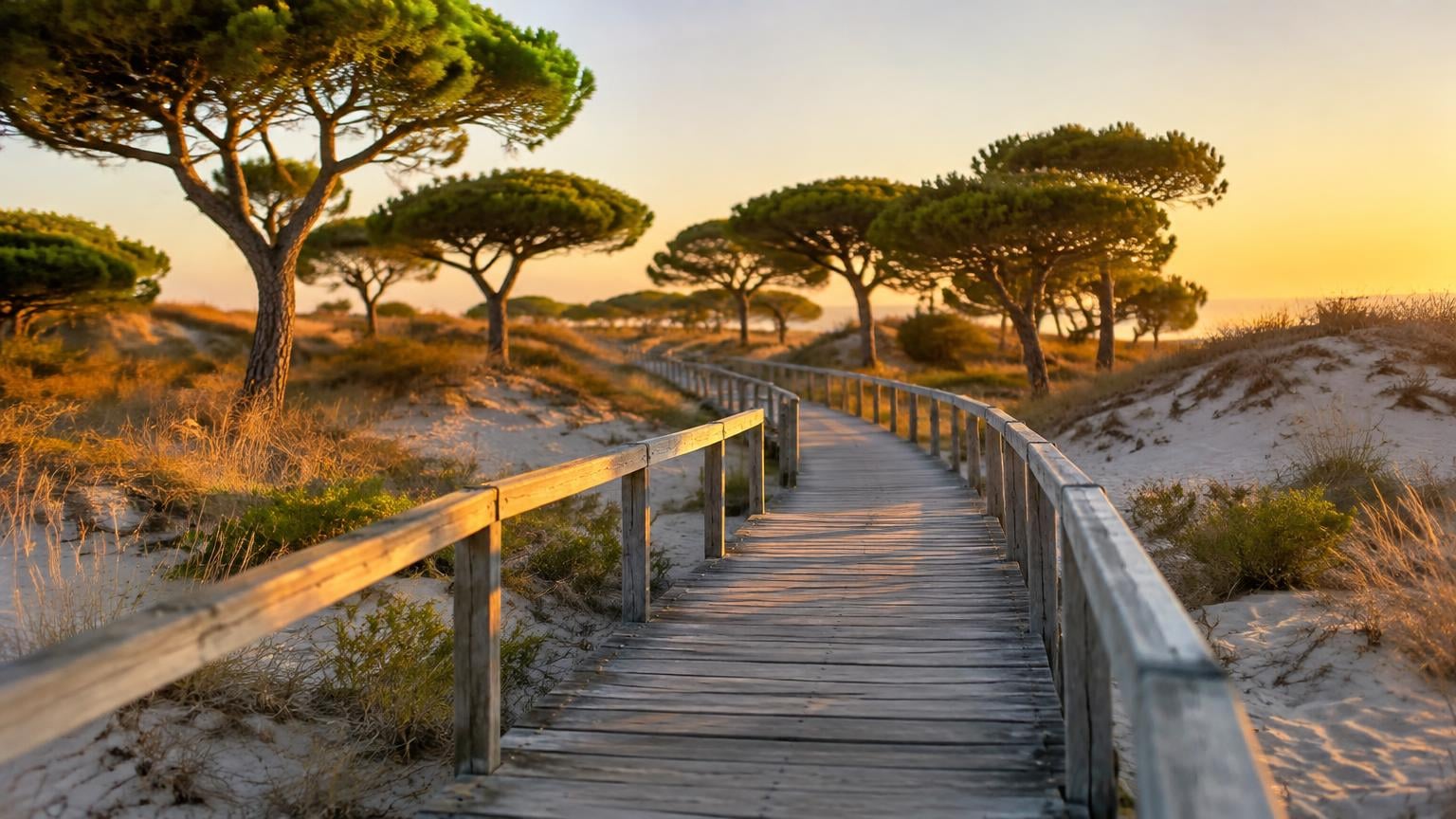
Why Comporta is often called the Hamptons of Portugal, what makes this stretch of the Alentejo coast so different, and how to plan an easy private arrival from Lisbon.
Why people call Comporta the Hamptons of Portugal
Ask a New Yorker to describe the Hamptons and you will hear about long sandy beaches, low key houses hidden behind dunes, farm stands, quiet money and a summer rhythm that feels far from the city even though the city is close. Comporta, on the Alentejo coast south of Lisbon, has earned the same nickname for very similar reasons. It is a weekend escape that people choose because it feels simple, not because it feels showy.
The comparison is a useful shortcut, but it is not a perfect one. Comporta is smaller, wilder and far more rural. There are no grand avenues of shingled mansions. Instead you find rice paddies, cork oaks, umbrella pines, fishermen's huts with reed roofs and a handful of villages where life still moves at the pace of the seasons. That contrast is exactly what draws travelers who already know the more polished resorts of Europe.
The landscape: rice fields, pines and a very long beach
Comporta sits on a narrow strip of land between the Sado estuary and the Atlantic. On one side are the rice fields that have shaped local life for generations, with storks nesting on poles and herons feeding in the shallow water. On the other side is a beach that runs for kilometers, backed by dunes and wooden boardwalks, where even in summer it is easy to find space.
Inland, the villages of Comporta, Carvalhal and Brejos da Carregueira are small clusters of whitewashed houses, cafes and design shops. Further south, Melides and its lagoon mark the edge of the area most visitors think of as Comporta. The whole region rewards slow days: a late breakfast, a long walk on the sand, lunch of grilled fish and rice, and a sunset that seems to last forever.
Who Comporta suits best
Comporta is a wonderful fit for couples and families who want privacy, space and nature more than nightlife. It suits travelers who are happy to spend a whole day on one beach, who enjoy discovering small restaurants and who like the idea of a house or boutique hotel set among pines rather than in a busy town center.
It is less suited to travelers who want to sightsee every day or who expect a lively evening scene. Many of our US guests combine a few nights in Comporta with time in Lisbon, Sintra or the Douro Valley, so the trip balances culture and city energy with genuine rest on the coast.
Where to stay without the crowds
Accommodation in the Comporta area tends to be low rise and spread out: design hotels among the pines, rural estates converted into small hotels, and private villas with pools. Because properties are far apart, the feeling of seclusion is real, but it also means you will want transport planned in advance.
Further south toward Melides and Grandola, newer properties continue the same quiet style, with wide views over the countryside and the ocean. Whichever you choose, book early for July and August, when Portuguese and international families arrive for the summer and the best rooms go quickly.
Getting there from Lisbon
Comporta is roughly an hour and a half by road from Lisbon airport, depending on traffic and the exact address. The drive crosses the Tagus, passes through the pine forests of the Setubal peninsula and then follows quiet roads toward the coast. Some travelers prefer the scenic route via the ferry from Setubal to Troia, which adds a short river crossing and lovely views of the estuary.
For guests arriving on a transatlantic flight, a private transfer is the simplest way to start the stay. Your driver meets you at arrivals or at the private aviation terminal, helps with the luggage and drives you directly to the door of your hotel or villa in a black Mercedes-Benz, so the first thing you do in Comporta is relax.
Getting around once you arrive
Distances between beaches, villages and restaurants are short on a map but taxis are scarce, especially in the evening. Many visitors rent a car, but after a long flight and on narrow sandy roads, a private driver can make far more sense. You can keep a driver at your disposal for selected days, for dinner reservations or for day trips.
Popular outings from Comporta include the Arrabida coast and its wine estates near Azeitao, the castle town of Alcacer do Sal on the Sado river, and further afield the medieval walled villages and vineyards of the inner Alentejo. With a driver you can enjoy a wine tasting or a long lunch without anyone needing to take the wheel.
The best time to visit
Summer is the classic Comporta season, with warm days, cool Atlantic water and a relaxed social atmosphere. June and September are especially pleasant, with fewer people and softer light. In spring the rice fields are green and the countryside is full of wildflowers, which makes it a beautiful time for walking and birdwatching.
Autumn and winter are very quiet, and some restaurants reduce their hours, but the beaches are almost empty and the long golden afternoons are perfect for travelers who simply want peace. Whatever the season, Comporta works best as part of a wider journey through Portugal, planned at an easy pace.
Keep planning your Portugal trip
Plan your trip with a private driver
Tell us your dates, group size and the places you would like to see. Our team replies with a tailored day by day proposal with a private driver, combining your ideas with our local knowledge.
See the 10-day bestseller trip
Explore private driver services