Spend a day between the pilgrimage grounds of Fátima and the extraordinary stonework of Batalha, where personal devotion and Portugal’s royal history meet. There is time for silence, a regional lunch, and a chapel whose ceiling is the open sky.
Leaving Lisbon with time to listen
Leave Lisbon after breakfast, and the city gradually gives way to the agricultural landscapes of the Tagus basin. Ahead lie two places that belong together without feeling alike. Fátima is a living pilgrimage destination, shaped by prayer and the movement of people. Batalha is a monastery built around a royal promise, its limestone carrying the ambitions of successive generations. Together, they make a day about what people choose to remember, and what they build to keep those memories alive.
The drive to Fátima usually takes around an hour and a half to two hours, depending on traffic and your starting point. With Portugal Magik, the journey unfolds in a Mercedes-Benz vehicle, with a local driver/guide who can shape the day around the guests: more time for reflection, a closer look at medieval history, or a leisurely lunch. Begin at Fátima, while the morning still feels open, then travel west to Batalha for the afternoon.
The small chapel at the heart of Fatima
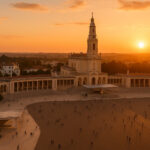
The Sanctuary of Fátima can surprise first-time visitors with its scale. The broad prayer area stretches between the Basilica of Our Lady of the Rosary and the modern Basilica of the Most Holy Trinity. Yet the spiritual heart of the sanctuary is much smaller: the Chapel of the Apparitions, built at the place associated with the holm oak where three shepherd children reported seeing the Virgin Mary.
Their names were Lúcia dos Santos and her cousins Francisco and Jacinta Marto. The first reported apparition took place on 13 May 1917, here at the Cova da Iria. Further reported apparitions drew growing crowds, culminating on 13 October in the event believers call the Miracle of the Sun. Knowing the children’s names makes the sanctuary feel less abstract. Beneath the monumental setting is a story that began with three young people tending sheep in rural Portugal.
Pause near the chapel rather than hurrying straight into a circuit of buildings. Some visitors pray; others simply sit. Both can find a respectful way to be present.
A pilgrimage site that is still being lived
Inside the Basilica of Our Lady of the Rosary are the tombs of all three shepherd children. Francisco and Jacinta died young, in 1919 and 1920; Lúcia became a Carmelite nun and lived until 2005. Across the grounds, the Basilica of the Most Holy Trinity, inaugurated in 2007, offers a striking architectural contrast. Its contemporary form reflects the practical needs of a sanctuary welcoming large congregations, rather than an attempt to imitate the older basilica.
This is not a museum with worship added as atmosphere. Services, processions, and individual acts of devotion give the place its rhythm. Keep voices low around prayer, dress respectfully, and ask before photographing people closely. The major pilgrimage dates, particularly 12 and 13 May and October, can transform the experience with substantial crowds. On any visit, checking the sanctuary’s programme helps you decide whether to attend a service or seek a quieter moment. Leave room for a pause that has no sightseeing purpose at all.
Browse our travel inspiration for ideas, or tell us what kind of day you have in mind.
Lunch on the way to a royal promise
Batalha lies roughly half an hour west of Fátima by road. The change is immediate: the vast pilgrimage grounds give way to a compact town gathered around an immense monastery. Before going inside, stop for lunch. A table in the streets near the monument lets the building become part of the afternoon gradually, appearing between rooftops as you walk.
Look for Portuguese cooking rooted in the surrounding region. Morcela de arroz, a blood sausage made with rice and associated with the Leiria area, is worth trying if it appears on the menu. A traditional restaurant might also serve bacalhau com broa, salt cod baked beneath a cornbread topping, or a slow-cooked meat dish. Ask what has been prepared that day rather than expecting every regional speciality.
For something sweet, look for brisas do Lis, small cakes associated with Leiria and made with egg yolks, sugar, and almonds. With a short coffee, they make a good conclusion before an afternoon spent looking upward.
Batalha, built after a battle
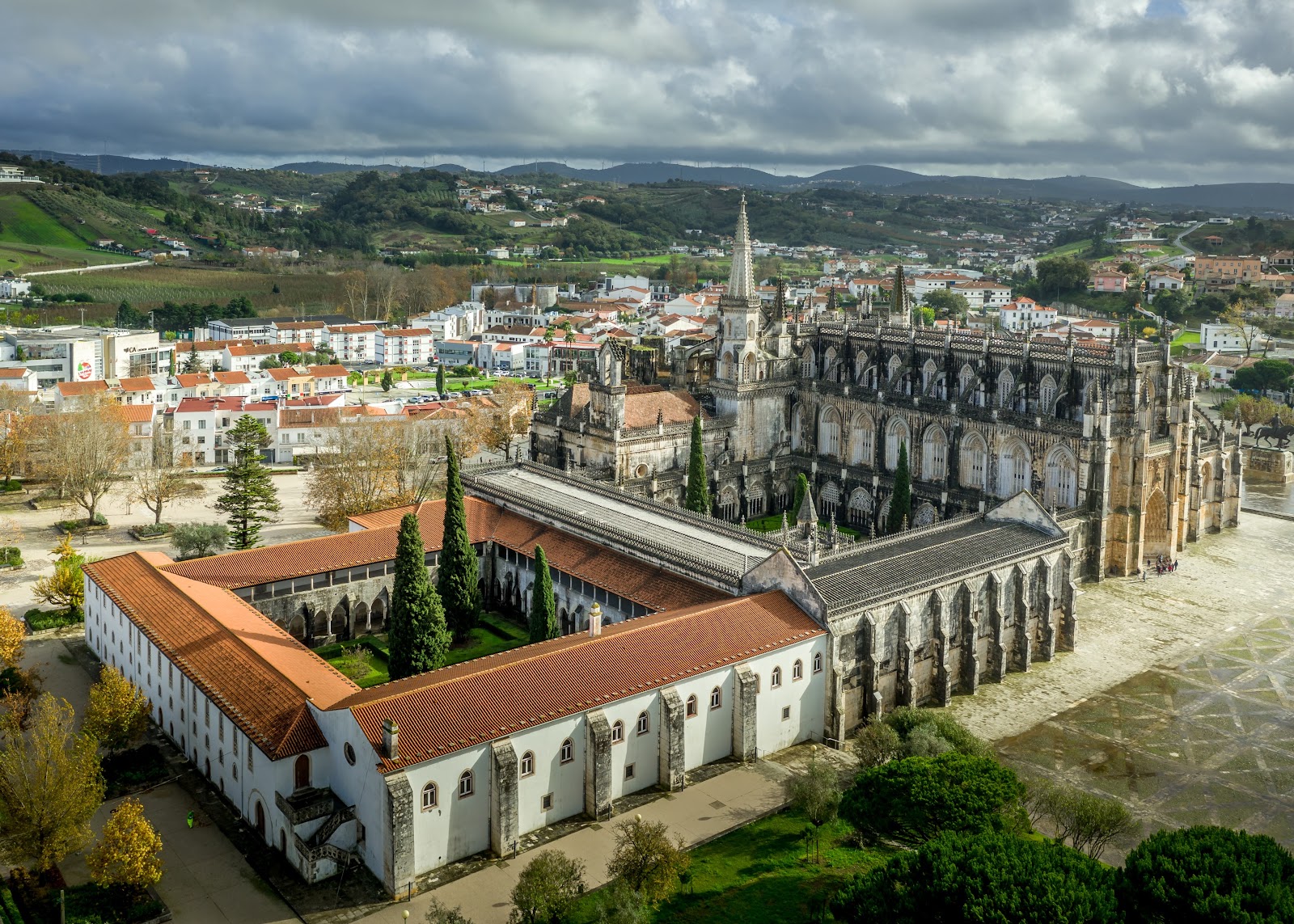
The monastery’s formal name is Santa Maria da Vitória. King João I founded it to commemorate the Portuguese victory at the Battle of Aljubarrota on 14 August 1385, a decisive event in securing his kingship and Portugal’s independence from Castile. Entrusted to the Dominican order, the monastery developed over generations. Its Gothic structure and later Manueline ornament reward slow looking, from the figures around the church portal to the elaborate tracery of the Royal Cloister.
In the Founder’s Chapel, João I and his English queen, Philippa of Lancaster, share a magnificent double tomb. Their marriage helped consolidate the Anglo-Portuguese alliance. Nearby are tombs of several of their sons, including Prince Henry the Navigator. Here, the grand national story becomes a family story too: a new dynasty establishing its place, remembering its dead, and presenting its future in stone.
Batalha was inscribed on UNESCO’s World Heritage List in 1983. That recognition is useful context, but the building needs little introduction once you stand beneath its soaring church vaults.
An unfinished ending under the sky
Save the Unfinished Chapels for the end. Commissioned by King Duarte as a royal pantheon, they were never completed. An extraordinarily carved Manueline portal leads into an octagonal setting open to the weather. After the enclosed church and sheltered cloister, the sky feels startlingly close. Clouds move where a roof might have been, and the changing light picks out details that a hurried glance would miss.
Check current opening times and ticket arrangements before travelling, especially outside summer. Comfortable shoes matter on stone surfaces, and a light layer is useful inside the monastery. Then give the final minutes to the building rather than the camera.
On the return to Lisbon, the two visits settle into different memories: a quiet moment beside Fátima’s chapel, perhaps, and daylight falling through Batalha’s unfinished walls. One place continues to gather people around a story of faith. The other preserves a royal promise, including the parts later generations never finished.
Plan your own day
Share your dates, group size and interests, and we will suggest a tailored plan with a local driver/guide.