Follow the river from Peso da Régua to Pinhão for a day of vineyard stories, tiled railway scenes and food rooted in the hills. In the Douro, the most lasting impressions often begin with something small: a broken stone, a painted boat or the first sip of an old wine.
Morning, where the hills begin to speak
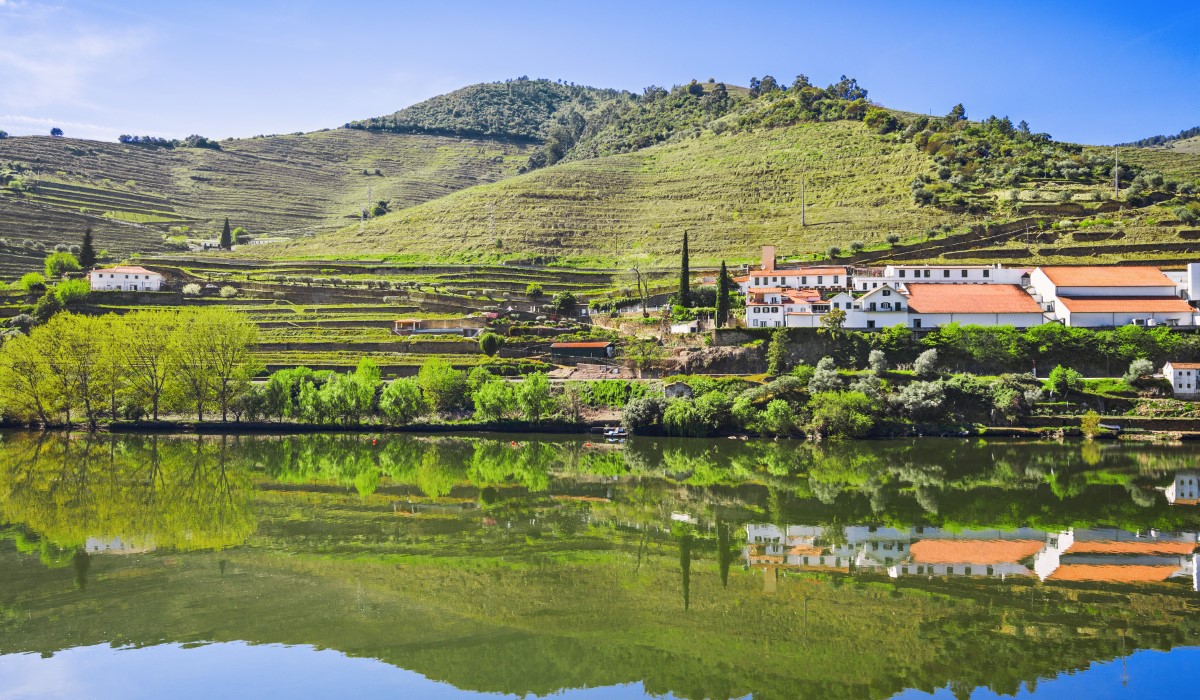
Leave Porto in the morning and give the Douro a whole day, rather than the space between two other appointments. The journey inland gradually exchanges the city’s granite streets for folded hills, scattered villages and slopes worked into lines of vines. By Peso da Régua, the river becomes the thread that holds everything together. This is not countryside that happened to become beautiful. Much of what you see was built, planted and maintained through generations of demanding work.
Portugal Magik’s Mercedes-Benz vehicles make a comfortable base for the journey, while a local driver/guide can shape the day around the guests, allowing more time for wine, a longer lunch or fewer stops. Today, the route is deliberately simple: a little history in Régua, the riverside road to Pinhão, one estate visit and a final view from above. The pleasure lies in having time to notice what connects them.
Régua and the story behind the label
Begin at the Museu do Douro in Peso da Régua, housed in the former headquarters of the Companhia Geral da Agricultura das Vinhas do Alto Douro. The institution helps explain a landscape that can otherwise seem almost too picturesque to question. Behind each vineyard are stories of boundaries, commerce, difficult harvests and the people who carried grapes across steep ground long before roads made the work easier.
In 1756, under the government of the Marquis of Pombal, the Douro became one of the world’s earliest formally demarcated wine regions. The purpose was not to create a scenic destination, but to regulate wine production and trade, particularly the business surrounding port. Centuries later, in 2001, UNESCO inscribed the Alto Douro Wine Region as a World Heritage cultural landscape.
Keep those two dates in mind when you return outside. The terraces are both agricultural infrastructure and historical evidence. Older stone-walled vineyards sit alongside broader modern terraces and rows planted vertically down slopes. The Douro is not a museum preserved under glass. It remains a working place, adapting to labour costs, erosion, heat and the practical demands of growing grapes.
The river road and Pinhão’s painted harvest
From Régua, follow the N222 towards Pinhão. On this stretch, the road stays close to the Douro, with vineyard slopes opening across the water. Estate names appear on hillsides, and the river curves out of sight just when you think you have understood its direction. This is a road to enjoy without trying to photograph every bend. Use proper stopping places and let some of the scenery remain simply a view through the window.
Pinhão’s railway station rewards a closer look. Its blue-and-white tile panels depict the regional wine trade and rural life: workers gathering grapes, baskets being carried and boats on the river. Instead of treating the azulejos as a decorative backdrop, read them as scenes from the valley’s working memory. They give human scale to the immense slopes you have just passed.
Look especially for the barcos rabelos, the wooden cargo boats once used to carry wine downstream towards Vila Nova de Gaia. Their work belonged to a much more difficult river than today’s apparently tranquil waterway. Dams later altered the Douro’s flow and navigation. The calm surface seen from Pinhão conceals an older story of currents, skill and risk.
Browse our travel inspiration for ideas, or tell us what kind of day you have in mind.
One estate, with time to understand it
Quinta do Bomfim, beside Pinhão, makes a coherent next stop. Owned by the Symington family since 1896 and closely associated with Dow’s ports, it offers a direct connection between the vineyards outside and the wine in the glass. Arrange the visit in advance and check the available formats rather than assuming every tasting includes the same wines or access.
The useful question here is not simply which bottle tastes best. Ask how the valley’s conditions shape what you are drinking. Schist, the layered rock characteristic of much of the Douro, fractures in ways that allow vine roots to seek water below the surface. Summer heat, hillside exposure and altitude all matter. Grapes such as Touriga Nacional, Touriga Franca and Tinta Roriz contribute different qualities to regional blends.
Port’s sweetness also has a practical explanation: grape spirit is added during fermentation, stopping it before all the grape sugars become alcohol. Douro table wines follow a different path, generally fermenting to dryness. Tasting with that distinction in mind makes the region easier to understand. There is no need to rush through several estates when one thoughtful visit can give the afternoon its centre.
Lunch belongs to the hills
Stay in or around Pinhão for lunch, choosing a restaurant whose current menu suits the table. Regional dishes worth looking for include cabrito assado, roast kid often served with potatoes, and bacalhau preparations that show how thoroughly salted cod belongs to inland Portuguese cooking. Depending on the kitchen and season, a meal might begin with local olive oil, bread, olives and sheep’s milk cheese.
A dry Douro red makes particular sense beside roast meat, though the region’s whites deserve attention too. Higher vineyards can produce wines with freshness that surprises visitors expecting only powerful reds. Order for appetite, not completeness. A shared dessert and coffee may be all the ending lunch needs, especially with another winding road ahead.
The last view, above Casal de Loivos
Finish by climbing towards the viewpoint at Casal de Loivos, above Pinhão. The road is narrow and winding in places, but the outlook gathers the day’s scattered impressions into one scene: river, village, railway and vineyards following the contours of the hills. After the museum, the tiles and the tasting, this is no longer just an impressive panorama. You can begin to read it.
Light and weather decide the colours, so there is no need to promise a golden sunset. Even beneath cloud, the geometry of the slopes is compelling. Stand for a while before returning towards Porto. The day’s strongest memory may be the realisation that the view depends on countless ordinary acts of work: pruning a vine, repairing a wall, carrying a harvest. The wine is one way of telling that story.
Plan your own day
Share your dates, group size and interests, and we will suggest a tailored plan with a local driver/guide.