
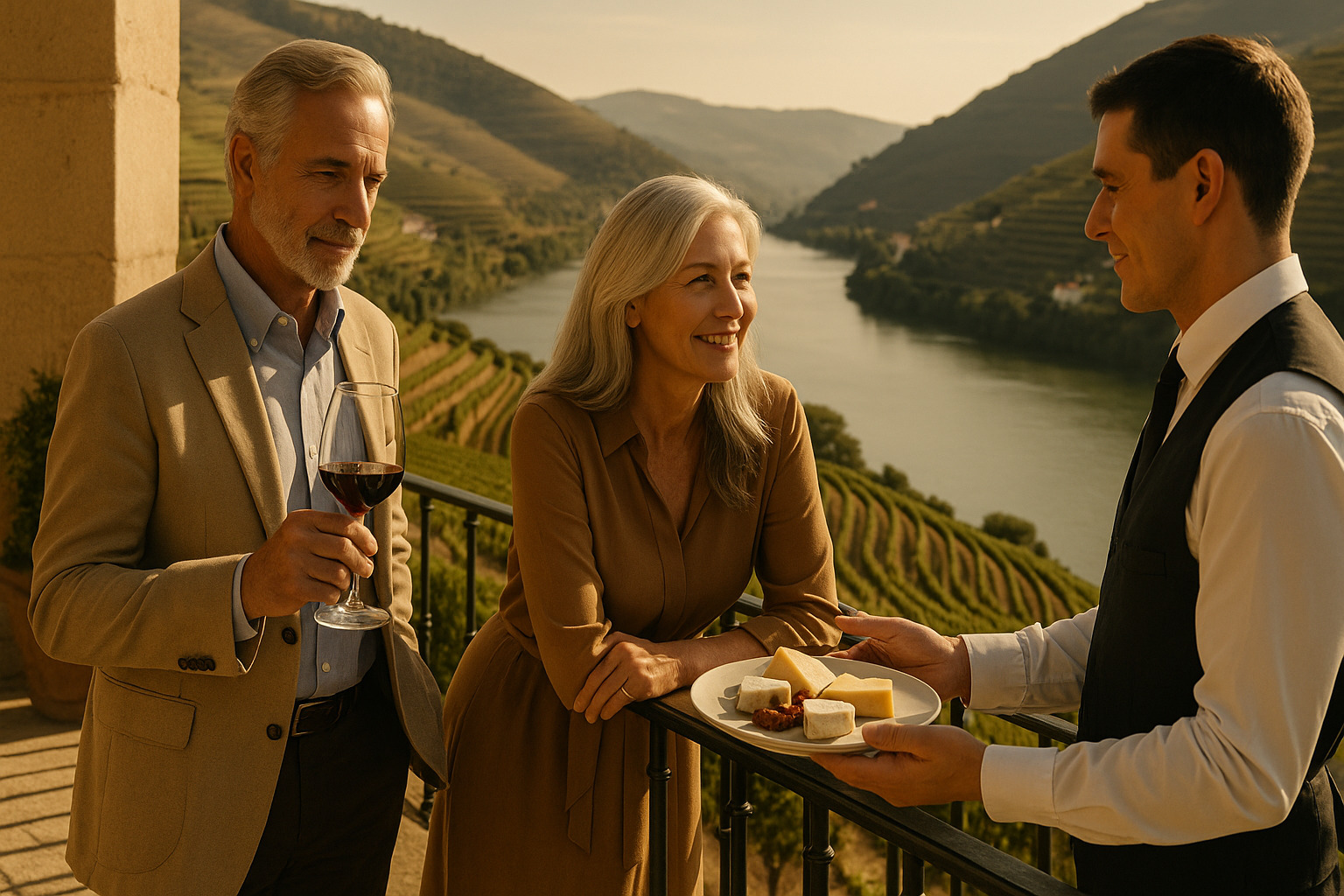
Most American travelers arrive in Portugal expecting scenic coastlines, medieval castles, exceptional wine, and friendly people. What they don’t expect — and what ends up surprising them more than almost anything else — is the country’s radically different approach to dining. Not the ingredients. Not the menu. The pace. This single cultural detail catches almost every American visitor off guard, and in many cases, becomes one of the elements they end up cherishing most about their trip.
In a world where dinner reservations in major U.S. cities often come with a countdown clock and a subtle pressure to keep moving, Portugal takes the entirely opposite approach. Meals here stretch. Conversations deepen. Nothing is rushed. No one interrupts. No bill appears prematurely. You are not rotated through a table; you are welcomed into a space where time is intentionally slowed down. It’s an idea rooted not in hospitality marketing, but in genuine cultural philosophy.
This slow dining culture often becomes the entry point through which Americans begin to understand Portugal on a deeper level — not just as a beautiful destination, but as a country with a very particular relationship to time, presence, and human connection. Dining here is not designed to be efficient. It is designed to be meaningful.
During private tours arranged by Portugal Magik Private Tours — an award-winning company operating for 14 years with a luxury fleet of Mercedes-Benz vehicles and highly experienced English-speaking driver-guides — guests experience this shift immediately. After their first dinner, the reaction is almost universal: “Why is this so relaxing? And why don’t we have this back home?”
This article explores exactly why this cultural difference exists, how Americans react to it, the history behind it, and how to embrace it fully during your trip. Along the way, you’ll find itinerary ideas and authentic guest reviews to help integrate these experiences into a custom route across the country. If you want to plan while reading, you can browse Portugal Magik’s multi-day itineraries here:
https://portugal-magik.com/multi-day-tours/
1. The Table Is Yours — For the Entire Evening
The first surprise for American travelers happens within the first fifteen minutes of any Portuguese meal: the rhythm of service feels different. The waiter greets you, shares suggestions or daily specials, brings drinks — and then quietly disappears. There is no hovering, no interruptions, no “just checking in.” In the United States, attentive service often means constant visibility. In Portugal, it means respecting space.
More importantly, once you sit down, the table is effectively yours for the entire night. Restaurants do not rotate tables aggressively. There is no expectation that you will finish, pay, and leave in a short window. In fact, staying for two hours is typical; staying for three is far from unusual.
One guest from San Francisco put it bluntly after a tour day in Évora arranged with Portugal Magik:
“We finally understood why everyone in Portugal looks more relaxed. Dinner isn’t a transaction — it’s a pause in your day. It changes you.”
Even in busy Lisbon neighborhoods like Chiado, Príncipe Real, or Alfama, you can linger after dessert, sip a coffee, order another glass of wine, and keep talking. No one will interfere. For Americans who live in a culture built on efficiency and quick turnover, this feels liberating.
Itinerary idea: Add a slow dinner in Lisbon after a private evening walking tour. This pairs well with a 3–5 day Lisbon itinerary reviewed together using:
https://portugal-magik.com/multi-day-tours/
2. The Bill Never Comes Until You Ask
This is the detail that Americans comment on most: the bill never appears on its own. In Portugal, bringing the bill without being asked is the equivalent of politely kicking you out. It is considered rude. Even after dessert, even after coffee, even if the table is clearly finished — you must request it. Otherwise, the assumption is simple: you are still enjoying your time.
Many Americans initially misinterpret this as inattentive service. It’s the opposite. It’s respect for your evening. Once this clicks, guests often begin enjoying dinners far more deeply. They stop looking at watches. They stop thinking about the next commitment. They realize they can simply breathe, eat, and talk.
A couple from New Jersey who spent 9 days touring Lisbon, Douro, and Porto with Portugal Magik described the moment they understood the custom:
“We sat for thirty minutes waiting for the check before we realized — they weren’t rushing us because they wanted us to relax. It was the first time in years we had a dinner without time pressure.”
3. Meals Are Social Events, Not Logistics
Portugal’s dining culture springs from a fundamental idea: meals are a form of connection, not a logistical necessity. Lunches and dinners are seen as social anchors in the day. Friends meet for long meals. Families gather. Conversations extend naturally. No one looks at the time.
This stands in sharp contrast to American dining, which tends to prioritize convenience, schedule, and efficiency. In the U.S., eating is often integrated into a packed day. In Portugal, dining creates the rhythm of the day.
Travelers often rediscover something they didn’t realize they were missing: human pace. When groups travel with Portugal Magik, guides frequently recommend restaurants where locals go precisely because the pace is unhurried and authentic. Travelers feel the difference immediately.
Itinerary idea: Add a wine-paired farm-to-table lunch in the Alentejo or Douro. These slow lunches are ideal on 6–12 day private tours.
4. Seafood and Meat Are Cooked to Order — No Rushing the Kitchen
Portugal’s culinary culture is deeply tied to freshness, especially when it comes to seafood. Many dishes take longer to prepare because they are being cooked from scratch. Grilled whole fish, cataplana stew, açorda, or caldeirada are not designed for rapid-fire kitchen service.
American travelers often say the food tastes different — more natural, more elemental. That’s because much of it is literally prepared on the spot. In many traditional restaurants, nothing is par-cooked. When the kitchen needs time, they take it.
One guest from Florida wrote after a private day tour to Nazaré and Óbidos:
“Our guide took us to a small fish restaurant where they grilled the catch of the day over charcoal. It took longer, but the flavor was unbelievable. You can taste the difference when food isn’t rushed.”
This slower cooking rhythm reinforces the entire dining culture: meals take time not just because of tradition, but because the food merits it.
5. Coffee Culture Is About Presence, Not Quantity
Americans often assume that Portugal’s espresso culture must be fast — but it’s not. People stop at cafés not to refuel, but to breathe. A coffee break is part of the day’s natural rhythm. Standing at the counter for an espresso is social. Sitting outside under a parasol with a meia-de-leite is contemplative.
This isn’t about caffeine intake; it’s about presence.
Itinerary idea: Include a café stop during a private walking tour in Lisbon or Porto. These moments often become traveler favorites.
6. Portuguese Waiters Are Not “Performers” — They’re Professionals
Another major difference: Portuguese service is discreet. In the U.S., servers often feel like part of the performance — lively, enthusiastic, conversational by default. In Portugal, service is elegant but understated. Waiters rarely introduce themselves by name. They rarely upsell. They don’t try to entertain you. Instead, they treat the profession with quiet pride.
For many Americans, this restraint reads as refreshing. They feel less pressure to engage, less noise, more attentive calm.
A traveler from Los Angeles who spent 10 days touring with Portugal Magik commented:
“We realized Portuguese waiters aren’t trying to charm you — they’re trying to serve you well without intruding. There’s a dignity to it that we really appreciated.”
Other Visitors are reading now:



7. Meals Are a Window Into the Portuguese Way of Living
Americans often return home with a new appreciation for time after experiencing these meals. The slow dining tradition is not a gimmick; it’s a reflection of deeper values: balance, respect, presence, connection. This cultural rhythm is felt everywhere — in the way people linger on terraces, in the quiet pace of neighborhood streets, in the softness of evening conversations.
When guests tour with Portugal Magik — often for 7–12 days across Lisbon, Porto, the Douro Valley, Alentejo, and the Algarve — they experience this rhythm repeatedly. It becomes part of their journey, part of the country’s imprint on their memory.
By the end of a trip, many travelers say the same thing:
“Portugal reminded us how to slow down.”
Planning Your Trip Around Portugal’s Slow Dining Culture
Understanding this dining philosophy can help shape a far better itinerary. Instead of packing your days with constant movement, allow for long lunches, late dinners, and quiet evenings in local restaurants where the pace is authentic.
Portugal Magik Private Tours specializes in exactly this style of travel — relaxed, comfortable, personalized, and immersive. With 14 years of experience, a luxury fleet of Mercedes-Benz vehicles, and expert English-speaking driver-guides, the company designs journeys that match the tempo of the country itself: unhurried, elegant, and meaningful.
The company covers the entire country — Lisbon, Porto, Douro, Algarve, Sintra, Évora, Coimbra, and more. Most guests book 7–12 day multi-city itineraries with private transportation, driver at disposal, private guided tours, and flexible pacing so they can truly enjoy the destinations rather than rush through them.
If you want help crafting a route that includes the best dining experiences in the country, we can review it together. You can begin by exploring our most popular multi-day tours here:
https://portugal-magik.com/multi-day-tours/
Book Your Portugal Experience
• Explore our bestseller tours: https://portugal-magik.com/multi-day-tours/
• Best Private Day Tours Around Lisbon: https://portugal-magik.com/private-day-tours/
• Read Top Guests Reviews: https://portugal-magik.com/reviews/
• Contact Us: https://portugal-magik.com/contact/
Fill in the form below to request your custom itinerary.