Follow Roman columns, pottery traditions and borderland castles through five unhurried days in the Alentejo, with Évora, Monsaraz and Marvão as your overnight bases. At the heart of the journey is an afternoon above Alqueva, where a small village opens onto an extraordinary horizon.
Day 1: Arrival in Évora, Roman Columns and Cathedral Stone
Arrive in Évora by late morning and leave the afternoon open for its compact historic center, a UNESCO World Heritage Site where whitewashed houses, granite doorways and stretches of medieval wall establish the visual rhythm of the next five days without demanding that you immediately master a chronology. Begin at the Roman Temple, built in the first century AD and long associated with Diana, although that familiar attribution is not supported by evidence; its surviving Corinthian columns offer a striking introduction to the Roman city beneath the streets you will walk today. Continue to Évora Cathedral, begun in the late twelfth century, allowing time for the transition from its fortress-like exterior to the quieter interior rather than treating this substantial medieval building as simply another landmark between photographs and lunch. At the table, start with açorda à alentejana, a garlicky broth with coriander, olive oil and bread, often served with an egg, whose apparently modest ingredients introduce the region more honestly than an elaborate tasting menu could. For this Portugal Magik itinerary, a private driver/guide handles the driving in a Mercedes-Benz vehicle and shapes the pacing around your interests, leaving the evening free for a gentle walk and an overnight stay in Évora.
Day 2: Évora, a Chapel’s Message and Wine in Clay
Give Évora a second morning rather than moving on immediately, beginning at the Church of São Francisco and its Chapel of Bones, where the human remains arranged along walls and pillars were intended as a religious meditation on mortality rather than a spectacle for visitors. The chapel was created by Franciscan friars in the sixteenth century, and its famous inscription, reminding those entering that their own bones will follow, makes a surprisingly effective argument for spending the rest of the day attentively rather than hurriedly. After coffee, travel south to Vila de Frades, a village closely associated with vinho de talha, the Alentejo tradition of fermenting wine in large clay vessels, with an advance appointment at a producer that explains the process and offers a tasting. The method has ancient roots, but the pleasure lies in discovering a living practice rather than a museum piece; ask how the clay vessels are prepared and how the wine changes between fermentation and the moment it reaches your glass. Make lunch the substantial meal, pairing the visit with migas, a bread-based preparation often served alongside pork, then return for an overnight stay in Évora and an evening with no further sightseeing obligations.
Day 3: São Pedro do Corval and Monsaraz, the Day to Remember
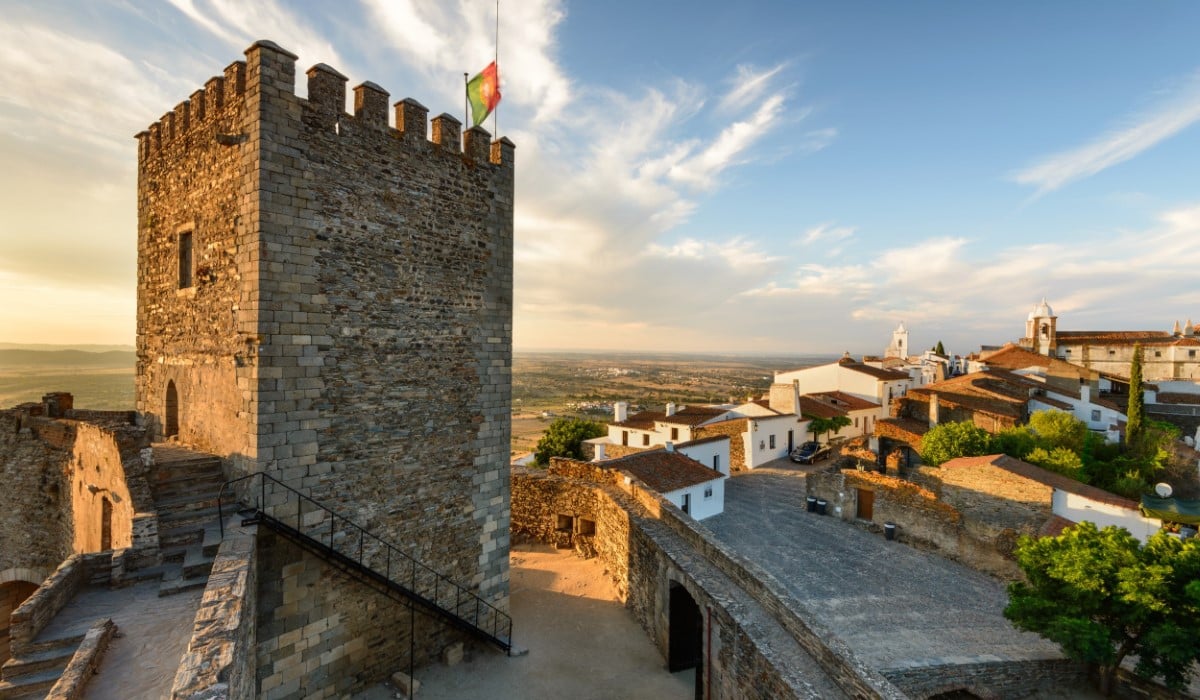
Leave Évora after breakfast for São Pedro do Corval, a pottery village where working workshops give the journey a human scale: instead of beginning with another monument, browse dishes and bowls, notice variations in painted decoration, and ask which pieces were made on the premises. Continue to Monsaraz before lunch, leaving the car outside the medieval walls and walking into streets whose white façades and dark schist details make the village feel composed of only a few materials, used with extraordinary confidence across centuries of building and repair. This is the day to remember slowly: climb toward the castle, look over the Alqueva reservoir, and consider the contrast between a settlement shaped by medieval frontier struggles and a vast body of water created by a dam that closed its gates in 2002. Lunch might be ensopado de borrego, a lamb stew served over bread, followed by a glass of Alentejo red and enough time at the table to appreciate why a short list of visits can produce a fuller day than an ambitious circuit. Stay overnight in Monsaraz, giving yourself the uncommon pleasure of seeing the lanes after many day visitors have departed, then return to a viewpoint as the declining light draws out the folds of the surrounding countryside.
Browse our travel inspiration for ideas, or tell us what kind of day you have in mind.
Day 4: Vila Viçosa and Estremoz, Marble on the Road North
Depart Monsaraz for Vila Viçosa, where the Paço Ducal tells a different Alentejo story, not of isolated hilltop defenses but of aristocratic power, dynastic ambition and the House of Braganza, which supplied Portugal’s monarchs after the restoration of independence in 1640. Plan an interior visit around the palace’s current opening arrangements, and take time outside to study the long marble façade, a useful introduction to the stone that shapes so many buildings and livelihoods in this part of the region. Continue to Estremoz for lunch and a walk through its upper town, noticing how marble appears not only in grand architecture but in everyday thresholds and street details, giving this working town a texture quite distinct from the village you left this morning. Choose porco preto, the prized Iberian pig associated with the region’s oak landscapes, perhaps served as grilled cuts with potatoes and greens, and ask for a local wine by the glass rather than making this transfer day carry another formal tasting. Turn north toward Marvão in the afternoon, allowing the changing countryside to become part of the experience, then settle in for an overnight stay in Marvão with dinner kept simple and the first proper exploration saved for morning.
Day 5: Marvão and Castelo de Vide, Stories Along the Border
Begin early at Marvão Castle, when the climb through the village can unfold without hurry and the views explain the site’s strategic value more clearly than any map: from this high granite ridge, movement across a broad stretch of border country becomes visible. The village’s name recalls Ibn Marwan, the ninth-century rebel associated with its early fortified history, although the defenses seen today reflect later medieval development; pause at the great cistern, a practical reminder that holding a fortress depended on water as much as walls. Descend to Castelo de Vide for a different kind of historical encounter in its former Jewish quarter, where steep lanes and the building interpreted as a medieval synagogue introduce the community’s history alongside the upheavals of forced conversion at the end of the fifteenth century. Over lunch, try a regional sheep’s cheese and, if available, boleima, a traditional local cake often made with apple and cinnamon, leaving space afterward for a quiet walk rather than setting off immediately in pursuit of a final landmark. Return for your last overnight stay in Marvão, where a local driver/guide can adjust the day’s walking and stops around your energy, ending five days with time to sit above the countryside and let its many histories settle.
Plan your own day
Share your dates, group size and interests, and we will suggest a tailored plan with a local driver/guide.