Portugal’s medieval walls shelter more than castles: they hold neighborhood bakeries, borderland stories and lunch tables worth lingering over. Choose one of these six towns as the heart of a memorable day, rather than trying to collect them all.
1. Óbidos, where the day begins inside a tiled gateway
About an hour north of Lisbon by road, depending on traffic, Óbidos makes an inviting first encounter with Portugal’s walled towns. Enter through the Porta da Vila and look up: its blue-and-white tiles belong to a later chapter than the medieval defenses surrounding you. Along Rua Direita, whitewashed houses and shop windows lead toward the castle. King Dinis gave Óbidos to Queen Isabel in 1282, helping establish its long association with Portugal’s queens. Arrive early and the pleasure is not just seeing the architecture, but hearing the town wake up.
For Americans accustomed to fitting several European landmarks into a day, Óbidos rewards restraint. Wander a side street, pause for coffee and try ginjinha, the local sour-cherry liqueur, if you drink alcohol. English is commonly spoken in visitor-facing businesses. The ramparts, however, have exposed stretches without protective railings, so families and anyone uneasy with heights may prefer the lanes below. A local driver/guide can shape the day around the guests, pairing the town with lunch nearby rather than another demanding walk.
2. Monsaraz, for a long lunch above the Alentejo
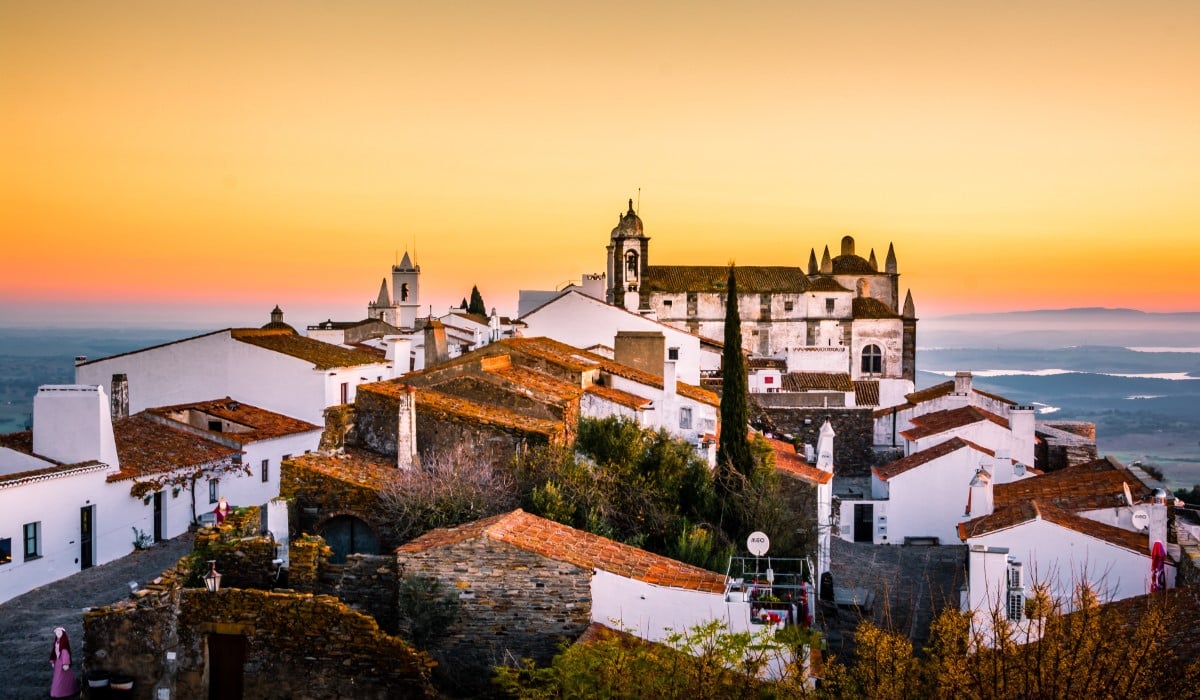
Monsaraz is the kind of place that makes a couple abandon the idea of watching the clock. Its fortified hilltop rises above the Alentejo, with narrow streets, pale walls and views toward the Alqueva reservoir. The medieval castle recalls centuries when control of this landscape mattered to Portuguese kings and their neighbors. The enormous sheet of water below is much newer, created by the Alqueva dam. That contrast, old defenses above a transformed landscape, gives the view a story beyond its beauty.
Build the day from an Évora base, roughly an hour away by car, rather than treating Monsaraz as a hurried detour from Lisbon. Walk before the afternoon heat, then settle down to migas, a regional bread-based accompaniment often served with pork, and wine from nearby Reguengos de Monsaraz. For travelers comparing Portugal with France or Italy, this is a useful way to judge value: a regional meal, a distinctive setting and time to enjoy both. Check menus rather than assuming every destination is cheaper.
3. Marvão, where the border becomes the day’s story
The approach to Marvão is part of its impact. The road climbs through the Serra de São Mamede toward a granite ridge, and the town seems to gather itself behind its walls. Its name is associated with Ibn Marwan, a ninth-century rebel leader, while the surviving castle and defenses reflect later medieval building campaigns. Inside, the large cistern offers a tangible explanation of survival during a siege. Outside, the view toward Spain explains why anyone would defend this difficult perch.
This is a rewarding day for families with curious older children and for travelers who like history grounded in a landscape. Wear shoes with grip: granite paving, steps and exposed wall walks require attention. Castelo de Vide is around twenty to thirty minutes away by road, making it a realistic second stop if energy allows. Otherwise, keep the afternoon for lunch and another view. Alentejo lamb stew, when available, suits the setting far better than a meal rushed between monuments.
Browse our travel inspiration for ideas, or tell us what kind of day you have in mind.
4. Sortelha, for a morning among granite houses
At Sortelha, near Sabugal, the walls seem to grow directly from the rocks. Granite houses sit beneath a castle established during the reign of Sancho II, who granted the settlement a charter in 1228. Enter the historic enclosure and follow the uneven lanes without expecting a procession of major museums. Here, the memorable detail may be a doorway fitted around an enormous boulder, or the sudden opening of the landscape beyond a gate. The scale is intimate, but the borderland history is substantial.
Choose Sortelha for a day based around the Beira Interior, not as a quick excursion from Lisbon. Belmonte is roughly half an hour away by road, allowing a second chapter without spending the afternoon in transit. At lunch, look for regional lamb dishes and Beira Interior wines; availability varies with the restaurant and season. English is less consistently available in small rural establishments than in major tourist centers, making a little Portuguese useful. The uneven surfaces also favor an unhurried visit over an ambitious walking schedule.
5. Trancoso, where market streets carry medieval memories
Pass through Trancoso’s Portas d’El Rei and the day takes on a more lived-in rhythm. This is not simply a castle with a village attached: streets and squares inside the walls still serve a working town. In 1282, King Dinis married Isabel of Aragon here, a royal connection that neatly links Trancoso with Óbidos. Walk toward the castle, then explore the streets associated with the town’s historic Jewish community. The Isaac Cardoso Jewish Interpretation Centre provides context that old stone alone cannot supply.
Leave room for a bakery stop. Sardinhas doces de Trancoso are sweet pastries, despite their fish-inspired name, traditionally made with an egg-rich filling. They make a fine conversation piece over coffee before the drive onward. Trancoso fits naturally into a day from Guarda, around forty minutes away by road. For retirees or multigenerational families, keeping one principal town and one leisurely meal often proves more satisfying than adding a succession of castle staircases.
6. Estremoz, for marble, market life and a final hilltop view
Estremoz offers two distinct moods: the lower town’s everyday bustle and the older fortified heights above it. Climb toward the medieval castle precinct and its striking marble keep, remembering that the town’s defenses also include later fortifications. Queen Isabel died here in 1336. On Saturdays, the market in Rossio Marquês de Pombal adds another layer to the day, with produce and stalls worth browsing before lunch. Order Alentejo pork or sheep’s cheese, and explore the surrounding region through a glass of wine.
With Portugal Magik, traveling in a Mercedes-Benz vehicle removes the need to navigate unfamiliar roads or find parking outside historic centers. Keep the final lesson simple: choose the town whose stories speak to you, and give it enough of the day to become a memory.
Plan your own day
Share your dates, group size and interests, and we will suggest a tailored plan with a local driver/guide.