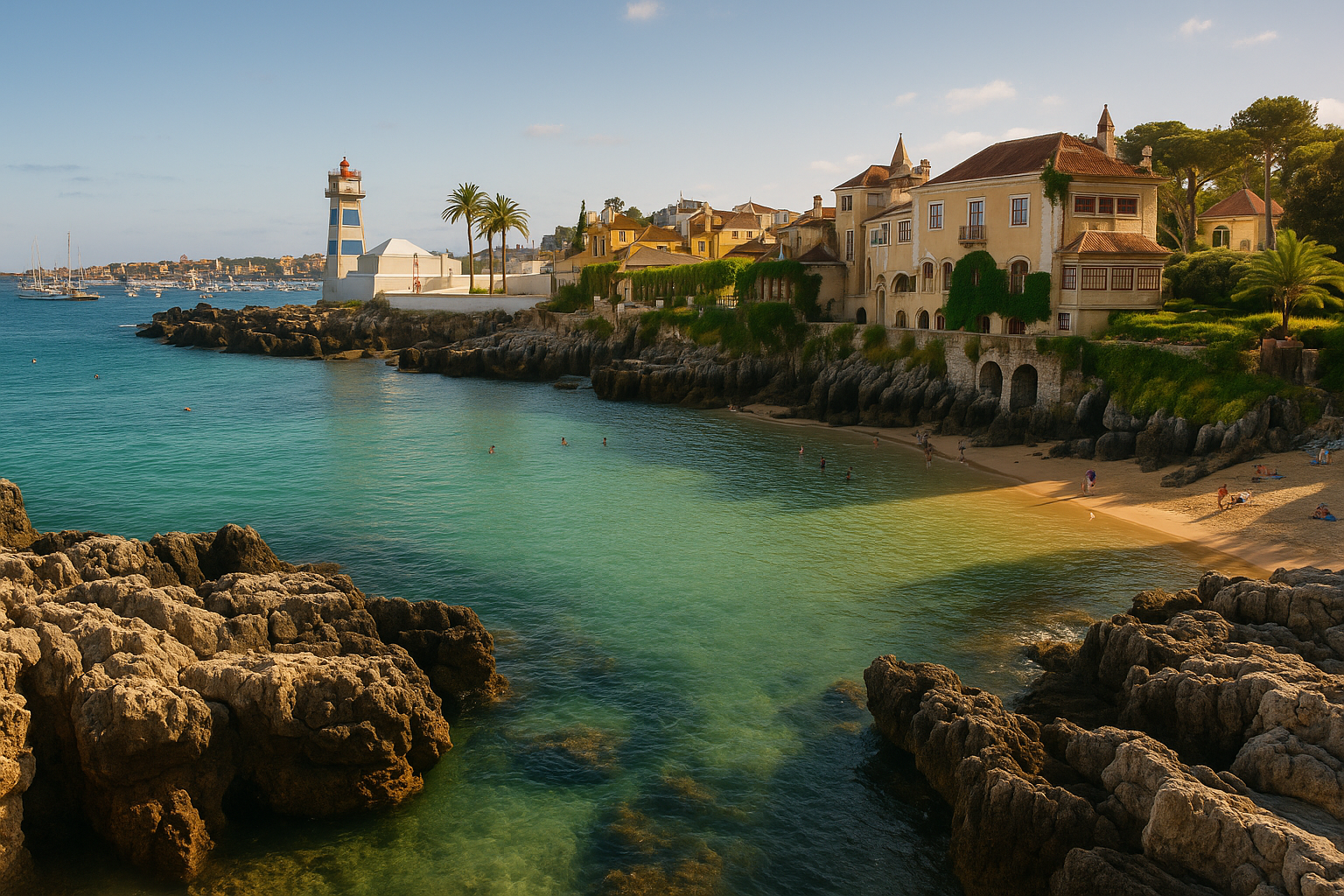
From a warm custard tart in Belem to an evening beside Cascais Bay, one unhurried day reveals Portugal’s appeal. For American retirees, the pleasure lies in how easily history, good food and ocean air fit together.
1. The morning begins with pleasure, not a checklist
Begin in Belém, west of central Lisbon, with coffee and a pastel de nata. At Pastéis de Belém, which began making its pastries in 1837, the specialty carries the neighborhood’s name: pastel de Belém. Beneath the browned surface is warm custard; underneath, pastry that scatters across the plate at the first bite.
For Americans who have already traveled through Europe’s great capitals, this modest beginning has particular appeal. Retirement travel need not mean another race through famous rooms. A seated breakfast, a little cinnamon and time to notice the blue-and-white tiles can establish the day’s priorities more persuasively than an ambitious itinerary.
2. History comes with stories worth lingering over
Nearby, the Jerónimos Monastery gives the morning its historical depth. Commissioned by King Manuel I, with construction beginning in 1501, it is a defining example of Manueline architecture. Carved ropes and maritime motifs connect its stonework to the seafaring ambitions that transformed Portugal’s fortunes.
The church contains the tombs of Vasco da Gama and poet Luís de Camões. Yet this is also a place to consider the harder history behind maritime wealth, including conquest and exploitation. For curious, well-traveled visitors, Portugal rewards more than admiration: it invites conversation. Check current opening arrangements, and allow for queues rather than assuming every visit will be effortless.
3. A change of scenery does not require changing hotels
Leave Belém and continue west toward Cascais. The journey follows the Tagus toward its Atlantic meeting point, with waterfront neighborhoods giving way to beaches and seaside towns. Depending on traffic and the route, the drive commonly takes around 40 minutes to an hour. It is a manageable transition, not a day surrendered to transportation.
That geographical closeness matters when comparing European holidays. Here, a substantial historic visit and a coastal afternoon can share one day without an early alarm or another suitcase to pack. There is no need to claim Portugal is universally easier than France, Italy or Spain. This particular corner simply makes variety remarkably practical.
Browse our travel inspiration for ideas, or tell us what kind of day you have in mind.
4. Someone else can handle the roads and parking
Along the coast, the scenery deserves more attention than a navigation screen. Narrow streets, unfamiliar parking rules and busy approaches to popular sights can take the enjoyment out of driving abroad, especially when neither person in a couple wants the responsibility.
With Portugal Magik, a local driver/guide can shape the day around the guests, using a Mercedes-Benz vehicle and adjusting the balance of walking, sightseeing and seated pauses. A longer breakfast might mean a shorter museum visit later. That flexibility also suits families traveling with retired parents: everyone shares the day without requiring everyone to maintain exactly the same pace.
5. Lunch tastes unmistakably of the place
In Cascais, lunch belongs near the water, though the view should never be the only reason to choose a restaurant. Look for simply grilled fish, perhaps robalo, sea bass, or dourada, gilt-head bream, served with potatoes and vegetables. Sardines are especially associated with the warmer months, rather than being a year-round promise of fresh local fish.
Before ordering a whole fish, ask whether it is priced by weight and confirm its size. Bread, olives and other couvert items brought to the table are generally charged if consumed. These small details make dining more comfortable, leaving attention where it belongs: crisp skin, olive oil and a leisurely conversation.
6. Good wine and satisfying value can share the table
A glass of Bucelas white offers a nearby wine story. Produced north of Lisbon, this small appellation is known for dry whites based on the Arinto grape, whose lively acidity makes a natural companion to fish. Ask what is available by the glass rather than feeling obliged to order a bottle.
Portugal can offer appealing value, particularly through regional wines and straightforward Portuguese restaurants outside the most conspicuous tourist locations. It is not automatically cheaper than every comparable meal in Spain, France or Italy, and fashionable Cascais addresses can be expensive. The attraction is finding quality without making every meal an occasion that requires elaborate planning.
7. English helps the day feel welcoming
After lunch, practical ease becomes noticeable in small exchanges: asking about a museum entrance, clarifying ingredients or finding the nearest restroom. English is widely spoken in visitor-facing businesses around Lisbon and Cascais, although it should not be assumed everywhere.
For American retirees, that reduces the friction of an unfamiliar destination without removing its character. Learning a courteous bom dia or obrigado still matters. So does leaving room for a conversation rather than treating every interaction as a transaction. Portugal’s appeal often emerges between the scheduled sights, when there is no pressing reason to hurry away.
8. Culture can fit comfortably into the afternoon
Cascais offers more than beach scenery. The Museu Condes de Castro Guimarães occupies an early twentieth-century residence beside Parque Marechal Carmona. Its furnished interiors, decorative arts and library provide a more domestic perspective than the monumental scale of the morning’s monastery.
Check opening days and accessibility before committing, particularly if stairs or uneven surfaces are a concern. Alternatively, keep the afternoon outdoors with a gentle wander through the park. This is comfortable pacing in practice: choosing the experience that suits today’s energy, rather than visiting somewhere simply because it appears on a list.
9. The evening leaves room to feel at ease
Finish beside Cascais Bay, where small fishing boats and the curve of Praia da Ribeira hold the view. Portugal is generally considered a safe destination, but ordinary precautions remain sensible: keep valuables secure, watch for pickpockets in busy areas and take care on polished or wet paving.
The waterfront offers a gentler alternative to Lisbon’s steep lanes, though surfaces and gradients still vary. Sit before returning to the city and let the afternoon light soften across the water. Perhaps that is the strongest reason to return: a memorable day need not be exhausting, and its best moment may be the one you left unplanned.
Plan your own day
Share your dates, group size and interests, and we will suggest a tailored plan with a local driver/guide.