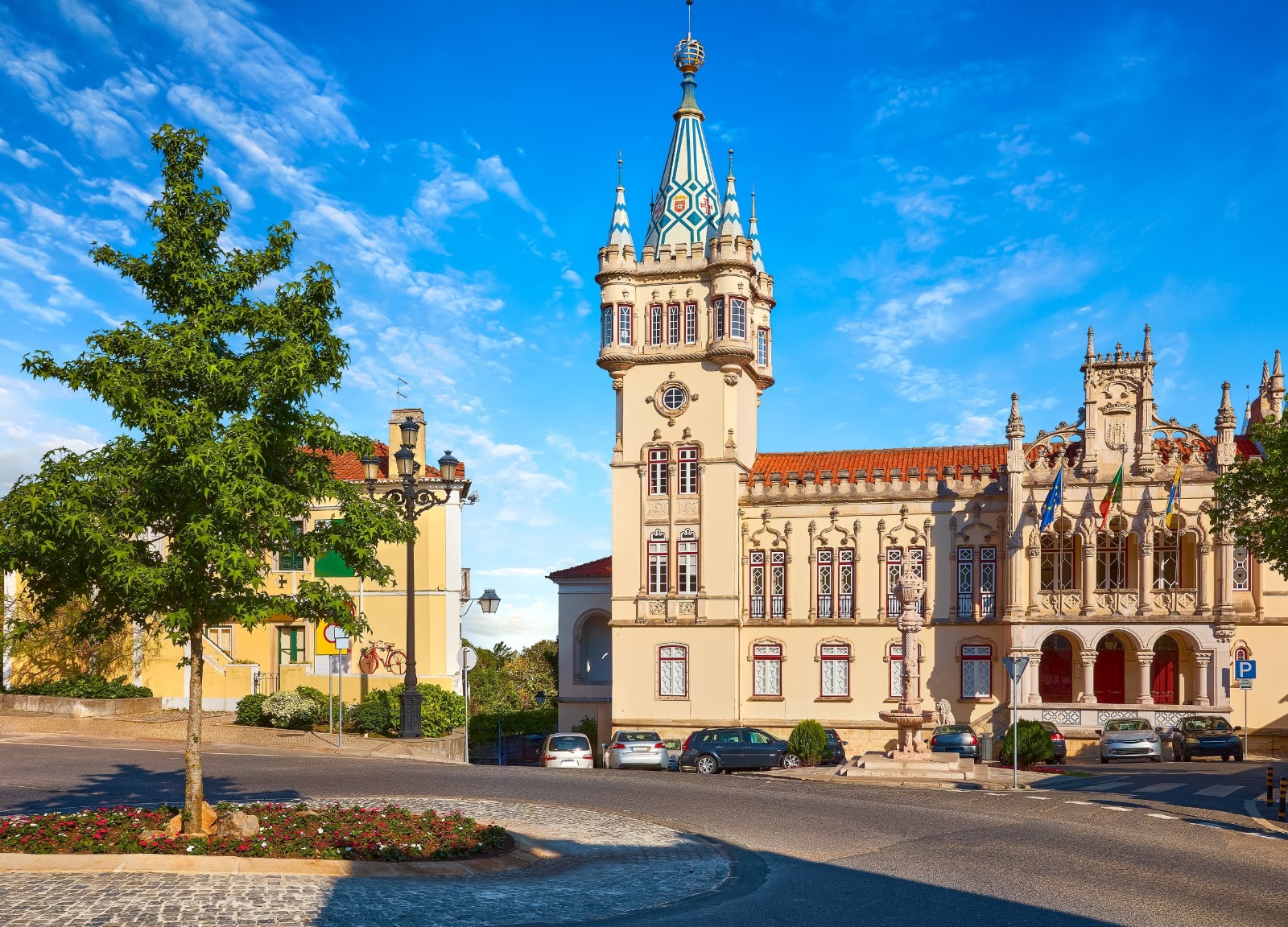
Follow the pastry counter from Belem to Sintra, where warm custard tarts, small cheese cakes and almond-filled pillows tell stories of monasteries, family businesses and everyday Portuguese pleasures.
Morning begins with a paper napkin
Begin in Belém with an appetite modest enough for breakfast and curious enough for the rest of the day. Lisbon is waking around you: cups meeting saucers, delivery vans finding their spaces, the Tagus catching the morning light. At Pastéis de Belém, on Rua de Belém, the blue lettering outside promises something familiar. Inside, beyond the shopfront, tiled rooms reveal how much life can gather around one small pastry.
Order a pastel de Belém and a coffee. The tart arrives with a blistered custard surface and a shell that breaks into delicate shards. Let it cool a little before the first bite. Cinnamon and icing sugar are available, but taste it plain first: warm custard, crisp pastry, sweetness held in balance. This is not a dessert that needs a ceremony, although the napkin beneath it will soon suggest that something important has happened.
Today follows pastries rather than monuments, travelling from riverside Lisbon to the hills of Sintra. There will be time for walking, a proper lunch and looking through windows. The point is not to collect the greatest number of cakes. It is to notice how differently each place makes sweetness its own.
The monastery behind the custard
The story at Pastéis de Belém reaches back to the nearby Jerónimos Monastery. According to the bakery’s own history, someone from the monastery began selling sweet pastries at a neighbouring shop after the religious houses were closed in 1834. Production under the Pastéis de Belém name began in 1837. The original recipe remains closely guarded, and the bakery still makes its pastries on the premises.
A pastel de nata is the broader Portuguese custard tart; a pastel de Belém belongs specifically to this establishment. That distinction matters, but it need not become a competition. Across Portugal, good versions differ in the firmness of their custard, the depth of their caramelised patches and the shattering quality of their pastry. Your favourite may ultimately be the one eaten at just the right temperature.
After breakfast, walk towards the monastery to give the story a physical setting. Its elaborate Manueline stonework belongs to Portugal’s age of maritime expansion. Many Portuguese sweets draw on religious-house traditions, especially combinations of eggs, sugar and almonds. Those ingredients also connect the pastry counter to wider histories of trade, empire and the labour that made sugar available. A sweet morning has deeper roots than it first appears.
Into the hills, without watching the clock
Leave Belém for Sintra, allowing the journey to be a pause rather than a dash between counters. The urban landscape gradually gives way to the wooded hills around the town. Weather can change with the setting: a bright Lisbon morning may become a cool, misty afternoon beneath Sintra’s trees. Bring a light layer, and choose shoes that are comfortable on sloping, sometimes slippery paving.
A Portugal Magik local driver/guide can shape the day around the guests, whether that means a longer riverside walk, fewer tasting stops or extra time over lunch, with a Mercedes-Benz vehicle for the journey between places. In Sintra, where road restrictions and limited parking complicate casual driving, it helps to plan the approach and leave room for exploring on foot.
Before the next pastry, sit down for something savoury. A bowl of soup followed by grilled fish or a simple lunch dish restores the appetite more effectively than another coffee. Sintra rewards these intervals. Look up at the National Palace’s twin white chimneys, then turn into a quieter lane and let the bustle of the centre fall behind.
Browse our travel inspiration for ideas, or tell us what kind of day you have in mind.
A small cheese cake with a long memory
For queijadas, make your way to Queijadas da Sapa on Volta do Duche. The business traces its origins to 1756 and Maria Sapa, placing this little cake within a remarkably long local tradition. Sintra’s queijadas themselves have an older history, with medieval references to their use in payments of rents. They were part of the town’s economy before they became something visitors carried home in paper packages.
A queijada de Sintra has a thin pastry case and a filling made with fresh cheese, sugar, eggs, flour and cinnamon. Do not expect the cool, thick softness of an American cheesecake. This is a small baked sweet with a compact centre, gently grainy from the cheese, and a pleasing contrast between its filling and its fine outer shell.
Buy one to eat now before deciding how many to take away. Its scale encourages attention: the browned top, the cinnamon, the way the cheese keeps the sweetness grounded. Beside the generous custard tart of breakfast, the queijada feels almost restrained, but its flavour stays with you.
Piriquita and the pastry called a pillow
Later, visit Casa Piriquita on Rua das Padarias, in Sintra’s historic centre. Founded in 1862 by Amaro dos Santos and Constância Gomes, the bakery is closely associated with the town’s sweet identity. Its name is linked to a nickname given to Constância by King Carlos I, a reminder of Sintra’s long relationship with the Portuguese royal family.
Here, try a travesseiro. The name means pillow, and the shape makes the translation immediately useful: an elongated parcel of puff pastry, dusted with sugar, enclosing a sweet filling of egg and almond. Piriquita introduced its celebrated version in the 1940s, much later than the establishment itself. Not every traditional favourite is ancient; some simply find their place so convincingly that a town becomes difficult to imagine without them.
If it is warm, give it a moment. Then bite carefully and accept the falling flakes. Compared with the queijada, this is an airy, generous mouthful. Sharing one leaves space to appreciate it without turning the afternoon into an endurance test.
What comes home in the box
By late afternoon, return towards Lisbon with a small box rather than a vast assortment. Ask each bakery about storage and when its pastries are best eaten. Custard tarts and puff pastry are particularly rewarding fresh; a purchase intended for tomorrow will not reproduce every texture you enjoyed at the counter today.
The lasting souvenir is the sequence: Belém’s warm custard beside the river, cheese and cinnamon beneath Sintra’s hills, almond filling caught in flaky pastry. Each sweet belongs to a particular address, but also to the people who kept making it. For one memorable day, following their work is enough.
Plan your own day
Share your dates, group size and interests, and we will suggest a tailored plan with a local driver/guide.