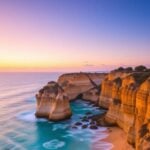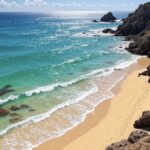
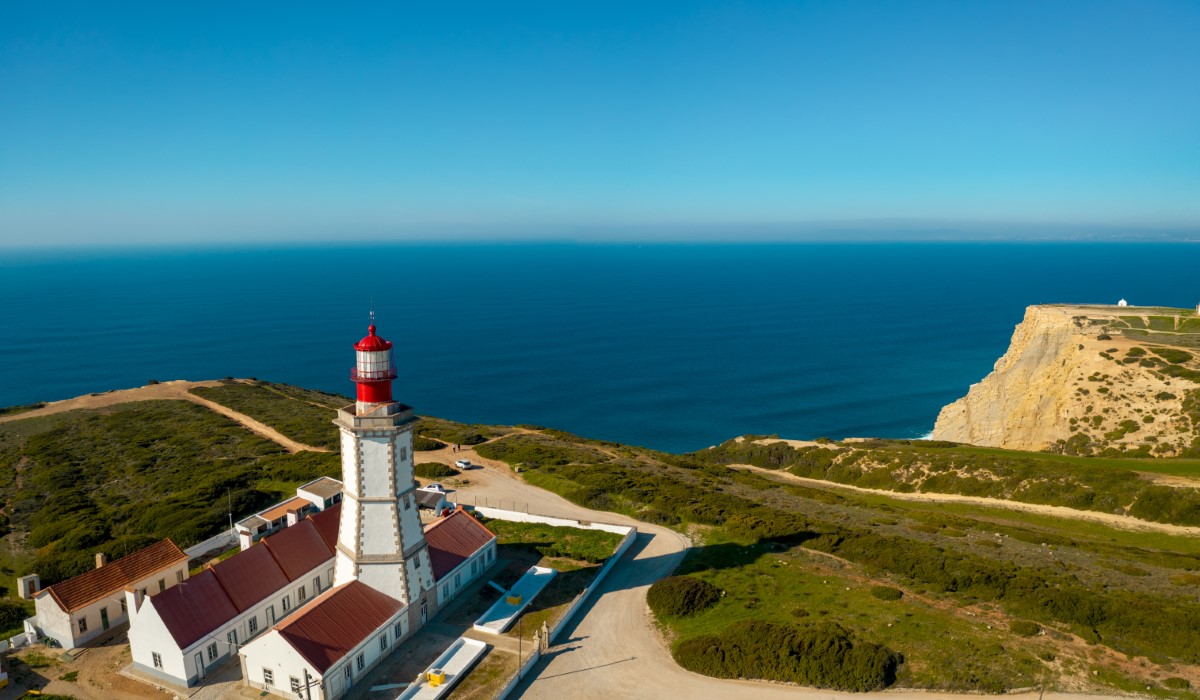
Follow a day from Setúbal’s fish market to the sheltered coves of Arrábida, with fried cuttlefish for lunch and a hillside fortress in the afternoon light. Here, the coast’s stories are found as readily at the table as in the landscape.
Begin where the sea comes ashore
Arrive in Setúbal while the morning still belongs to people doing their shopping. At Mercado do Livramento, fish lie silver against ice, stallholders discuss the day’s catch, and bags fill with vegetables destined for lunch. Opened in 1876 and rebuilt in the twentieth century, the market is both a working address and a handsome introduction to the city. Its tiled panels depict scenes of regional life, including fishing and agriculture. Before you have reached a beach, the coast has already begun telling its story.
Come in the morning on an opening day, checking the current schedule before travelling. Rather than treating the counters as a display, notice the exchange between seller and customer: a question about freshness, a suggestion for the grill, an accustomed nod. Depending on the catch and season, you may see sardines, sea bream, octopus or cuttlefish. The last of these will become particularly relevant at lunchtime. First, though, there is coffee to drink and a city to meet.
A city with its face to the Sado
Walk towards Praça de Bocage, named for the poet Manuel Maria Barbosa du Bocage, born in Setúbal in 1765. His statue stands above a square of café tables and passing conversation. The lanes nearby offer a different scale from the market: shopfronts, balconies and brief glimpses of everyday life. Setúbal rewards this modest amount of wandering. It is a port city with work to do, not simply a picturesque pause on the way to somewhere else.
A short walk away, the Church of the Convent of Jesus adds another chapter. Built in the late fifteenth century, it is an important early example of Manueline architecture, with distinctive twisted stone columns inside. Check visiting arrangements if you want to enter. Then continue towards the waterfront, where the Sado estuary opens out and the sandy Tróia peninsula lies across the water. Fishing, salt production and, later, fish canning all helped shape the city. The broad estuary makes those connections feel immediate rather than remote.
Lunch belongs to cuttlefish
By lunchtime, the morning’s market visit has done its work. Setúbal’s signature order is choco frito: cuttlefish cut into pieces, coated in seasoned flour and fried, commonly served with chips and lemon. It is not squid, although visitors sometimes mistake one for the other. A good plate brings together a crisp coating and tender flesh, with enough salt and acidity to invite another bite. This is food best approached without ceremony, while it is hot.
Look around the streets near Avenida Luísa Todi for restaurants serving it, and let the menu and the day’s appetite guide the rest. Grilled fish is another natural choice, while a tomato salad offers a fresh counterpoint to the fried cuttlefish. Ask what is available rather than assuming every species appears year-round. There is no need to turn lunch into a survey of Portuguese cuisine. One local dish, properly enjoyed, gives the day a stronger memory than a table crowded with obligations.
Browse our travel inspiration for ideas, or tell us what kind of day you have in mind.
Into the green folds of Arrábida
West of Setúbal, the buildings thin and the limestone slopes of Arrábida begin to dominate the view. Established in 1976, Arrábida Natural Park protects a landscape of wooded hills, scrub, cliffs and coastal habitats. The contrast is striking: dense Mediterranean vegetation above water that, in favourable light, shifts between blue and green. Cork oaks, holm oaks and strawberry trees belong to this landscape, though the vegetation changes with altitude and exposure.
This is where a local driver/guide can shape the day around the guests, allowing more time for a viewpoint, choosing a manageable walk or favouring a quiet pause over another stop. With Portugal Magik, the journey in a Mercedes-Benz vehicle links the city and the hills comfortably, but the pleasure lies outside the window. Follow permitted roads and use designated stopping places. Summer traffic measures can restrict access to some coastal roads and beaches, so the route should reflect current rules rather than a fixed promise of reaching every cove.
A small harbour beneath a vast hillside
Portinho da Arrábida provides the day’s gentlest change of scale. Beneath the steep green hillside, a small waterfront settlement faces sheltered water and pale sand. Nearby beaches, including Creiro, draw swimmers when conditions suit, but this coast is equally rewarding without a swim. Sit for a while and watch how the colour changes over sand, rock and deeper water. The Atlantic can feel brisk even when the afternoon sun is warm.
Near Creiro, archaeological remains recall a Roman fish-processing complex, where the sea’s catch was preserved and transformed into products such as fish sauces. They offer a useful reminder that this beautiful shore was also a workplace centuries before beachgoers arrived. Above the coast, the sixteenth-century Convent of Arrábida occupies the hillside, its white buildings associated with Franciscan retreat. Visits require advance planning and are not a casual walk-in stop. Seen in the landscape, it supplies a quieter story: people came here not only to harvest the sea, but also to withdraw from the world.
One last look from São Filipe
Return towards Setúbal for the hilltop Fortaleza de São Filipe, built from the late sixteenth century during the reign of Philip I of Portugal, also Philip II of Spain. Its defensive position now gives visitors a sweeping view across the city, the Sado and Tróia. Check current access before including it. In clear late-afternoon light, the geography of the day becomes wonderfully legible: the working waterfront below, the estuary beyond, the hills stretching west.
There is no need for a grand finale. Remember the market’s tiled walls, the lemon squeezed over lunch, and the moment the sea first appeared between the slopes. Arrábida and Setúbal make a memorable day because those experiences belong together. The mountain shelters the coast, the water feeds the town, and the town gives the landscape its human voice.
Plan your own day
Share your dates, group size and interests, and we will suggest a tailored plan with a local driver/guide.