Porto is home to the Kadoorie synagogue, one of the largest in the Iberian Peninsula, alongside separate institutions dedicated to Jewish history and the Holocaust. This article explains how these distinct sites fit together.
A Modern Landmark With Deep Roots
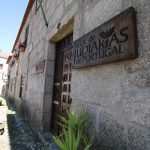
The Kadoorie synagogue, formally known as Mekor Haim, opened in the 1930s in Porto and remains one of the larger synagogues on the Iberian Peninsula. It was built in significant part through the efforts and funding tied to the Kadoorie family, whose name the synagogue carries.
Its construction reflected renewed Jewish communal organization in northern Portugal during the early twentieth century, decades after centuries of enforced secrecy following the expulsion and forced conversions of the late fifteenth century.
The building continues to serve the local community and stands as a visible symbol of Jewish presence in Porto, distinct from the medieval history that predates it by centuries.
The Jewish Museum of Porto
Porto also hosts a Jewish museum that is a separate institution from the synagogue itself, dedicated to documenting the broader history of Jewish life in the city and the wider region across different eras.
This museum presents material on medieval Jewish communities, the period of forced conversion and crypto-Jewish practice, and the more recent history of community reconstruction in the twentieth century.
Because it operates independently of the synagogue, visitors should understand these as two distinct sites with different purposes, even though they relate to the same broader communal history in Porto.
A Separate Holocaust Museum
In addition to the Jewish museum, Porto is home to a dedicated Holocaust museum, which again operates as its own institution rather than as a wing of the synagogue or the Jewish museum.
This museum addresses the broader history of the Holocaust in Europe, including material relevant to Portugal's role during the Second World War as a transit point for refugees fleeing Nazi persecution.
Keeping these three institutions, the synagogue, the Jewish museum, and the Holocaust museum, clearly distinct helps visitors plan their time and understand the specific focus of each.
Jewish Life in Porto Across the Centuries
Before the upheavals of the late fifteenth century, Porto had an established Jewish community with its own quarters and communal structures, as was common in major Portuguese cities of the period.
Following the 1497 forced conversions, Jewish practice in Porto, as elsewhere in the country, continued largely in secret for generations among New Christian families, a pattern often described as crypto-Jewish life.
The emergence of institutions like the Kadoorie synagogue in the twentieth century marked a significant shift back toward open communal life, supported in part by Jewish families with international connections who helped fund the effort.
Understanding the Three Institutions Together
A well-planned visit to Porto's Jewish heritage sites typically includes time at the synagogue to see the building itself, followed by visits to the Jewish museum and the Holocaust museum to gain fuller historical context.
Because each institution covers a different period or theme, seeing all three provides a more complete picture than visiting any single site alone, spanning medieval history, early modern persecution, and the twentieth-century history of the Holocaust and refuge.
Local guidance can help clarify which exhibits belong to which institution, since the shared subject matter can otherwise make the distinctions less obvious to first-time visitors.
Including Porto in a Wider Itinerary
Porto pairs naturally with other Jewish heritage destinations in Portugal, including Lisbon, Belmonte, and Tomar, each offering a different chapter of the same long history.
Iberian Heritage Journeys includes Porto within its private multi-day Jewish heritage travel itineraries across Portugal and Spain, guided by private heritage driver-guides who can explain the relationships between these different sites.
Depending on available time, travelers might choose the 3-day introductory itinerary, the 6-day highlights itinerary, the 10-day complete immersion itinerary, or the 12-day Iberian journey, each incorporating Porto's synagogue and museums as part of a broader route.
Visitors planning a trip benefit from understanding this background in advance, since it adds depth to the experience of standing in these historic places and helps connect what is seen on site to the longer arc of Portugal's Jewish history across different regions and centuries.
Visitors planning a trip benefit from understanding this background in advance, since it adds depth to the experience of standing in these historic places and helps connect what is seen on site to the longer arc of Portugal's Jewish history across different regions and centuries.
Visitors planning a trip benefit from understanding this background in advance, since it adds depth to the experience of standing in these historic places and helps connect what is seen on site to the longer arc of Portugal's Jewish history across different regions and centuries.
Plan your Jewish heritage journey
Share your dates, interests and group size and we will suggest a tailored private itinerary with a local driver/guide, including heritage-focused visits. Access arrangements are confirmed before booking.